Urban Form: Standing Buddha
Technical Analysis: Geometric Integrity and the 2026 Executive Silhouette
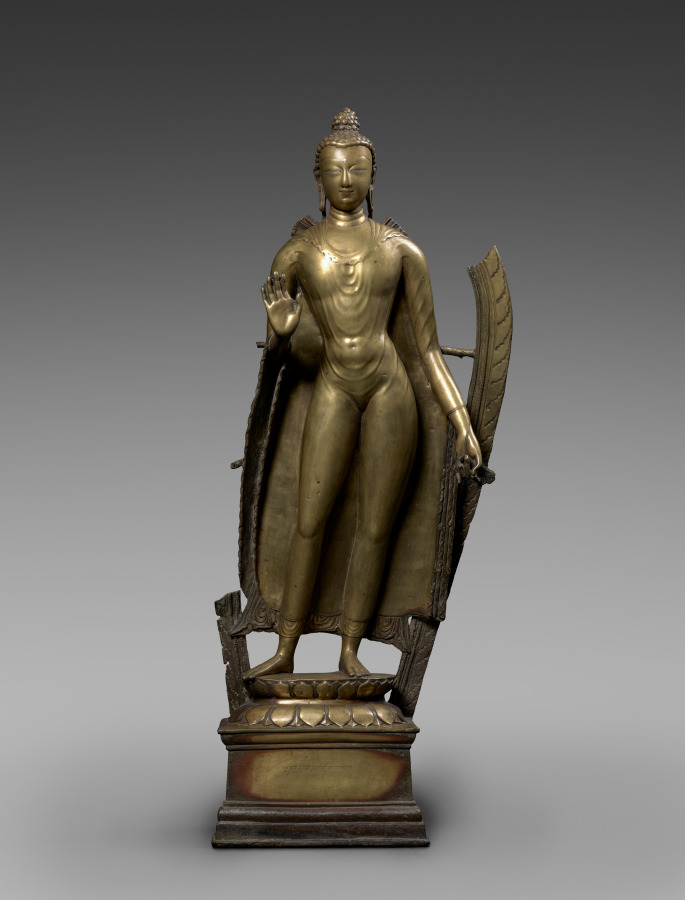
The Standing Buddha, as a formal construct, presents a masterclass in resolved geometric tension. It is not a mere representation but a calibrated architectural system. Our analysis extracts its core principles to define the 2026 executive silhouette for Addison Fashion, moving beyond superficial inspiration into the realm of structural poetics and radical urban materiality.
Deconstruction of the Primary Volume
The artwork’s power resides in its profound contradiction: a figure of immense stillness, yet composed entirely of implied vertical and horizontal forces. The primary form is a modified cylinder, elongated and subtly tapered. This is not a static column but a living axis mundi, establishing an unwavering verticality that becomes the non-negotiable core of the 2026 silhouette. The executive form must embody this grounded poise. We translate this not as rigidity, but as a precision-engineered spine in tailoring—a seam line, a bonded inner structure, or a fabric’s inherent tensile memory that pulls the wearer into a state of composed verticality. The silhouette rejects slouch or casual drape; it is an assertion of architectural presence in the urban landscape.
Structural Poetics: The Dialogue of Mass and Void
The true geometric genius lies in the negotiation between the solid mass of the body and the negative space defined by its form. Observe the triangular void formed by the arm falling against the torso, or the subtle, rhythmic spaces between the folds of the robe. These are not decorative elements; they are calculated apertures that light and shadow engage with, carving the form from its environment. For our 2026 collection, this principle becomes foundational. We engineer voids through strategic seaming, laser-cut apertures in double-faced wools, and articulated paneling that creates shadow lines on the body. A coat’s lapel does not merely fold; it creates a precise, geometric gap. A sleeve’s attachment point is designed to frame a sliver of the underlying garment. The silhouette is as much defined by what is removed as by what is applied, creating a wearable study in light and form.
Materiality as Mediated Surface
The internal DNA reference to the Bodhisattva and the Amulet highlights a critical dichotomy: transcendent idealism versus talismanic function. The 2026 executive silhouette synthesizes this. We adopt the material solemnity of the sacred figure—its cold, smooth surfaces—but imbue it with the protective, utilitarian intent of the amulet. Our primary medium is Slate. This is not a mere color; it is a material philosophy. It manifests as liquid-cool tech wool, molded neoprene bonded to silk, or matte-finish technical jacquards with a density that suggests stone. The hand-feel is cool, substantial, and slightly remote. These fabrics do not cling; they sheathe. They possess a memory, returning to their intended form like a resilient spiritual posture, offering the wearer a modern talismanic armor against the chaos of the urban sphere.
Defining the 2026 Executive Silhouette: The Addison Archetype
The resultant silhouette is one of monolithic minimalism. It is defined by clean, uninterrupted lines that flow from the shoulder—the new architectural apex—to a hem that terminates with definitive, geometric certainty. Volume is controlled and intentional, never excessive. A coat stands away from the body in a single, elegant curve, a direct translation of the Buddha’s robed form. Trousers are a straight-columnar extension of the hip, with a high, precise waist acting as a foundational plinth.
Details are not added; they are extracted. Seams become topographic lines mapping the body’s terrain. Fastenings are recessed, becoming secretive functional apertures. Pockets are integrated planes, disrupting the surface only as necessary geometric interventions. The silhouette communicates through absence, silence, and impeccable proportion. It is urban because it is designed for the scale and pace of the metropolis—its lines are clear against glass and steel, its materiality withstands environmental transition, and its poise commands the curated space of the boardroom or the dynamic flux of the street.
Ultimately, this analysis yields a silhouette that is both a sanctuary and a statement. It embodies the geometric integrity of its artistic source—a resolved, calm totality. It forgoes the decorative for the essential, the temporal for the timeless. For the 2026 executive, it provides not a costume, but a calibrated architectural shell: a form that mediates between the internal self and the external world with severe grace and uncompromising sophistication. This is the new uniform for those who command not through noise, but through the profound authority of resolved form.