Urban Form: Composition
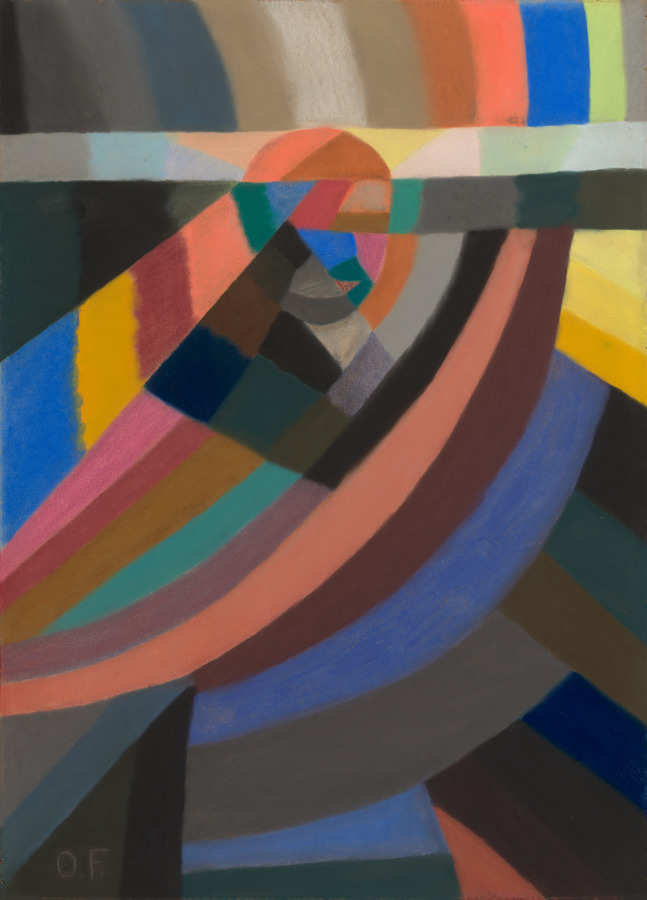
Technical Deconstruction: The Dialectic of Emptiness and Density in Urban Silhouette
The aesthetic DNA extracted from the “Udumbara” temple plaque and the “Divine Beasts, Chariots, and White Tiger” bronze mirror presents a sophisticated paradox for the 2026 NYC executive wardrobe. At its core, this is a study in compositional tension—the interplay between negative space and dynamic density. For the modern urban professional, this translates into a silhouette strategy that rejects both the chaotic over-embellishment of fast fashion and the sterile void of pure minimalism. Instead, we propose a Minimalist framework executed in Slate, a color that embodies the meditative stillness of the plaque’s ink-wood union while carrying the metallic gravitas of the bronze mirror’s patina.I. The Plaque Principle: Form as Negative Volume
The “Udumbana” plaque is not a statement of presence, but of absence as presence. Its power lies in what it does not say. The wood grain is not hidden; it is the canvas. The ink strokes are not decorative; they are structural anchors in a sea of emptiness. For the 2026 silhouette, this dictates a monolithic, unbroken line. The garment must read as a single, continuous volume—a block of Slate from shoulder to hem—interrupted only by the most essential of architectural seams.Formal Application: The foundational piece is a double-faced wool crepe coat, cut with a razor-sharp, slightly dropped shoulder. No lapel. No collar. The front closure is a concealed magnetic placket, creating a seamless, mirror-like surface. The length falls to mid-calf, terminating in a clean, un-hemmed edge that mimics the “unfinished” quality of the plaque’s carved terminus. The interior is unlined, allowing the raw wool’s texture—its “wood grain”—to speak against the body. This is not a garment that drapes; it is a garment that contains. It creates a negative space around the torso, a “room” of silence within the city’s noise.
Color Rationale: Slate is chosen not as a neutral, but as a chromatic void. It is the color of wet stone, of ink that has bled into paper and dried. It absorbs light rather than reflecting it, reinforcing the garment’s role as a visual “pause” in the urban landscape. This is the executive’s equivalent of the temple gate: a threshold between the chaotic external world and the ordered internal one.
II. The Mirror Principle: Form as Dynamic Tension
The bronze mirror presents the antithesis: a surface of controlled chaos. The “满工” (full-field) composition—chariots, beasts, celestial beings—is not clutter; it is a compressed narrative. Every line is in motion, yet the whole is perfectly balanced. For the silhouette, this translates into architectural detailing within a restrained silhouette. The garment’s surface becomes the mirror’s back: a field for precise, kinetic interventions.Formal Application: Beneath the coat, the core garment is a high-neck, long-sleeve shell in a liquid matte jersey—a fabric that moves like the mirror’s flowing chariot reins. The innovation lies in the structural seams. Rather than standard darts, the shell is constructed with a series of asymmetrical, bias-cut panels that wrap from the left shoulder, across the ribcage, and terminate at the right hip. These seams are not hidden; they are exposed and top-stitched in a contrasting Slate thread one shade lighter, creating a “relief” effect akin to the mirror’s bronze lines. The hem is cut on a severe angle, rising from mid-thigh on the left to just below the hip on the right—a literal “chariot wheel” trajectory that implies forward motion even at rest.
Color Rationale: The shell is also Slate, but a different value—a charcoal with a subtle metallic sheen. This creates a chromatic dialogue between the coat’s matte absorption and the shell’s reflective surface. The eye moves between them, just as the mind moves between the plaque’s emptiness and the mirror’s fullness. This is not a monochrome look; it is a monochromatic system of tonal counterpoint.
III. The Synthesis: The “象外之象” Silhouette
The true power of this composition lies in the relationship between the two garments. The coat is the “空” (emptiness)—a static, protective volume. The shell is the “满” (fullness)—a dynamic, revealing structure. When worn together, they create a third form: the silhouette of the interval.Operational Mechanics:
- Layering as Calligraphy: The coat’s open front reveals the shell’s diagonal seams only in motion—a step, a turn, a gesture. The garment “writes” itself on the body, stroke by stroke, like the plaque’s ink on wood.
- Proportion as Balance: The coat’s volume is offset by the shell’s cling. The upper body is enclosed; the lower body is released. This echoes the mirror’s composition: a dense center (the celestial court) surrounded by a border of swirling clouds (negative space).
- Texture as Narrative: The coat’s wool is the “wood”; the shell’s jersey is the “bronze.” The two materials never touch, but they converse across a millimeter of air—the “breath” between the plaque and the mirror.
IV. The 2026 Executive Wardrobe: A Protocol for Presence
This is not a collection of garments. It is a system of spatial negotiation. The executive who wears this silhouette does not enter a room; they define the room. The coat establishes a perimeter. The shell creates a focal point. The Slate palette ensures that the eye is not distracted by color, but forced to read the pure language of form.Key Specifications for Production:
- Coat: 100% double-faced wool, 680 GSM. Unstructured shoulder. Hidden magnetic closure. Internal pocket at left chest, invisible from exterior. Hem weight: 1.2 kg per linear meter to ensure clean fall.
- Shell: 92% viscose, 8% elastane with a metallic finish. Seam allowance: 0.5 cm, exposed. Bias-cut panels must be cut on a 45-degree grain to achieve the required torque.
- Color Matching: Coat: Pantone 18-0601 (Slate). Shell: Pantone 19-3906 (Dark Slate) with a 5% silver micro-fleck for the mirror effect. Tolerance: ΔE ≤ 1.0.