Urban Form: Eve
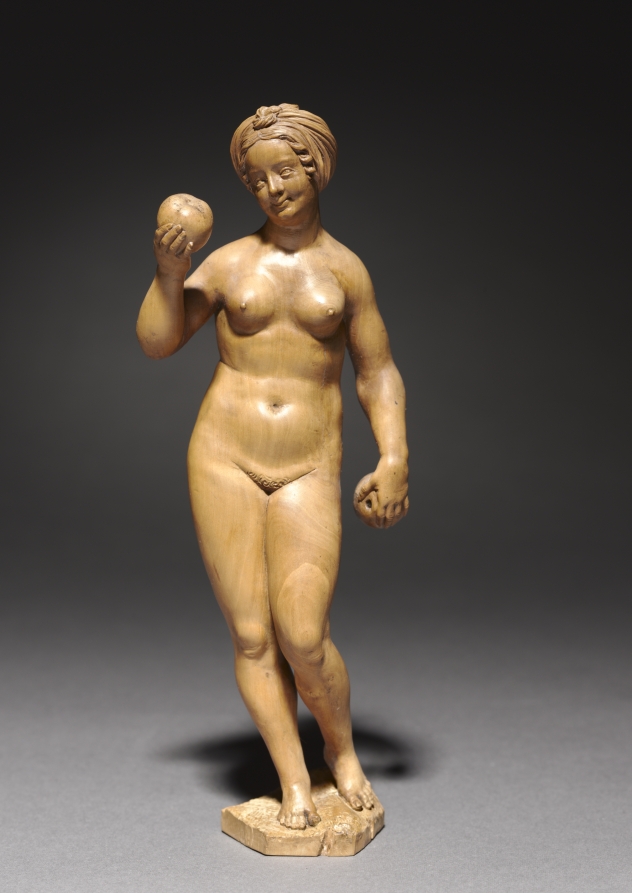
Executive Summary: The Eve Silhouette as a Dialectic of Macrocosm and Microcosm
The Eve subject, as rendered through the dual lenses of Qing dynasty Landscapes, Figures, and Flowers porcelain and the modern Flowering Crab Apple painting, presents a compelling paradox for the 2026 NYC executive wardrobe. The porcelain embodies a macrocosmic principle—a “moving landscape” where disparate elements (mountain, figure, flora) are unified through spatial rotation and material tactility. The painting, conversely, operates on a microcosmic principle—a “deep gaze” into a single branch, where emptiness (negative space) becomes the generative field for life’s trajectory. For Addison Fashion, the Eve silhouette is not a compromise between these poles but a synthetic third form: a minimalist architecture that houses both the fluid, panoramic journey of the vase and the focused, static intensity of the crab apple. The chosen palette of Ivory serves as the neutral substrate—the “blank silk” or “porcelain ground”—upon which these opposing forces are inscribed without visual noise.
I. Form: The Architecture of “You Guan” (游观) and “Jing Guan” (静观)
A. The Macrocosmic Silhouette: Fluid, Rotational Volume
The porcelain’s aesthetic demands a silhouette that moves with the viewer. In the 2026 executive context, this translates to a double-faced coat or a wrap dress with asymmetrical draping. The form must not be static; it must unfold as the wearer pivots in a boardroom or walks through a glass atrium. Key technical specifications:
- Shoulder line: A soft, extended shoulder—neither rigid nor dropped—that mimics the vase’s “horizon line” where mountain meets sky. This creates a continuous visual arc from shoulder to hem, avoiding any sharp angular breaks.
- Waist suppression: Minimal. The silhouette is columnar but not tubular. A subtle inward curve at the natural waist, akin to the vase’s gentle belly, allows the fabric to rotate around the body without clinging. This is achieved through internal darts rather than external seaming, preserving the surface as a pristine canvas.
- Hem treatment: A weighted, bias-cut hem that swings with movement. The hem should not be parallel to the floor; instead, it should have a 3-5 cm differential (higher front, lower back) to suggest the “panoramic scroll” unrolling as the wearer advances.
- Construction detail: The coat or dress must be fully lined in a contrasting weight—a silk charmeuse for the body, a wool crepe for the shell. This creates a tactile dialogue between inner and outer, mirroring the porcelain’s glaze (outer) and clay body (inner). The lining should be visible only at the hem or cuff, a secret “landscape” revealed in motion.
B. The Microcosmic Silhouette: Static, Focused Volume
The Flowering Crab Apple demands a form that arrests the gaze. This is the structured shell top or the high-neck, sleeveless bodysuit—a garment that creates a discrete, bounded field around the torso. Here, the silhouette is about negative space and tension:
- Neckline: A mandarin collar or a high, curved stand that frames the neck like a vase’s rim. This is not a restrictive collar but a threshold—a point where the body’s volume meets the air.
- Armhole: A cut-in, clean armhole with no sleeve. The armhole must be bound in a self-fabric bias to create a crisp, unbroken line. This exposes the arm as a “branch”—a structural element that extends the silhouette outward.
- Body length: Cropped to the natural waist or just below the ribcage. This creates a visual “stem” from the torso to the lower garment, emphasizing the vertical axis of the body.
- Construction detail: The top must be interfaced with a firm, non-fusible canvas at the front and back panels. This gives the garment a sculptural rigidity—it stands away from the body by 1-2 cm, creating a micro-climate of air between fabric and skin. This is the “empty space” where the viewer’s eye can rest.
II. Color: Ivory as the Ground of All Possibility
A. The Porcelain Ground: Warm, Translucent Ivory
Ivory is not a neutral beige. For the Eve collection, it must be a warm, slightly yellowed ivory with a matte, powdery finish—reminiscent of Qing dynasty egg-shell porcelain. This color functions as the “blank” upon which the wearer’s own “landscape” (gesture, movement, context) is painted. Technical specifications:
- Fabric choice: A wool-cashmere blend (80/20) with a twill weave. The twill creates a subtle diagonal texture that catches light differently at each angle, mimicking the “glaze flow” of a porcelain surface.
- Dye process: The ivory must be achieved through a low-impact, natural dye (e.g., madder root and chamomile) to avoid the flat, synthetic quality of optical white. The result should have slight tonal variation—a “breathing” surface.
- Contrast accent: A single ink-black or deep umber line—a piped seam or a bound edge—that runs along the coat’s center back or the top’s collar. This line is the “brushstroke” that defines the form, echoing the painting’s ink outlines.
B. The Painting’s Negative Space: Cool, Reflective Ivory
For the microcosmic top, the ivory must shift to a cooler, slightly blue-tinged tone—the color of aged paper or silk under moonlight. This is the “empty space” that allows the wearer’s skin to become the “flower.” Technical specifications:
- Fabric choice: A double-faced satin (silk outer, cotton inner) with a subtle sheen. The satin’s reflective quality creates a luminous halo around the body, making the wearer appear to “glow” from within.
- Finish: All seams must be French seams or bound with a silk organza to prevent any fraying or visible thread. The garment must be completely clean on the inside—a “painting’s reverse” that is as considered as the front.
- Accent: A single embroidered “bud” at the left shoulder—a tiny, abstracted form in a slightly darker ivory thread. This is not a literal flower but a gesture—a point of focus that anchors the viewer’s gaze, just as the crab apple’s blossoms anchor the painting’s emptiness.
III. Synthesis: The 2026 Executive Wardrobe
The Eve silhouette for the NYC executive is not a single garment but a system of two opposing forms that can be worn together or separately:
- Day (Macrocosmic): The double-faced coat in warm ivory, worn over a silk shell in the same tone. The coat’s fluid volume allows for uninterrupted movement through transit, meetings, and social spaces. The wearer becomes a “moving landscape,” her body the axis around which the fabric rotates.
- Evening (Microcosmic): The structured shell top in cool ivory, paired with a high-waisted, wide-leg trouser in black or charcoal. The top’s sculptural rigidity creates a static, powerful presence—the wearer is a “flower” in full bloom, her stillness commanding attention.
- Combined: The coat can be worn open over the top, creating a layered dialogue between the macro and micro forms. The coat’s fluidity softens the top’s rigidity; the top’s focus anchors the coat’s expanse.
Final Technical Note: All garments must be unlined at the hem (for the coat) or unfaced at the neckline (for the top) to allow a raw, deliberate edge—a “cut” that references the painting’s edge and the vase’s lip. This is the signature detail of the Eve silhouette: a form that is complete yet open, finished yet breathing.
The result is a wardrobe that does not merely clothe the executive but inscribes her into a continuum—between the panoramic and the particular, the moving and the still, the vessel and the void. In a city of relentless motion, the Eve silhouette offers a pause—a space where the wearer, like the porcelain’s figure or the painting’s flower, becomes the point of convergence for all that surrounds her.