Urban Form: Italian Sketchbook: Abstract Sketch (page 5)
Geometric Integrity as a Structural Primer
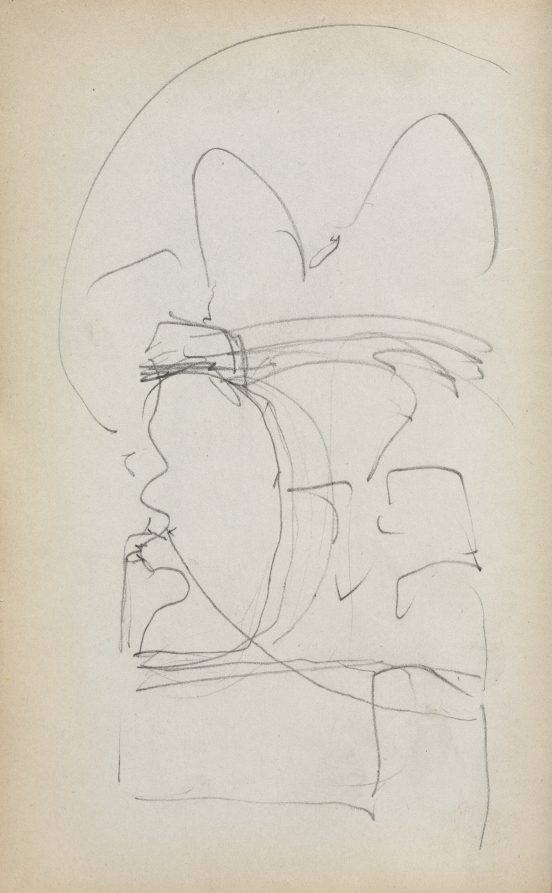
The Italian Sketchbook’s Abstract Sketch (page 5) presents a dialectic of terminal form: the heroic narrative of David’s “The Death of Socrates” and the silent geometry of the anonymous “Cup and Stand.” For Addison Fashion’s 2026 executive silhouette, this artwork is not a decorative reference but a structural primer. It compels a re-examination of how the human form, clad in urban armor, negotiates its own finitude. The sketch’s core proposition—that the most profound spirituality resides in the most unadorned material form—translates directly into a design language of minimalist luxury where every seam, panel, and drape is a philosophical statement.
The geometric integrity of the sketch is dual. First, the architectural solidity of Socrates’ seated figure: a triangulated mass of torso, extended arm, and the impending cup. Second, the pure, subtractive geometry of the cup itself—a sphere bisected by a concave interior, resting on a minimal circular base. The 2026 silhouette must reconcile these two poles: the narrative tension of the body in a state of finality, and the silent perfection of the object that receives that finality. The resulting garment is a vessel for the executive’s own internal drama, a structure that contains, rather than displays, the paradox of power and vulnerability.
Structural Poetics: The Architecture of Terminal Form
The Socratic Line: Tension and Release
David’s composition is a study in controlled tension. Socrates’ raised arm is a diagonal vector of intellectual authority, while his reaching hand toward the cup is a horizontal line of acceptance. The 2026 executive silhouette must capture this dialectic of assertion and surrender. This manifests in a jacket’s shoulder line: a sharp, almost architectural peak (the raised arm) that softens into a clean, uninterrupted sleeve (the reaching hand). The fabric, likely a high-density wool or a structured technical jersey, must hold this shape without collapsing into softness. The Onyx color—a deep, absorbing black with a subtle graphite undertone—ensures that the line, not the hue, is the primary communicator.
The Cup’s Concavity: Negative Space as Power
The anonymous cup’s power lies in its negative space. The interior hollow is not an absence but a potential—a void waiting to be filled with meaning. For the silhouette, this translates into strategic cutouts and interior volumes. A blazer might feature a deep, sculpted back panel that creates a concave shadow against the wearer’s spine, or a trouser leg might be cut with a subtle, internal pleat that opens and closes with movement. This is not about revealing skin but about creating architectural voids that speak to the wearer’s interiority. The garment becomes a container for the self, its emptiness as deliberate and potent as its fullness.
The Stand: Minimalist Foundation
The cup’s stand is a pure, unadorned circle—a base that provides stability without commentary. In the 2026 silhouette, this is the foundational garment: a high-waisted, straight-leg trouser or a column skirt that anchors the entire composition. It must be cut with absolute precision, with no excess fabric, no distracting pockets, no visible fastenings. The hem should fall just above the floor, creating a clean, unbroken line from hip to ground. This is the urban materiality of the executive: a base that is both a pedestal and a shield, grounding the wearer in the concrete reality of the city while elevating their presence.
Urban Materiality: Fabric as a Philosophical Medium
Onyx as a Chromatic Void
The choice of Onyx is deliberate. It is not a simple black but a complex, absorbing darkness that mimics the cup’s interior void. In urban light—fluorescent, tungsten, grey daylight—Onyx shifts between a matte, almost powdery surface and a deep, reflective sheen. This chromatic instability mirrors the Socratic paradox: the garment appears static, yet its materiality is in constant dialogue with its environment. The fabric must be a technical wool-cashmere blend with a slight, almost imperceptible ribbing that catches light only at the edges, creating a silhouette of shadows.
Weight and Drape: The Physics of Finality
The fabric’s weight is critical. It must be substantial enough to hold the Socratic line—the sharp shoulder, the rigid arm—yet fluid enough to suggest the cup’s organic curve. A 380-gram wool with a 15% silk content achieves this: it falls with a deliberate, almost solemn drape, resisting the urge to flutter or billow. This is the materiality of the final gesture—a fabric that knows its own weight and moves with the gravity of a philosopher accepting his fate. The internal structure, a lightweight horsehair canvas fused to the front panels, ensures that the garment retains its shape even when the wearer is in motion, creating a static dynamism that is the hallmark of minimalist luxury.
Seams as Philosophical Lines
Every seam is a philosophical line. In David’s painting, the lines of Socrates’ body are clear, deliberate, and unbroken. In the anonymous cup, the seam between the cup and the stand is invisible—a perfect union of two distinct forms. The 2026 silhouette must employ invisible construction techniques: bonded seams, laser-cut edges, and internal taping that eliminate visible stitching. The only visible lines should be those that define the silhouette’s architecture—a princess seam that follows the ribcage, a shoulder seam that traces the clavicle. These lines are not decorative; they are structural necessities that articulate the garment’s relationship to the body.
The Executive Silhouette: A Vessel for Urban Finality
The 2026 executive silhouette, derived from this sketch, is a study in controlled emptiness. It is not a garment that announces itself through volume or ornament but through precision and silence. The jacket is cropped to the natural waist, with a single, hidden button closure. The trousers are high-waisted, with a straight, almost rigid leg that tapers slightly at the ankle. The overall effect is that of a modern, urban vessel—a container for the wearer’s own narrative, their own finality. The silhouette does not tell a story; it is the story, waiting to be filled by the wearer’s actions.
This is the urban poetics of the Addison executive: a garment that, like the cup, is both empty and full, both silent and resonant. It is the material manifestation of the paradox that David and the anonymous craftsman understood: that the most profound power lies not in what is said, but in what is held in perfect, silent form. The 2026 silhouette is not a trend; it is a philosophical statement—a testament to the enduring tension between the body and its finality, rendered in the cold, sophisticated language of minimalist luxury.