Minimalist
Onyx
Urban Form: Carved Bowl
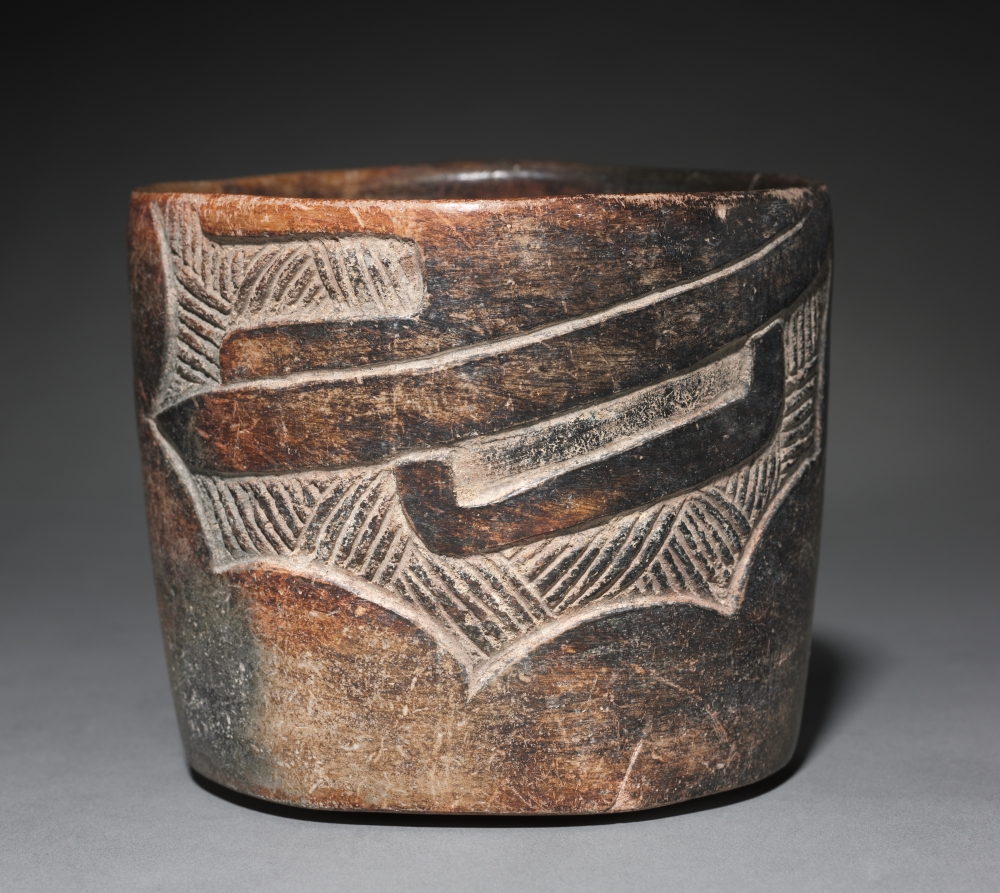
Urban Silhouette Research: The Carved Bowl as Structural Poetics
The Carved Bowl, when examined through the lens of Addison Fashion’s 2026 executive silhouette, emerges not as a mere vessel but as a manifesto of architectural containment. Drawing from the internal DNA of the *Rock in the form of a fantastic mountain* and the *Jar in the shape of bronze container (hu)*, this analysis deconstructs the bowl’s geometric integrity to define a new paradigm of urban materiality. The bowl’s form is a study in controlled tension—a hollowed volume that simultaneously asserts presence and invites absence. It is a paradox of solidity and void, where the outer shell defines the inner space, much like the executive silhouette must command a room while remaining an envelope for the individual within.Geometric Integrity: The Dialectic of Mountain and Vessel
The Carved Bowl’s geometry is a synthesis of two opposing yet complementary principles: the organic, weathered contours of the fantastic mountain and the rigid, ceremonial symmetry of the bronze *hu*. The mountain rock, with its “wrinkled, lean, leaky, and transparent” qualities, provides the bowl with a dynamic, almost geological surface. This is not a smooth, industrial curve but a topography of ridges and depressions that catch light and shadow, creating a visual rhythm of compression and release. The bowl’s exterior is a microcosm of a mountain range—a series of faceted planes that suggest tectonic upheaval. In contrast, the *hu* jar contributes a strict, axial symmetry. The bowl’s rim is a perfect circle, its base a stable, grounded ellipse. This dual inheritance results in a form that is both chaotic and ordered: the upper body may flare outward with the irregularity of a natural rock formation, while the lower half tapers with the precision of a bronze ritual vessel. The geometric integrity lies in this unresolved tension—the bowl is neither fully natural nor fully artificial. It is a third state, a “material translation” where the mountain’s spirit is housed within the jar’s structure. For the 2026 executive silhouette, this translates into a jacket or coat that is both sculptural and functional. The shoulder line, for instance, must echo the bowl’s rim—a clean, circular horizon that frames the body. Yet the fabric should fall in folds that mimic the mountain’s crevices, creating a silhouette that is not static but alive with internal movement. The waist is the bowl’s base—a firm, grounded anchor that prevents the structure from becoming top-heavy. The overall geometry is that of an inverted cone, where the volume is concentrated at the shoulders and gradually narrows to a sharp, defined hem. This is not a silhouette of soft draping but of hard, architectural lines that carve space around the wearer.Structural Poetics: The Philosophy of Containment and Release
The Carved Bowl embodies a structural poetics rooted in the Chinese aesthetic of “borrowing form to convey spirit.” The bowl is not a literal representation of a mountain or a jar; it is a symbolic vessel that contains the essence of both. Its hollow interior is a void that invites contemplation—a negative space that is as important as the positive form. This is the core of the 2026 executive silhouette: the garment must not merely cover the body but create an aura of presence through absence. The structural poetics demand that the silhouette be a “medium” for the wearer’s identity, much like the fantastic mountain rock is a medium for the Daoist ideal of the microcosm. In practical terms, this means the garment’s seams are not hidden but celebrated as lines of force. They trace the bowl’s geological strata, creating a visual narrative of construction. A coat might feature a single, continuous seam that spirals from the collar to the hem, mimicking the bowl’s concentric rings of growth. The fabric itself must be treated as a material that can be “carved”—think of a double-faced wool that is felted and then cut to reveal a raw, unfinished edge, or a bonded leather that is embossed with a pattern of fissures. The structural poetics are about revealing the process of creation, not hiding it. The garment should look as if it has been excavated from a single block of material, with the wearer’s body as the chisel that releases its form.Urban Materiality: Onyx and the Architecture of the City
The choice of Onyx as the defining color for this silhouette is deliberate. Onyx is not a neutral; it is a deep, absorbing black that contains veins of white and gray, much like the Carved Bowl’s surface contains the memory of its geological origins. In an urban context, Onyx represents the city at night—the polished glass of skyscrapers, the matte asphalt of rain-soaked streets, the reflective surfaces of luxury vehicles. It is a color that absorbs light rather than reflecting it, creating a silhouette that is both present and elusive. The urban materiality of Onyx is about density and depth. A garment in this color does not shout; it commands through its sheer weight of presence. The fabric for the 2026 executive silhouette must be chosen to enhance this materiality. Consider a Japanese wool-cashmere blend that is milled to a dense, almost stone-like hand. It should have a slight luster, like the patina of a well-handled bronze, but remain matte enough to avoid frivolity. Alternatively, a technical silk with a micro-ribbed texture could mimic the bowl’s “wrinkled” surface, offering a tactile experience that is both luxurious and industrial. The urban materiality is also about performance: the garment must be resilient to the city’s demands—wrinkle-resistant, water-repellent, and structured enough to hold its shape after hours of wear. It is a material that ages gracefully, developing a character that reflects the wearer’s journey through the urban landscape.Conclusion: The 2026 Executive Silhouette as a Carved Void
The Carved Bowl redefines the 2026 executive silhouette by prioritizing the void over the volume. It is a silhouette that is not about expansion but about containment—a controlled, geometric shell that frames the body as a precious object. The mountain’s irregularity and the jar’s symmetry are resolved into a form that is both ancient and futuristic, natural and constructed. The Onyx color anchors this form in the urban environment, while the structural poetics ensure that the garment is not just worn but inhabited. For the Addison Fashion executive, this is not a trend but a philosophy: the silhouette is a carved bowl, a hollow space that holds the spirit of the wearer, ready to be filled with the city’s energy.
Technical Insight
Technical Insight: Translating Onyx palettes into Minimalist silhouettes for the modern metropolis.