Oversized
Slate
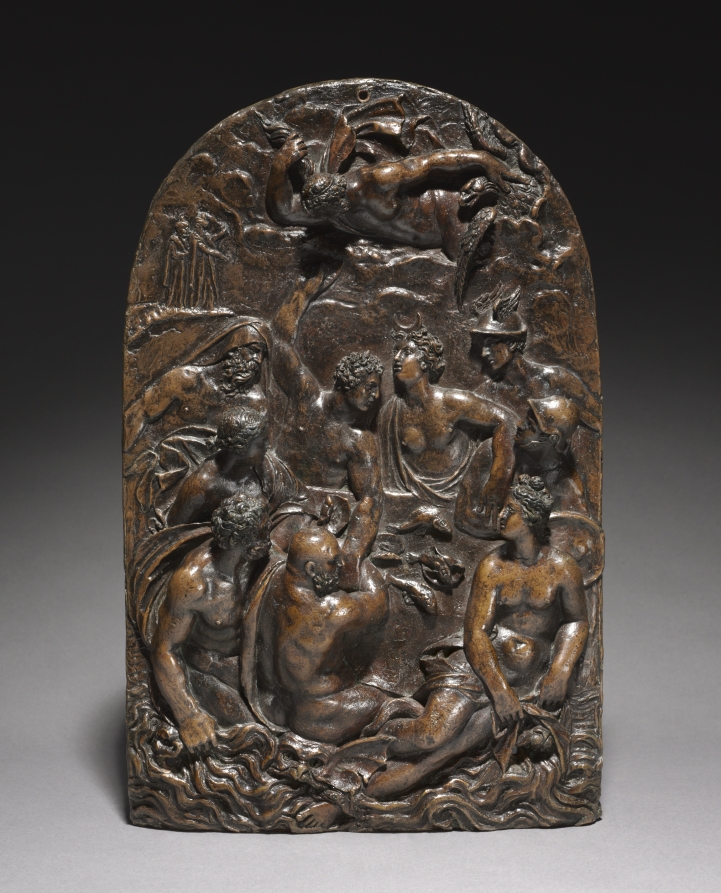
Urban Form: Feast of the Gods
Geometric Integrity of the Subject: A Study in Negative Space and Tectonic Drape
The subject, *Rock in the form of a fantastic mountain* (a Lingbi scholar’s stone), presents a radical departure from representational sculpture. Its geometric integrity is not found in symmetry or classical proportion, but in a rigorous system of voids, cantilevers, and compressive forces. The stone’s defining characteristics—the “thinness” (shou), “wrinkles” (zhou), “leakage” (lou), and “perforations” (tou)—translate directly into a language of architectural drape. For the 2026 executive silhouette, this mandates an **Oversized** construction that prioritizes volume as a container for negative space, rather than as a mere expansion of fabric. The stone’s “leakage” and “perforations” create a network of internal cavities. These are not random holes; they are precisely carved passages that allow light to puncture the mass. In garment construction, this principle dictates a silhouette defined by strategic cutouts, deep armhole scoops, and asymmetric hemlines that break the solid block of fabric. The **Slate** color—a deep, charcoal grey with undertones of blue-grey—serves as the perfect medium for this light-play. It absorbs ambient light, creating a matte, non-reflective surface that emphasizes the shadows cast by the garment’s internal voids.Structural Poetics: The Tectonic Fold as Urban Calligraphy
The “wrinkles” (zhou) on the stone’s surface are not imperfections; they are geological calligraphy, recording the pressure of time. For the urban executive, this translates into a fabric language of controlled, intentional creasing. We are not discussing soft draping. This is **tectonic draping**—where heavy-weight wool, bonded cashmere, or structured cotton canvas are manipulated into permanent, angular folds. The folds must mimic the stone’s “fantastic mountain” profile: sharp, faceted, and asymmetrical. The silhouette is **Oversized** but not amorphous. It is a controlled volume. The shoulders are extended and squared, but the sleeve head is dropped to create a continuous, monolithic line from neck to wrist. The torso is cut with a single, deep pleat that runs from the shoulder blade to the hem, echoing the stone’s vertical fissures. This pleat is not a functional allowance for movement; it is a structural element, a “wrinkle” that defines the garment’s internal logic. The back panel is cut longer than the front, creating a subtle train that mimics the stone’s cantilevered base—a visual anchor that grounds the otherwise floating volume.Urban Materiality: The Mineralization of Fabric
The *Seated luohan with a servant* introduces a counterpoint: the human figure as a vessel for spiritual weight. The luohan’s robes are depicted as “rock strata”—layered, heavy, and immobile. This informs our material choice. The fabric must possess a **mineral quality**. We reject fluid silks or lightweight linens. The primary fabric is a double-faced wool crepe in **Slate**, weighing 420 grams per square meter. This weight allows the fabric to hold a crease and fall with the density of stone. The internal structure is reinforced with a bonded interlining that mimics the stone’s compressive strength. The garment’s seams are not hidden; they are exposed and top-stitched with a contrasting **Slate** thread (one shade lighter), creating a visual “crack” that references the stone’s surface fissures. The lining is a matte cupro in a slightly lighter **Slate** tone, providing a subtle internal contrast that is only visible when the garment is in motion or when the wearer gestures.Color Analysis: Slate as a Chromatic Void
**Slate** is not a neutral. It is a chromatic void that absorbs and redefines its environment. In the context of the scholar’s stone, it represents the primordial darkness from which the mountain emerges. For the 2026 executive, **Slate** functions as a statement of power through absence. It does not compete with the urban landscape; it absorbs it. The color is achieved through a blend of black, grey, and a trace of indigo, giving it a cold, mineral undertone that shifts under different lighting conditions—from a flat charcoal in overcast daylight to a deep, almost blue-black under artificial office lighting.Silhouette Application: The “Fantastic Mountain” Coat
The definitive garment from this research is the **Fantastic Mountain Coat**. It is a single-breasted, floor-length coat with an oversized, dropped shoulder. The key structural elements are: - **The Void:** A single, large cutout on the left side of the chest, framed by a bonded edge. This cutout is not a pocket; it is a negative space that allows the lining to be glimpsed, mimicking the stone’s “leakage.” - **The Cantilever:** The right sleeve is cut in a single, continuous piece with the body panel, creating a seamless, monolithic line from shoulder to hem. The left sleeve is set in with a deep, angular pleat that runs from the bicep to the cuff. - **The Strata:** Three horizontal seams across the back, each spaced 15 centimeters apart, create a layered, geological effect. These seams are top-stitched and slightly puckered to mimic the stone’s “wrinkles.”Conclusion: The Executive as Living Sculpture
The 2026 executive silhouette, as defined by the *Feast of the Gods* research, is not about comfort or ease. It is about the **mineralization of the human form**—the transformation of the wearer into a living sculpture that occupies space with the same tectonic authority as a Lingbi stone. The **Oversized** cut is not a trend; it is a philosophical statement. It rejects the efficiency of the tailored suit in favor of a volume that commands attention through its deliberate, structural emptiness. The **Slate** color is the final seal—a color that speaks of deep time, urban concrete, and the quiet power of the void. This is the uniform for the executive who understands that true presence is not about filling space, but about shaping it.
Technical Insight
Technical Insight: Translating Slate palettes into Oversized silhouettes for the modern metropolis.