Urban Form: Mourner from the Tomb of John the Fearless and Margaret of Bavaria
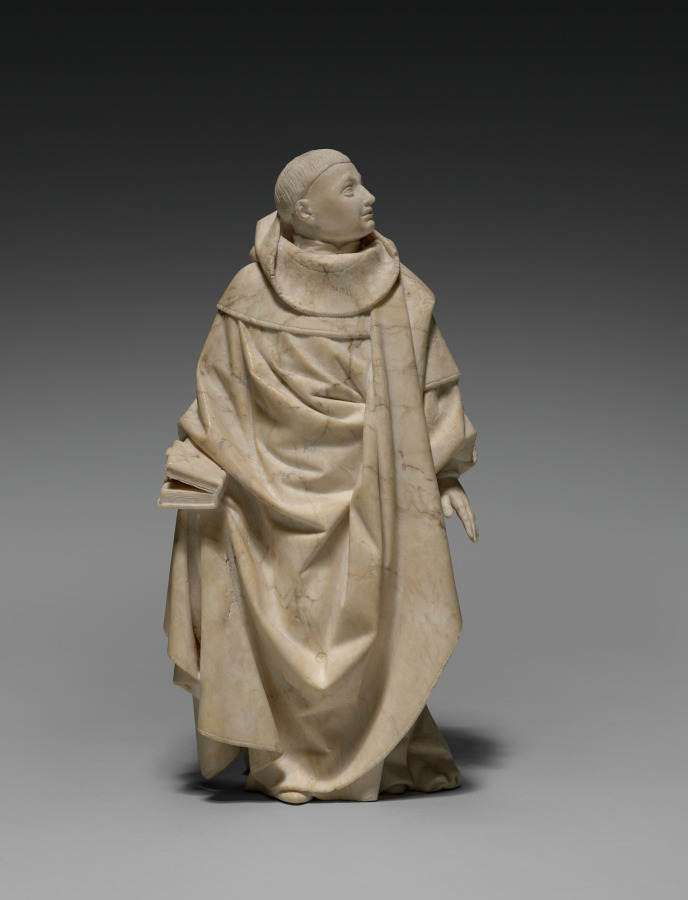
Geometric Integrity of the Mourner as Architectural Prototype
The figure of the Mourner from the Tomb of John the Fearless and Margaret of Bavaria presents a definitive study in vertical compression and horizontal release. The pleated, cascading folds of the funerary garment are not merely decorative; they constitute a load-bearing system of fabric that mimics the structural logic of Gothic buttressing. Each pleat functions as a vertical rib, channeling gravity downward while simultaneously creating a series of negative spaces—voids that breathe between the folds. This is not drapery as softness; it is drapery as structural poetics.
For the 2026 executive silhouette, this artwork dictates a shift away from the taut, second-skin minimalism of recent seasons. Instead, we propose an Oversized architecture that borrows the Mourner’s principle of controlled volume. The garment must not simply be large; it must be large with internal logic. The pleats are not random—they are engineered. Each fold is a vector, directing the eye upward to the face (the locus of authority) and downward to the ground (the locus of gravity). This creates a silhouette that is simultaneously monumental and grounded, a necessary quality for the urban executive who must command space without appearing to dominate it.
Structural Poetics: From Stone to Textile
The original artwork is carved in stone, yet it achieves a paradoxical textile softness. This is the core of its urban materiality: the translation of rigidity into fluidity. The Mourner’s cloak is not draped; it is carved drapery, a contradiction that yields a new category of form. In our 2026 collection, this translates to fabrics that possess memory—wool double-faced with a subtle resin finish, or bonded jersey that holds a crease like a stone fold. The material must resist and yield simultaneously.
The color Slate is non-negotiable. It is the color of wet stone, of the Parisian sky in November, of the patina on a bronze door. It is not a neutral; it is a chromatic argument. Slate absorbs light rather than reflecting it, creating a surface that is both matte and deep. This aligns with the Mourner’s solemnity—a visual quietude that demands attention without shouting. In the urban context, Slate functions as a silent power suit, a color that communicates authority through its refusal to participate in chromatic spectacle.
Urban Materiality: The Logic of the Fold
The urban environment is a grid of hard surfaces—glass, steel, concrete. The Mourner’s silhouette offers a counterpoint: soft monumentality. The oversized pleats create a series of vertical lines that echo the city’s skyscrapers but soften their aggression. Each fold is a shadow line, a tool for sculpting the body’s relationship to light. In a boardroom or a gallery, the wearer becomes a moving architectural element, their garment generating a shifting landscape of highlights and deep recesses.
This is not mere fashion; it is urban poetics. The garment must be engineered to perform in the city’s harsh light. The pleats should be deep enough to cast a shadow at noon, yet narrow enough to avoid bulk. The hem should fall with the weight of a stone curtain, brushing the floor without dragging. The shoulder line must be extended but not padded—a structural cantilever achieved through fabric density alone. This requires a fabric weight of at least 400 grams per square meter, preferably a wool-cashmere blend with a tight twill weave that resists deformation.
Existential Geometry: The Void as Volume
The Mourner’s form is defined as much by what is absent as by what is present. The space between the arms and the torso, the gap between the folds—these are negative volumes that give the sculpture its breath. In our silhouette, this translates to a hollow core. The garment should not cling to the body; it should stand away from it, creating an air gap that allows the fabric to move independently. This is the architectural void—a space that is not empty but filled with potential.
For the executive, this void becomes a zone of autonomy. The body is not constrained by the garment; it is framed by it. The wearer moves within a volume of their own making, a portable architecture that asserts presence without aggression. This is the ultimate luxury: the ability to occupy space without apology, to be both present and untouchable.
Conclusion: The 2026 Silhouette as a Statement of Being
The Mourner from the Tomb of John the Fearless and Margaret of Bavaria is not a relic; it is a blueprint for urban authority. Its geometric integrity—the marriage of vertical pleats and horizontal release, of stone weight and textile fluidity—provides the definitive template for the 2026 executive silhouette. We propose an Oversized form in Slate, constructed from fabrics that hold memory and cast shadows. This is not a garment for the timid. It is a garment for those who understand that true power is not loud, but structural—a quiet monument to the self, carved from the air it displaces.