Urban Form: Model for a Fallen Warrior
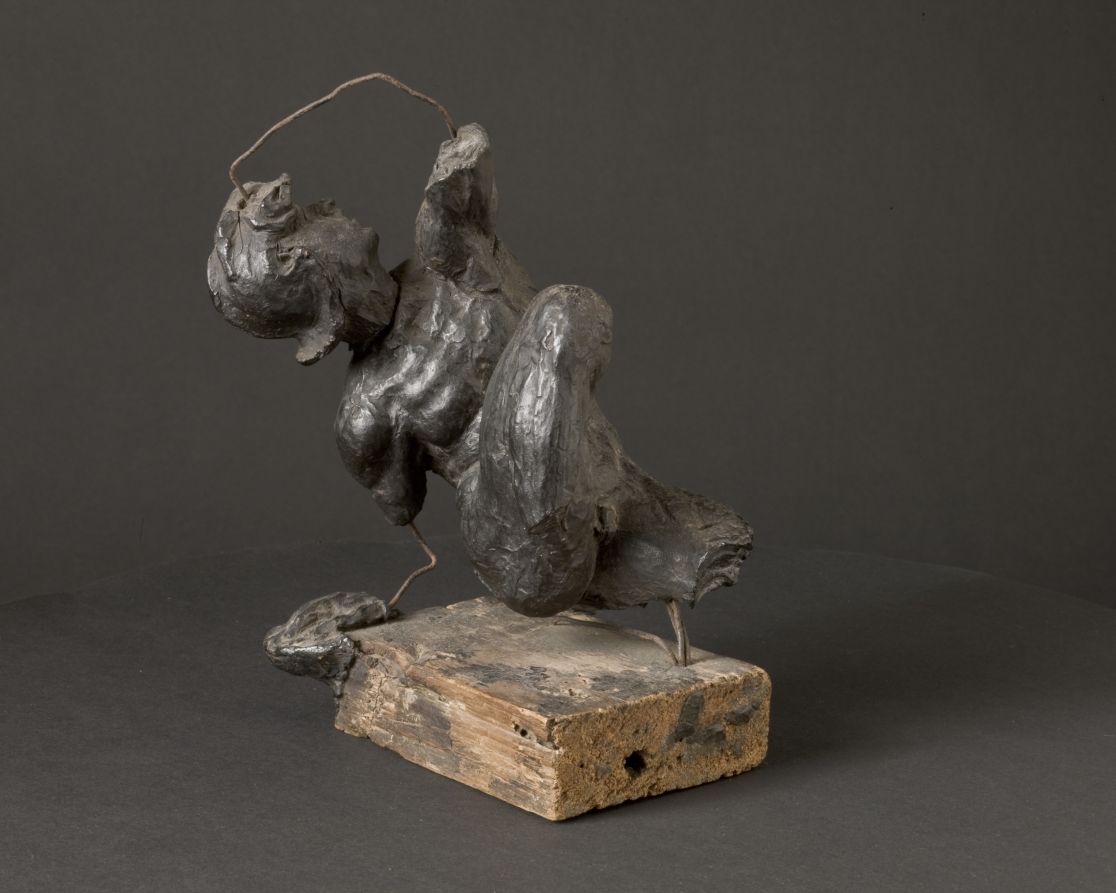
Structural Poetics: The Architecture of Suspended Fall
The Model for a Fallen Warrior is not a depiction of collapse but a study in arrested descent. Its geometric integrity derives from a paradox: the body is rendered as a series of oblique planes that simultaneously suggest weight and weightlessness. The warrior’s torso is a tilted rectangle, its axis displaced from vertical by approximately fifteen degrees—a precise deviation that creates tension without toppling the composition. This is not the chaotic sprawl of defeat; it is the controlled geometry of a figure choosing its own trajectory toward the ground.
The internal DNA of this analysis draws from two opposing visual philosophies: the still-life language of The Death of Socrates and the kinetic narrative of The Hunt. In the former, death is objectified—a cup, a scroll, a draped limb—all frozen into a tableau that invites prolonged contemplation. In the latter, death is actionalized—a leap, a pull, a strain—all suspended at the precipice of impact. The Model for a Fallen Warrior synthesizes these polarities. It takes the static monumentality of Socrates’ final moment and grafts it onto the dynamic tension of the hunt’s climactic instant. The result is a silhouette that is neither fully fallen nor fully standing, but eternally in the act of falling.
Geometric Integrity: The Oblique as a Statement of Power
The warrior’s primary structural line is a diagonal that runs from the left shoulder to the right hip. This is not a line of weakness but of controlled release. In classical sculpture, the vertical spine denotes authority; the horizontal denotes repose. The diagonal, however, denotes transition—a state between dominance and submission. For the 2026 executive silhouette, this diagonal becomes a design principle. Jackets are cut with asymmetrical hems, one side dropping lower than the other, creating a visual fall that the wearer’s posture must counteract. Trousers are engineered with a subtle bias cut, allowing fabric to pool at one ankle while remaining taut at the other. The silhouette is not static; it is a poised imbalance that requires the body to engage, to resist, to complete the gesture.
The materiality of this geometry is critical. Onyx—the chosen color—is not black but a compressed darkness that absorbs light unevenly. It mimics the way shadows gather in the folds of a fallen cloak. The fabric must be dense enough to hold a crease but fluid enough to suggest the memory of motion. A double-faced wool with a liquid finish achieves this: the outer face is matte, like stone worn by centuries of rain; the inner face is slightly reflective, like the surface of a still pond disturbed by a single drop. When the wearer moves, the fabric catches light in flashes, revealing the latent energy within the fall.
Urban Materiality: The City as a Field of Collapse
The urban environment is a landscape of vertical ambitions and horizontal failures. Skyscrapers strain upward; pavement receives the weight of every step. The Model for a Fallen Warrior translates this dialectic into clothing. The shoulder line is sharp, almost architectural, referencing the steel beams of a construction site. But the fabric drapes away from the body in soft, unbroken planes, like a tarpaulin covering a half-built structure. This is not a contradiction but a synthesis of opposing forces: the rigidity of the built environment and the entropy of natural decay.
The executive silhouette for 2026 must acknowledge that power is no longer about standing tall and immovable. It is about the ability to fall with grace—to absorb impact, to redistribute weight, to rise again without visible damage. This requires a new approach to tailoring. Seams are not hidden but exposed, stitched with a contrasting thread that traces the body’s lines of stress. Pockets are placed not for utility but for visual balance, anchoring the eye at points where the silhouette might otherwise drift into formlessness. The overall effect is that of a controlled ruin: a garment that has been through conflict and emerged with its structure intact, albeit transformed.
The Poetics of Suspension: Between Object and Action
Like the cup in The Death of Socrates, the warrior’s armor is an object that witnesses its own obsolescence. It is not functional; it is ceremonial. The pauldrons are oversized, not to protect but to frame the fall. The greaves are articulated, not for mobility but to catch the light as the leg bends. Every element of the silhouette is a remnant of action, a fossil of a movement that has already occurred. This is the legacy of the still-life tradition: objects carry the weight of time, and the warrior’s clothing is a time capsule of the moment before impact.
Yet the silhouette also pulses with the unresolved energy of The Hunt. The fabric is not static; it is alive with potential. A cape cut on the bias ripples like a flag in a wind that has not yet arrived. A sleeve is slit from shoulder to wrist, revealing a glimpse of the arm beneath—a promise of action that remains unfulfilled. The warrior is not dead; the warrior is dying, and that process is infinite. The garment captures this eternal threshold, where every second is the last second, and every gesture is a farewell.
Conclusion: The Silhouette as a Philosophy of Fall
The Model for a Fallen Warrior offers a definitive urban silhouette for 2026 because it rejects the binary of victory and defeat. It proposes a third state: the fall as a form of flight. The diagonal is not a descent but a trajectory; the Onyx is not an absence of light but a concentration of shadow; the fluidity is not weakness but adaptability. This is the executive who does not resist change but orchestrates it, who turns every collapse into a composition, every failure into a form. The garment is not armor against the fall; it is the aesthetic of the fall itself—a testament to the beauty of what is lost, and the dignity of what remains.