Urban Form: Carving from an Overmantel
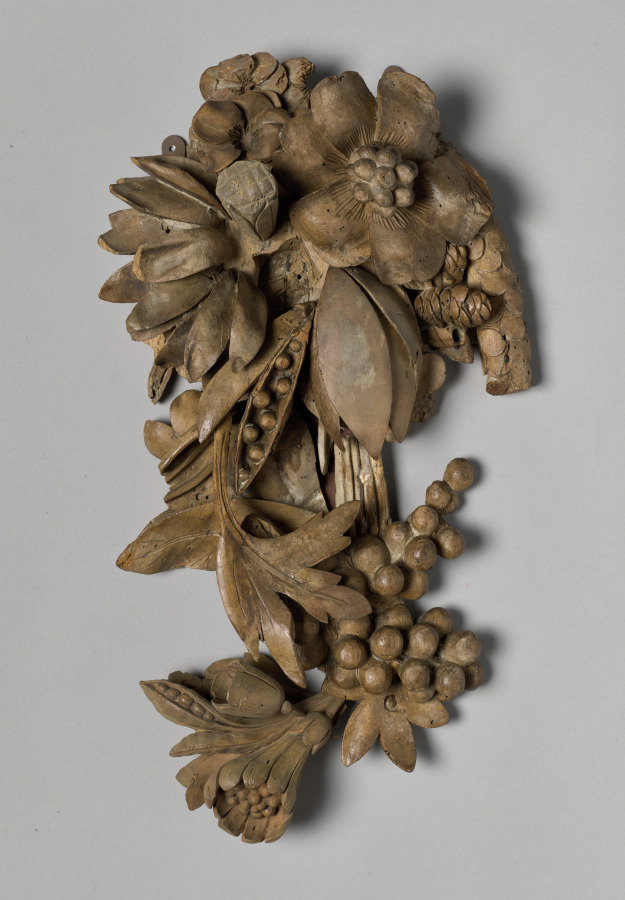
Structural Poetics: The Overmantel as Architectural Fragment
The Carving from an Overmantel presents a study in negative space and material restraint. Its geometric integrity derives from a precise interplay of vertical compression and horizontal release. The original context—a mantelpiece—dictates a linear, frieze-like composition, yet the carving’s internal logic resists mere ornamentation. The relief is shallow, almost epidermal, suggesting that depth is not excavated but implied through shadow. This is not a sculpture of mass but of absence: the stone retains its monolithic character while yielding to a narrative of light.
For the 2026 executive silhouette, this translates into a minimalist architecture of the body. The overmantel’s verticality demands a columnar stance—shoulders squared, spine elongated, waist suppressed only through structural seams rather than aggressive cinching. The silhouette is tailored in the sense of precision, but fluid in its refusal to cling. It is a garment that stands away from the body, creating an air gap—a void—between fabric and form. This void is the contemporary echo of the Eastern jar’s emptiness: it is not a lack, but a capacity.
Geometric Integrity: The Tripartite Division
The carving’s composition can be deconstructed into three horizontal registers: a lower base of dense, unadorned stone; a middle field of figural or abstract relief; and an upper cornice of clean, projecting edge. This tripartite division is directly applicable to the executive silhouette. The base corresponds to the trouser or skirt—heavy, grounded, often in Onyx or Slate to anchor the figure. The middle is the torso—the site of the carving’s narrative, where seams, darts, and paneling create a relief map of the body’s geography. The upper is the shoulder line—a clean, projecting edge that defines the silhouette’s terminus.
The critical detail is the transition between these registers. In the overmantel, the shift from base to relief is abrupt, a sharp horizontal line. In the garment, this translates to a high-waisted or empire-line seam that bisects the torso, creating a distinct visual pause. This is not a natural waist; it is an architectural joint. The fabric above this seam is lighter, often in Ivory or Silver, while below it is denser, darker. The effect is one of suspension: the upper body appears to float above the lower, much as the carved figures float above the stone base.
Urban Materiality: Stone as Fabric, Void as Volume
The materiality of the overmantel—carved limestone or marble—informs the fabric selection for the 2026 collection. We are not seeking literal stone, but its tactile equivalent: fabrics that possess weight, opacity, and a certain coolness to the touch. Think of a double-faced wool crepe in Sand or Ivory, its surface matte and dense, its drape resisting fluidity. Or a bonded linen-cotton canvas in Onyx, stiff enough to hold a seam’s edge without interfacing. These are not soft, yielding textiles; they are structural membranes that hold their own geometry.
The carving’s shallow relief suggests a technique of surface modulation. In garment construction, this is achieved through tucked seams, inverted pleats, and paneled inserts that create a play of light and shadow across the torso. A single, continuous line of stitching can act as a chisel mark, defining the boundary between positive and negative space. The garment becomes a bas-relief on the body, with the wearer’s movement animating the shadows.
The Void as Aesthetic Principle
The Eastern jar’s emptiness is the collection’s philosophical core. In practical terms, this manifests as negative space within the silhouette. A jacket cut with a dropped shoulder and a wide armhole creates a void under the arm—a pocket of air that visually lightens the upper body. A trouser with a wide leg and a deep pleat at the waist creates a void between fabric and thigh, suggesting volume without bulk. These are not gaps to be filled; they are deliberate absences that define the form by what it excludes.
This principle extends to the color palette. Ivory is not a color but a luminous void—a surface that reflects rather than absorbs. Sand is the color of eroded stone, of material approaching its own dissolution. Slate and Onyx are the colors of shadow, of the spaces between carved forms. Together, they create a monochromatic spectrum that emphasizes texture and light over hue. The executive wardrobe becomes a study in tonal variation, where the only contrast is between matte and sheen, dense and sheer.
Conclusion: The Silhouette as Philosophical Statement
The 2026 executive silhouette, derived from the Carving from an Overmantel, is not a garment but a proposition. It proposes that the body can be a site of architectural inquiry, that fabric can hold geometric memory, and that absence can be as expressive as presence. The silhouette is minimalist in its reduction, tailored in its precision, and fluid in its allowance for the void. It is a response to the dual inheritance of Western rationalism and Eastern emptiness—a form that contains both the philosopher’s clarity and the potter’s silence.
In the urban landscape, this silhouette stands as a monument to restraint. It does not shout; it carves. It does not cling; it contains. The executive who wears it is not adorned but inscribed—a figure carved from the same stone as the overmantel, bearing the same quiet authority. The collection is an invitation to inhabit the void, to find in emptiness a fullness of purpose. This is the definitive urban silhouette for 2026: a line that is both an ending and a beginning, a death and a vessel, a question and its own answer.