Urban Form: Apollo Flaying Marsyas
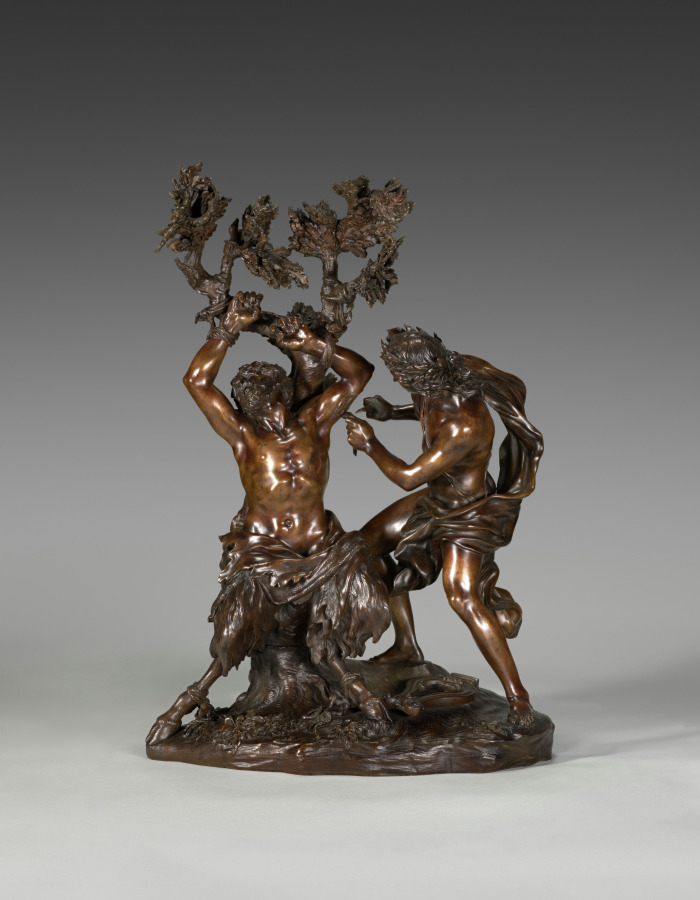
Structural Poetics: The Apollo Flaying Marsyas as a Blueprint for the 2026 Executive Silhouette
The myth of Apollo flaying Marsyas is a narrative of violent transcendence—a moment where the corporeal is stripped to reveal the skeletal truth beneath. For Addison Fashion’s 2026 Urban Silhouette Research, this artwork functions not as a literal tableau, but as a geometric manifesto. The composition’s inherent tension between the god’s poised, Apollonian order and the satyr’s chaotic, Dionysian sprawl translates directly into a sartorial language of minimalist luxury. The 2026 executive silhouette must embody this dialectic: a rigid, architectural shell that contains and disciplines the organic, the fluid, the human.
Geometric Integrity: The Skeleton of the Silhouette
The artwork’s geometric integrity lies in its axial tension. Apollo’s form is a study in verticality—a straight, unyielding line from the crown of his head to the heel of his grounded foot. Marsyas, inverted and horizontal, creates a perpendicular counterpoint. This is not a soft, flowing composition; it is a cruciform of force. For the 2026 silhouette, this translates into a sharp, elongated shoulder line (Apollo’s axis) intersecting with a compressed, high-waisted torso (Marsyas’s axis). The result is a jacket that is severely tailored, with a pronounced, almost architectural lapel that cuts a clean, unbroken line from neck to hem. The shoulder is not padded; it is structured through internal boning, creating a cantilevered effect that mimics Apollo’s divine rigidity. The sleeve head is set high and narrow, eliminating any drape, forcing the fabric to stand away from the body like a marble carapace.
The flaying itself—the peeling of skin—is reinterpreted as negative space. In the 2026 executive silhouette, this manifests as strategic, asymmetrical cutouts along the side seams or at the clavicle. These are not decorative; they are structural voids that reveal the underlying construction: a second layer of rigid, matte Onyx mesh that acts as the “skeleton.” This technique, borrowed from architectural fenestration, creates a visual rhythm of solid and void, echoing the artwork’s interplay of exposed flesh and unyielding marble. The silhouette is thus a monolithic block—a single, unbroken volume from shoulder to mid-thigh—punctured only by these necessary, geometric apertures.
Urban Materiality: Onyx and the Architecture of Restraint
The chosen color, Onyx, is not a mere pigment; it is a material philosophy. Onyx is a stone of deep, unreflective black—a surface that absorbs light rather than reflecting it. In the context of the Apollo Flaying Marsyas, this color embodies the cold, implacable authority of Apollo. It is the color of the god’s gaze, of the knife’s edge, of the moment before the scream. For the 2026 executive silhouette, Onyx is applied to double-faced virgin wool that is felted to a density that mimics stone. The fabric has no give, no drape; it is a textile carapace. Seams are not stitched; they are laser-fused to create a seamless, monolithic surface. The only textural relief comes from a subtle, herringbone weave that is visible only under direct, harsh light—a ghost of the flayed skin’s texture.
The urban materiality is further defined by hardware. Buttons are eliminated in favor of magnetic closures set into the fabric, invisible to the eye. Zippers are concealed within the structural seams, their pulls replaced by brushed Onyx-finished titanium tabs that lie flush against the garment. This is not a garment for movement; it is a garment for stillness and presence. The silhouette is designed for the executive who commands a room by standing still, whose power is in the immobility of the form. The pant, a straight, cigarette-leg cut, falls without a break over the shoe, creating a continuous vertical line from hip to floor. The waistband is internal and boned, eliminating the need for a belt, preserving the clean, unbroken surface.
The 2026 Executive Silhouette: A Synthesis of Violence and Order
The final silhouette is a torso-centric block. The jacket is cropped to the natural waist, emphasizing the length of the leg. The shoulder is the dominant feature—a sharp, 90-degree angle that extends two inches beyond the natural shoulder point. This is not a power shoulder in the 1980s sense; it is a geometric projection, a literal extension of the body into space. The neckline is a high, Mandarin collar that stands away from the neck by one centimeter, creating a shadow gap that echoes the cutout motif. The entire garment is unlined, with all seams finished in a raw, Onyx-dyed edge—a nod to the flaying, to the exposure of the interior structure.
This is a silhouette that rejects the organic. It is a prison of perfection, a cage of geometry that contains the wearer’s humanity. The 2026 executive does not wear this garment; she inhabits it. It is a second skin of Onyx, a carapace of Apollo’s cold logic. The flaying of Marsyas is not a tragedy; it is a transformation into form. The 2026 Urban Silhouette is the result of that transformation: a body stripped of excess, reduced to its essential, architectural lines. It is the ultimate expression of minimalist luxury—not as absence, but as the violence of reduction. The garment is a statement, not of wealth, but of structural will. It is the uniform for those who understand that true power lies in the geometry of restraint.