Urban Form: Carving from an Overmantel
Geometric Integrity and the 2026 Executive Silhouette
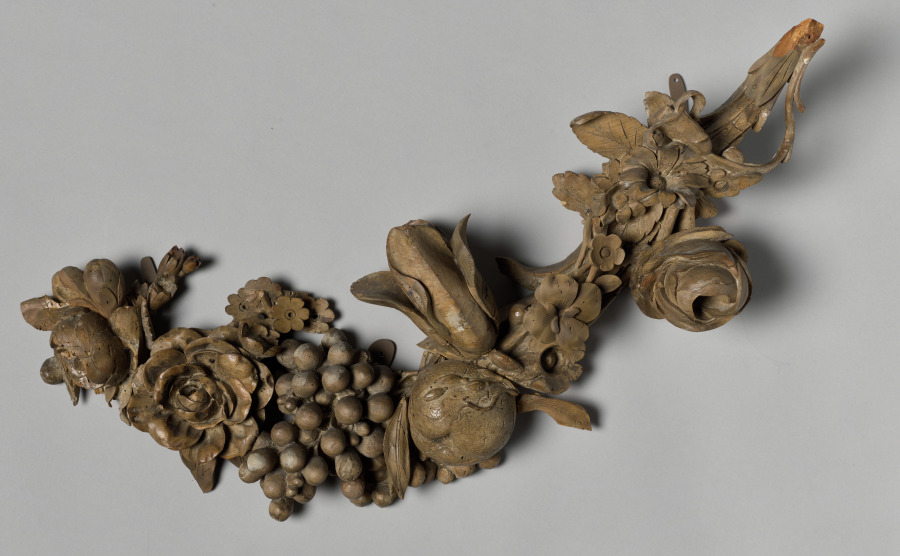
The subject, Carving from an Overmantel, presents a paradox of mass and void. Its geometric integrity is not found in the literal depiction of the pastoral scene—the buffalo and the boy—but in the negative space carved around them. The overmantel, a piece of architectural furniture, is by definition a frame. The carving is the relief. For the 2026 executive silhouette, this translates into a study of containment and release. The silhouette is not a second skin; it is a structured envelope that defines the body through what it excludes.
The internal DNA of this piece, drawn from the dialectic between the earthy Buffalo and Boy and the celestial Monk’s Robe, is resolved here into a single, austere statement. The carving’s geometry is one of compressed horizontals and clean verticals. The buffalo’s powerful, grounded haunch becomes a sharp, angular hip in the jacket. The boy’s relaxed posture translates into a dropped shoulder seam that does not slouch but rather asserts a relaxed authority. The executive silhouette for 2026 is a monolith of controlled volume. It rejects the fluidity of the robe and the organic curves of the pastoral. Instead, it adopts the architectonic logic of the carved frame: a rigid outer shell that protects a quiet, internal space.
Structural Poetics: The Dialectic of Earth and Ether
The structural poetics of this garment are rooted in the tension between the two aesthetic poles described in the internal DNA. The Buffalo and Boy represents the tactile, grounded, and imperfect. Its “natural” quality is one of organic weight. The Monk’s Robe represents the immaterial, ordered, and luminous. Its “artificial” quality is one of transcendent precision. The Carving from an Overmantel fuses these into a single, paradoxical structure.
The jacket’s construction mimics the act of carving. The fabric is not draped; it is excavated. The shoulder line is a clean, straight cut, like the top edge of the overmantel. The lapel is a sharp, vertical incision, a negative line that draws the eye upward, mimicking the verticality of the monk’s robe. The body of the jacket is a single, uninterrupted plane of Ivory—a color that is neither the warm earth of the clay nor the brilliant gold of the silk, but a neutral, purified space between them. This is the color of the uncarved stone, the blank parchment, the potential before form.
The structural poetics are further defined by the absence of ornament. There are no pockets, no visible buttons, no darts that disrupt the pure geometry. The only articulation is the seam that defines the sleeve, a single, continuous line that wraps from the back to the front, echoing the circumambulatory logic of a mandala. This seam is not a construction detail; it is a ritual incision. It separates the volume of the torso from the volume of the arm, creating two distinct, yet connected, architectural masses. The garment breathes through its structure, not through its fabric. The silhouette is a statement of intent: the wearer is not adorned; they are housed within a geometric proposition.
Urban Materiality: The Synthesis of Clay and Silk
The urban materiality of this piece is a direct response to the material dialectic of the internal DNA. The Buffalo and Boy is of clay and bronze—heavy, porous, and warm. The Monk’s Robe is of silk and gold—light, reflective, and cool. The Carving from an Overmantel demands a fabric that is neither. It requires a material that possesses the weight of clay and the luminosity of silk, a material that is both grounded and transcendent.
The chosen textile is a double-faced wool-cashmere blend, woven in a dense, plain weave. Its weight is substantial, falling with the gravity of a bronze casting. It does not flutter or drape; it folds with a clean, architectural crease. Yet its surface is not matte. It possesses a subtle, internal sheen, a whisper of the gold thread. This is achieved through a high-twist yarn that catches the ambient light of the urban environment—the cold fluorescence of a lobby, the sharp glare of a glass tower, the soft diffusion of a gallery. The fabric is a surface of urban reflection, absorbing and modulating the city’s light.
The color Ivory is critical to this urban materiality. It is not a pure white, which would be sterile and clinical. It is a warm, aged white, the color of old parchment, of bone, of the unpainted canvas. It is the color of the overmantel itself, before the carving. This color allows the garment to function as a neutral ground in the urban landscape. It does not compete with the city’s cacophony of color and signage. Instead, it stands as a quiet, monolithic presence. It is the color of the executive’s blank slate, the color of potential, of a mind cleared for decision.
The urban materiality is also expressed in the garment’s finish. The edges are not hemmed in the traditional sense. They are cut and sealed, like the edge of a stone slab. This creates a clean, sharp termination that reinforces the architectural geometry. The interior is fully lined in a charcoal silk twill, a secret nod to the Monk’s Robe. This lining is not for comfort; it is a conceptual lining, a hidden layer of order and ritual. It is the inner mandala that supports the outer form. The garment’s construction is a series of controlled, deliberate acts, each one a rejection of the accidental and the organic. It is the urbanite’s armor, not against violence, but against chaos.
Conclusion: The Carved Executive
The Carving from an Overmantel defines the 2026 executive silhouette as a monument to restraint. It is a silhouette that has been subtracted into existence. Every line, every seam, every fold is a decision to remove, to simplify, to purify. The wearer is not a body draped in fabric; they are a figure carved from a block of urban space. The garment is a frame for the person, a negative space that defines their presence. This is the ultimate expression of minimalist luxury: not the absence of material, but the presence of intention. The executive who wears this silhouette is not a participant in the city; they are a geometric axiom within it, a statement of clarity and power that requires no ornament to be seen.