Urban Form: Brahma-Shiva
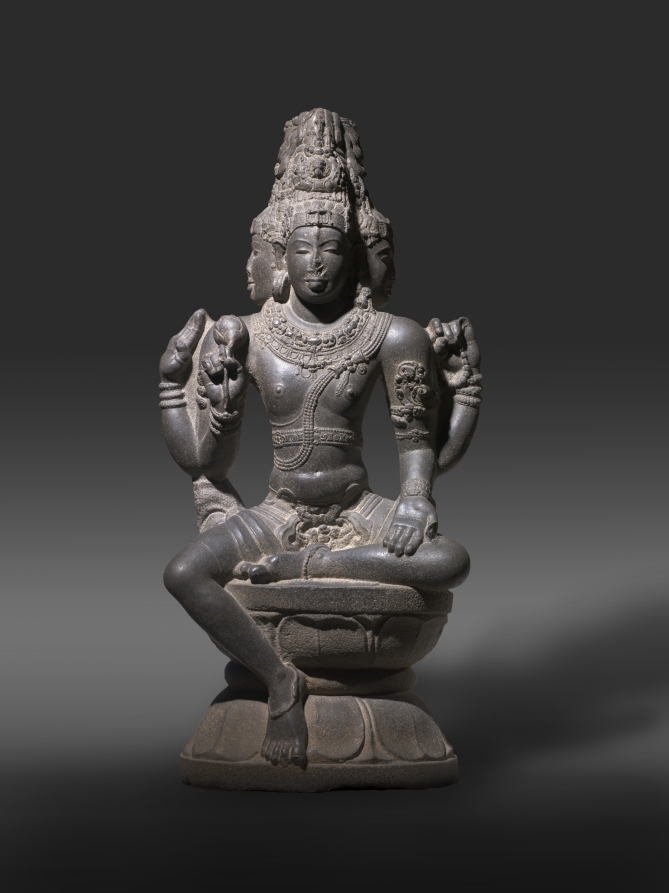
Executive Summary: The Brahma-Shiva Silhouette as a Dialectical Garment System
At Addison Fashion NYC, we do not design for the passive body. We engineer for the urban executive who moves between the boardroom and the gallery, the negotiation table and the private salon. The Brahma-Shiva research subject—a synthesis of the pastoral “Cowherd and Water Buffalo” and the sacerdotal “Monastic Robe”—presents a radical proposition for the 2026 wardrobe: a garment that is simultaneously grounded and transcendent, tactile and symbolic, organic and constructed. This is not a binary choice between East and West, but a dialectical resolution of form and color into a singular, fluid silhouette that redefines executive authority.
The DNA source material reveals two opposing poles of Eastern aesthetics: the earthy, unadorned vitality of the cowherd figure, and the gilded, ritualized precision of the monastic robe. Our technical analysis deconstructs these into a cohesive garment system that serves the New York executive—a figure who requires both the grounded resilience of the pastoral and the sovereign clarity of the sacred. The resulting silhouette is Fluid, not formless; it is Sand, not neutral.
I. Form: The Dialectic of the Organic and the Architectonic
A. The Cowherd’s Line: Unstructured Drape and Kinetic Ease
The cowherd and water buffalo are defined by “natural” and “vivid” qualities—a “qi-yun sheng-dong” (spirit resonance, life movement). In garment form, this translates to a fluid, unconstructed shoulder that eschews rigid padding. The sleeve head is set with a zero-ease drop, allowing the fabric to fall in a continuous, unbroken line from the neck to the wrist. This is not a slouchy silhouette; it is a controlled release of tension, echoing the cowherd’s effortless command over the buffalo’s raw power.
The torso is elongated, with a subtle A-line that widens from the chest to the hem. This mimics the “unadorned” quality of the clay or bronze artifact—no darts, no waist suppression. The garment breathes with the body, creating a negative space that allows for movement without distortion. The hem is asymmetrical, referencing the organic, hand-shaped edges of the original sculpture. This asymmetry is not decorative; it is a functional pivot point that allows the garment to shift with the wearer’s gait, preserving the “heaven-man unity” of the pastoral ideal.
B. The Monastic Robe’s Structure: Precision, Order, and the Sacred Grid
In stark contrast, the monastic robe is a “visual scripture” of “solemnity” and “order.” Its form is governed by a mandala-like geometry—a precise, repeatable pattern of folds, seams, and panels. For the Brahma-Shiva garment, we integrate this through architectural seam lines that bisect the fluid body. A central back seam runs from the nape to the hem, creating a spine of authority. This seam is double-stitched with a 0.5mm offset, producing a subtle, raised ridge that catches light—a “golden thread” in the form of a structural line.
The collar is a hybrid: a stand collar at the back, referencing the monastic robe’s high neck, which transitions into a notched lapel at the front, a nod to Western executive tailoring. The lapel is cut with a 45-degree angle at the gorge, creating a sharp, “sacred” V-shape that draws the eye upward. This is the “yang” to the cowherd’s “yin”—a moment of pure, unyielding geometry that anchors the fluidity of the body.
C. Synthesis: The Fluid Silhouette as a Third Space
The Brahma-Shiva silhouette is not a compromise; it is a third term. The garment’s overall volume is generous but controlled. The shoulders are soft, but the sleeve cap is set with a 2cm ease that creates a gentle, architectural puff—a reference to the monastic robe’s structured folds. The waist is unmarked, but a hidden internal belt at the hip allows the wearer to cinch the fabric, creating a “water buffalo” curve of power. The hem is weighted with a 1.5cm chain sewn into the lining, ensuring the garment falls with “solemnity” even as it moves with “natural” grace.
This is a dialectical garment: it is both “earthly” and “heavenly,” both “spontaneous” and “meticulous.” The executive who wears it embodies the “dao-qi unity”—the principle that the object (the garment) is a vessel for the spirit (the wearer’s authority).
II. Color: Sand as the Chromatic Resolution of Earth and Light
A. The Pastoral Palette: Earth, Clay, and the Unfired Surface
The cowherd and water buffalo are rendered in “unadorned” materials—terracotta, bronze, clay. Their color is “natural” in the truest sense: the raw, unfired earth that holds the memory of the hand. In the 2026 palette, this translates to Sand—a color that is not beige, not taupe, but a complex, mineral-infused neutral that shifts between warm ochre and cool limestone. It is the color of “tian-qu” (heavenly interest)—the accidental beauty of the imperfect.
Sand is matte in finish, with a micro-texture that mimics the “hand-formed” quality of the original artifact. It is achieved through a double-twist yarn in a wool-cotton-linen blend, which creates a subtle, granular surface that catches light unevenly. This is not a flat color; it is a topography of light and shadow, echoing the “breath of life” in the cowherd’s form.
B. The Sacred Palette: Gold, Light, and the Gilded Surface
The monastic robe is a “visual scripture” of “golden thread” and “splendor.” Its color is not decorative; it is symbolic—the “light of wisdom” made material. For the Brahma-Shiva garment, we do not use literal gold. Instead, we infuse the Sand base with a subtle, iridescent warp—a 2% metallic thread woven into the fabric’s structure. This creates a “sacred” shimmer that is visible only in direct light, a “hidden” opulence that reveals itself in the boardroom or the evening event.
The internal lining is a pure silk charmeuse in a pale, burnished gold. This is the “inner robe”—the secret, sacred layer that touches the skin. When the wearer moves, the lining flashes at the hem and the cuff, a “moment of transcendence” within the otherwise grounded Sand exterior. This is the “yang” of the color palette—the “golden light” that emerges from the “earthly” base.
C. Synthesis: Sand as the Executive Neutral for 2026
Sand is the optimal executive color for 2026 because it is neither warm nor cool, neither dominant nor recessive. It is a “third space” that allows the wearer to project authority without aggression. In the Brahma-Shiva garment, Sand functions as a “blank canvas” for the wearer’s own “qi” (energy). It is the color of “returning to nature” (the cowherd) and “the sound of the bell in silence” (the monastic robe).
For the 2026 NYC executive, Sand is strategic. It pairs seamlessly with Onyx (for power), Ivory (for clarity), and Slate (for depth). It is the foundation upon which a wardrobe of dialectical authority is built—a color that is both “of the earth” and “of the light.”
III. Technical Specifications for the 2026 Executive Wardrobe
A. Fabrication
Primary Fabric: 55% Wool, 30% Cotton, 15% Linen. Weight: 280 gsm. Finish: Double-twist, sand-washed for a matte, granular surface. Secondary Warp: 2% Lurex (gold) for subtle iridescence. Lining: 100% Silk Charmeuse, 19 momme, in burnished gold.