Minimalist
Slate
Urban Form: Woman in Profile
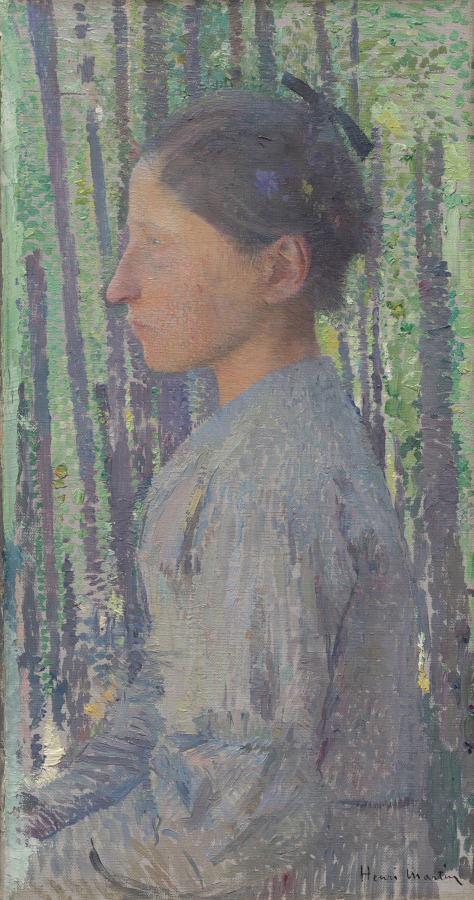
Structural Poetics: The Woman in Profile as Architectural Vessel
The subject—a woman in profile—is not a portrait but a diagram of existential tension. The silhouette, rendered in the cold precision of a graphite line, traces the cranial vault, the nasal bridge, the cervical curve, and the clavicular plane. This is not a face; it is a facade. The profile becomes a structural armature, a load-bearing wall that separates interior consciousness from exterior space. In the 2026 executive silhouette, this translates into a garment that does not drape but constructs. The shoulder line must be a cantilever, the neckline a lintel, the hem a datum line. The body is no longer a soft volume to be clothed but a rigid frame to be clad. The fabric—slate wool, perhaps, or a bonded jersey with the density of cast concrete—must hold its shape against the body’s movement, creating a negative space that echoes the void between the woman’s face and the viewer’s gaze.The Geometry of the Profile: From David’s Martyr to Morandi’s Vessel
The profile, when isolated from the full figure, becomes a pure geometric form. It is a contour that can be read as a series of arcs, tangents, and inflection points. In Jacques-Louis David’s *The Death of Socrates*, the philosopher’s profile is a heroic arc—the brow, the nose, the beard, the outstretched arm—all converging toward the chalice. The chalice is a cylinder, a perfect geometric solid, and Socrates’ hand is a vector pointing toward it. The geometry is teleological: every line leads to the object, and the object leads to death, and death leads to transcendence. The woman in profile, in this context, becomes a martyr to her own silhouette. Her garment must be a chalice—a vessel that holds the poison of urban ambition, the hemlock of corporate sacrifice. The collar is a rim, the torso a body, the hem a base. The fabric must be stiff enough to suggest containment, yet fluid enough to imply the final, fatal draught. In Giorgio Morandi’s *Still Life with Bottles and Jugs*, the profile is flattened, emptied of narrative. The bottles and jars are arranged in a shallow space, their contours overlapping, their colors muted to a monochrome of grays and ochres. There is no hand reaching for them; they exist in a state of pure, silent being. The woman in profile, viewed through Morandi’s lens, is not a subject but an object among objects. Her silhouette is a vessel, but it is empty. The garment must not signify; it must simply be. The slate color is not a mood but a material fact—a pigment that absorbs light, that refuses to reflect the viewer’s desire. The cut is not a statement but a structure: a seam that runs from the nape to the hem, a dart that folds the fabric into a three-dimensional volume, a pocket that is a negative space, a void within the void.Urban Materiality: The Fabric as a Field of Tension
The 2026 executive silhouette is not a soft, flowing form. It is a hard, geometric shell that negotiates the city’s aggressive grid. The urban environment is a series of right angles—glass facades, steel beams, concrete pavements, asphalt roads. The woman in profile must cut through this grid, not conform to it. Her garment must be a tool, not an ornament. The material must be heavy, dense, and resistant to the wind that tunnels between skyscrapers. Slate wool, with its tight weave and matte finish, offers a surface that is both protective and impenetrable. It is a fabric that does not yield to the body but rather imposes its own geometry. The shoulder is a sharp, angular block; the sleeve is a narrow cylinder; the pant leg is a straight, unbroken line. The silhouette is a series of parallel and perpendicular lines that echo the city’s own syntax. The structural poetics of this silhouette lie in the tension between the garment’s rigidity and the body’s organic curves. The profile, when viewed from the side, reveals a series of convex and concave forms—the curve of the breast, the hollow of the waist, the swell of the hip. The garment must not follow these curves; it must contradict them. The jacket is cut with a straight, boxy line that falls from the shoulder to the hip, creating a negative space between the fabric and the body. This is not a fit; it is a gap. The gap is the space of urban alienation, the distance between the self and the world. The fabric does not touch the body; it hovers, like a memory of a touch that never occurs.The Vessel and the Void: A Dialectic of Presence and Absence
The woman in profile, as a vessel, is both full and empty. She is full of the city’s noise, its data, its demands. She is empty of the self that might resist these forces. The garment, as a second skin, must mediate this dialectic. The slate color is the color of the city at dusk—the moment when the sky turns to concrete and the concrete turns to sky. It is a color that is neither warm nor cold, neither light nor dark. It is a color of suspension, of waiting. The silhouette is a question mark: a curve that rises from the ground, arcs through the air, and falls back to the earth. The hem is a horizon line, the collar a vanishing point. In David’s painting, the chalice is a symbol of sacrifice. In Morandi’s painting, the bottle is a symbol of silence. The woman in profile, dressed in slate, is both. She is the sacrifice of the self to the city’s logic, and she is the silence that remains after the sacrifice is complete. Her silhouette is a monument to this paradox. The garment is not a costume; it is a structure. It is a building that houses the void. The 2026 executive silhouette is not about fashion; it is about architecture. It is about the geometry of the profile, the materiality of the urban, and the poetics of the vessel. It is a silhouette that does not speak; it simply stands, in profile, against the light.
Technical Insight
Technical Insight: Translating Slate palettes into Minimalist silhouettes for the modern metropolis.