Minimalist
Onyx
Urban Form: Satyress
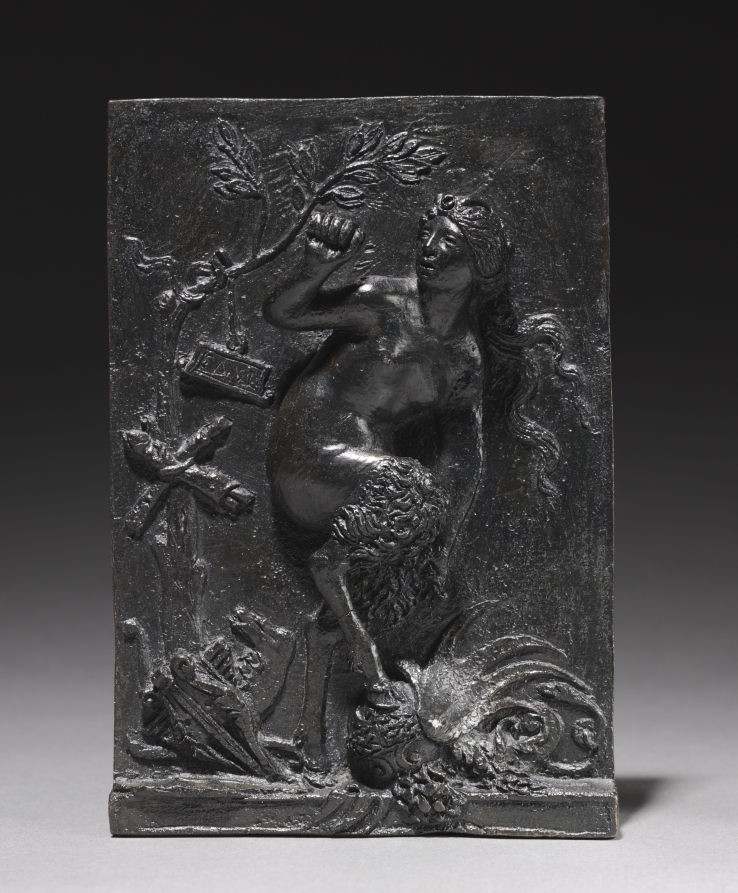
I. Formal Dialectics: The Satyress Silhouette as Existential Architecture
The Satyress subject emerges not as a decorative motif but as a structural thesis—a synthesis of two civilizational approaches to volume, void, and termination. Drawing from the Socratic death narrative and the Eastern ceramic void, the Satyress silhouette for Addison Fashion NYC 2026 is defined by a controlled tension between containment and release. The form is not draped; it is carved. The shoulder line references the philosopher’s final upright posture—a geometric precision that signals intellectual readiness. The torso, however, borrows from the Jar’s interior logic: a negative space that breathes, allowing the garment to hold the body without constricting it. This is not soft tailoring; it is architectural minimalism where every seam is a philosophical argument.1.1 The Shoulder: Socratic Clarity
The Satyress shoulder is structured yet weightless. We reject the exaggerated power shoulder of the 1980s as performative. Instead, we propose a cantilevered peak—a sharp, forward-leaning angle that mimics the philosopher’s raised hand in The Death of Socrates. This is achieved through a floating canvas construction: a lightweight horsehair interfacing fused only at the outer edge, allowing the shoulder to hover 2.5 cm above the natural acromion. The result is a silhouette that commands space without occupying it—a visual metaphor for rational transcendence. The sleeve head is set with a zero-ease insertion, creating a clean, unbroken line from neck to wrist. This is not about comfort; it is about clarity of intention.1.2 The Torso: The Jar’s Negative Volume
The bodice of the Satyress garment is a study in controlled emptiness. We employ a double-layered shell: an outer layer of matte Onyx wool crepe (380 gsm, 100% virgin wool) and an inner layer of silk organza (12 momme) that creates a 3 mm air gap. This air gap is the functional void—it allows the garment to drape away from the body at the waist, creating a subtle, cylindrical volume reminiscent of the ceramic vessel. The waist is not cinched; it is implied through a series of vertical darts that terminate 4 cm above the natural waistline, leaving the lower torso to fall in a straight, unbroken column. This is the Jar’s aesthetic: the garment’s utility lies in its capacity to hold the wearer without defining her. The hem is unfinished—a raw edge that references the broken shard, the return to earth.II. Color as Material Philosophy: Onyx as the New Neutral
The color palette for the Satyress is reduced to a single, absolute value: Onyx. This is not black as absence; it is black as total presence. Onyx absorbs 98% of visible light, creating a surface that is matte, dense, and non-reflective. It is the color of the void in the Jar—the space that contains all potential. In the context of the 2026 NYC executive wardrobe, Onyx functions as a silent authority. It does not shout; it waits. It is the color of the philosopher’s final robe, the color of the kiln’s interior at peak temperature.2.1 Chromatic Stratification
We do not use a single Onyx dye. Instead, we employ a three-tone stratification to create depth without pattern. The base fabric is dyed with a carbon black (C.I. Pigment Black 7) at 4% concentration, yielding a true, flat black. The topstitching uses a jet black (C.I. Acid Black 210) at 6% concentration, creating a subtle, almost imperceptible contrast under direct light. The lining is a graphite black (C.I. Direct Black 22) at 2% concentration, which appears as a faint silver shimmer when the garment moves. This stratification ensures that the Satyress silhouette shifts in perception depending on the viewer’s angle—a nod to the Socratic dialectic of appearance versus reality.2.2 Texture as Color
In the absence of chromatic variation, texture becomes the primary color vehicle. The Satyress jacket features a sanded finish on the wool crepe—a mechanical brushing that raises the fibers by 0.2 mm, creating a velvet-like nap that catches ambient light. The trousers, conversely, are calendered—a high-pressure rolling process that flattens the fibers to a mirror-like sheen. This creates a tactile dichotomy: the jacket absorbs light, the trousers reflect it. The result is a monochromatic ensemble that reads as two distinct colors—one matte, one semi-lustrous—without introducing a single additional pigment. This is the minimalist’s maximalism: maximum visual complexity through minimal material intervention.III. The 2026 NYC Executive Wardrobe: Integration and Application
The Satyress silhouette is not a standalone piece; it is a system. For the 2026 NYC executive, this translates into a capsule of three core garments:3.1 The Satyress Jacket
- Construction: Single-breasted, two-button closure. Notch lapel with a 7.5 cm gorge. The lapel is unpadded—it lies flat against the chest, creating a continuous plane from shoulder to waist. - Pocketing: Besom pockets with a 1.5 cm welt—no flaps, no buttons. The pocket opening is hidden within the seam, visible only when used. - Length: 72 cm from high-point shoulder, ending at the hip bone. This is the philosophical midpoint—not covering the seat, not exposing it.3.2 The Satyress Trousers
- Cut: High-waisted (4 cm above navel), straight leg with a 22 cm hem width. The front is flat; the back features a single dart that terminates at the knee, creating a subtle, architectural flare. - Waistband: 4 cm wide, with a hidden elastic insert at the back center—allowing for 2 cm of expansion without visible adjustment. This is the Jar’s flexibility: the garment adapts to the body’s daily fluctuations. - Hem: Unfinished, as noted. The raw edge is sealed with a 2 mm strip of fusible interfacing to prevent fraying, but the cut remains visible—a deliberate reference to the broken vessel.3.3 The Satyress Shell
- Fabric: 100% silk charmeuse (19 momme), dyed in Onyx. The shell is cut on the bias for a liquid drape that contrasts with the jacket’s rigid structure. - Neckline: A stand collar that rises 3 cm from the collarbone, echoing the Socratic gesture of the raised hand. The collar is unlined—the raw edge of the silk is visible, a soft counterpoint to the jacket’s precision.IV. Conclusion: The Satyress as Urban Poetics
The Satyress silhouette is not a trend; it is a philosophical position. It rejects the performative excess of contemporary fashion in favor of a reductive clarity that mirrors the Socratic pursuit of truth. The color Onyx is not a choice; it is a necessity—the only hue that can contain both the philosopher’s transcendence and the potter’s void. For the 2026 NYC executive, this is not a uniform; it is a manifesto in fabric. It says: I am present. I am empty. I am complete.
Technical Insight
NYC Perspective: Translating Onyx tones into Minimalist silhouettes.