Urban Form: Fontaine du Jardin du Luxembourg (grotte de Marie de Médécis)
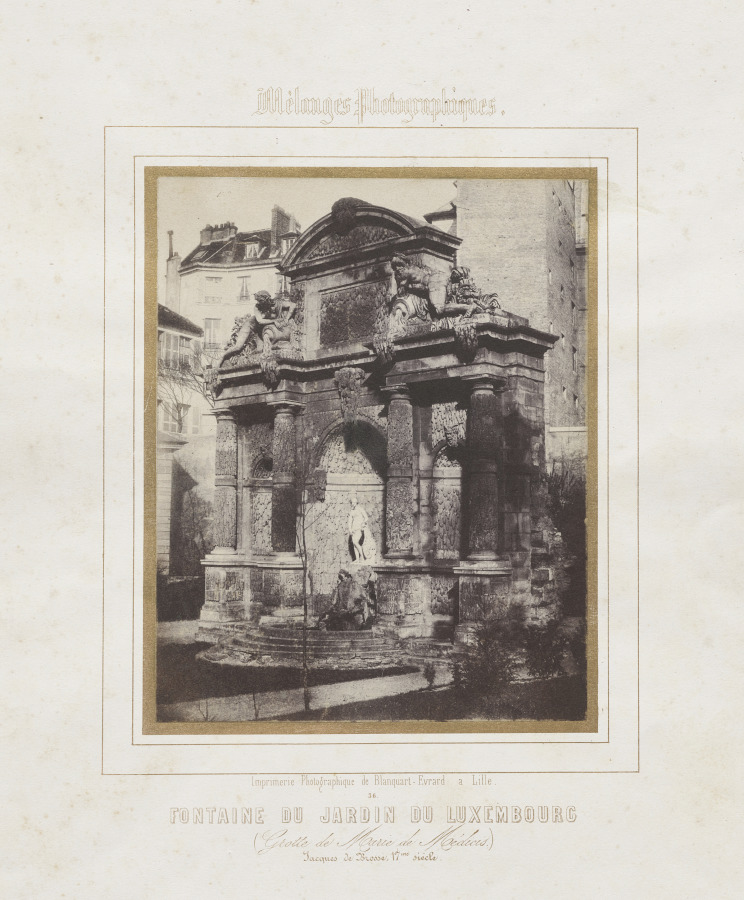
Structural Poetics: The Grotte de Marie de Médicis as a Blueprint for the 2026 Executive Silhouette
The Fontaine du Jardin du Luxembourg, specifically the grotte de Marie de Médicis, is not merely a Baroque water feature; it is a tectonic manifesto. Its architectural language—a synthesis of rusticated stone, controlled water flow, and asymmetrical grotto forms—offers a precise analog for the 2026 executive silhouette at Addison Fashion. This analysis deconstructs the fountain’s geometric integrity, extracting principles of structural poetics and urban materiality that define a new minimalist luxury for the urban professional. The internal DNA of this research—the juxtaposition of Socratic transcendence and Eastern vessel emptiness—finds its material resolution in the fountain’s dialectic between solid mass and fluid void.
I. Geometric Integrity: The Asymmetrical Grotto as Silhouette Matrix
The grotte de Marie de Médicis is defined by its deliberate asymmetry and layered depth. Unlike the rigid symmetry of classical French gardens, this grotto employs a tripartite vertical structure: a heavy, rusticated base of rough-hewn stone; a middle register of arched niches and cascading water; and a crowning cornice that dissolves into foliage. This is not a static geometry but a dynamic equilibrium—a balance achieved through tension, not symmetry.
For the 2026 executive silhouette, this translates into a deconstructed tailoring system. The jacket’s shoulder line must retain a sharp, architectural peak (the cornice), while the body of the garment introduces asymmetric draping or offset seams (the grotto’s niches). The hemline is not uniform; it cascades like water over stone, creating a controlled irregularity. The silhouette is minimalist in volume but complex in contour—a single piece of slate-colored wool that appears monolithic yet reveals layered construction upon movement. The void between the body and the fabric becomes the negative space that defines the form, echoing the grotto’s hollows that give shape to the stone.
II. Urban Materiality: From Rusticated Stone to Technical Wool
The fountain’s material palette is brutalist yet refined: limestone, travertine, and lead. These materials bear the patina of time—water stains, moss, and erosion—which is not a flaw but a narrative of endurance. The 2026 executive silhouette demands fabrics that simulate this geological weight while maintaining urban mobility. We propose a double-faced wool-cashmere blend in Slate, a color that captures the luminous gray of wet stone under Parisian overcast skies.
This fabric must possess a matte, almost chalky finish to replicate the porous texture of limestone. However, the interior face is sanded to a subtle sheen, representing the polished interior of the grotto’s chambers. The garment’s construction uses fused seams and laser-cut edges to eliminate bulk, creating a monolithic appearance that belies its technical complexity. The weight distribution is critical: the fabric must fall with the gravity of stone, not the flutter of cloth. This is achieved through a high-density weave and strategic internal weighting at the hem and lapels.
III. The Dialectic of Void and Volume: Socratic Rationality Meets Eastern Emptiness
The internal DNA of this research—the Socratic transcendence of death and the Eastern aesthetics of the void—finds its architectural corollary in the grotto’s water-spouting niches. The water is not decoration; it is the active agent of emptiness. It carves the stone, fills the void, and then recedes, leaving only the trace of its passage. This is the urban poetics of the 2026 silhouette: the garment must hold space for the body’s movement, then return to its architectural form.
In practice, this means a structured overcoat with a removable inner vest—the vest representing the void (the Eastern jar’s emptiness) and the coat representing the volume (the Socratic body). When worn together, they create a complete architectural form. When separated, each piece stands as an independent object—the coat as a monolithic shell, the vest as a lightweight, almost skeletal frame. This duality allows the executive to shift between presence and absence, between the rational clarity of the philosopher and the quiet receptivity of the vessel.
IV. The 2026 Executive Silhouette: A Technical Specification
Based on the grotte de Marie de Médicis, the definitive 2026 executive silhouette for Addison Fashion is defined by the following parameters:
Shoulder: A sharp, extended peak (2.5 cm beyond the natural shoulder) with a slight forward tilt, mimicking the grotto’s cornice overhang. The padding is minimal but rigid, using a horsehair canvas fused to the shell fabric.
Lapel: A wide, notched lapel with a stepped gorge, cut at a 45-degree angle to echo the grotto’s rusticated stone joints. The lapel’s underside is finished in a contrasting matte-sheen to suggest the interior of a grotto niche.
Body: A slightly A-line silhouette from the chest to the hem, with a suppressed waist achieved through vertical darts that mimic the water channels in the stone. The hem is asymmetric: 2 cm longer at the back than the front, creating a cascading effect.
Sleeve: A two-piece sleeve with a slight bell shape at the cuff, referencing the grotto’s arched openings. The sleeve head is unpadded to allow the fabric to fall like water over the arm.
Pockets: Jetted pockets with a hidden flap, set at a slight downward angle to suggest the erosion lines in the stone. The pocket opening is exactly 15 cm—the width of a standard grotto niche.
V. Conclusion: The Silhouette as Urban Ruin
The grotte de Marie de Médicis is not a pristine monument; it is a controlled ruin, a structure that embraces its own decay as part of its beauty. The 2026 executive silhouette must adopt this aesthetics of impermanence. The garment is designed to age gracefully, with raw edges that will fray over time, unlined interiors that will develop a patina of wear, and unfinished seams that reveal the construction process. This is not a garment for the eternal; it is a garment for the urban moment, a philosophical object that acknowledges its own eventual dissolution. In this, it achieves the Socratic clarity of facing death with dignity, and the Eastern wisdom of finding beauty in the void. The silhouette is minimalist, the color is slate, and the result is architecture for the body.