Minimalist
Slate
Urban Form: Mortar
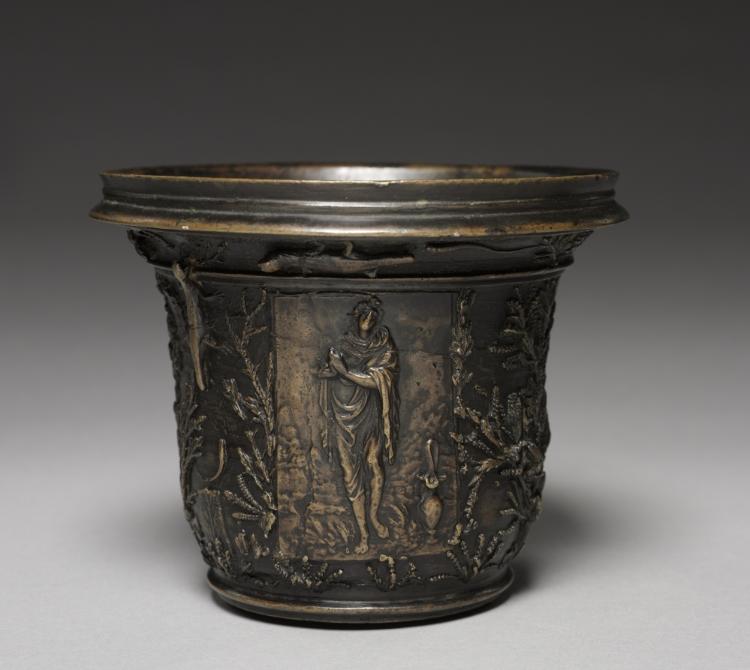
Formal Deconstruction: The Mortar as a Structural Paradigm for the 2026 Executive Silhouette
The subject “Mortar” is not a material but a conceptual binding agent. In the context of Addison Fashion NYC’s Urban Silhouette Research, Mortar represents the invisible force that fuses disparate elements—the spiritual interiority of the Renaissance portrait and the ritualistic exteriority of the Shang bronze vessel—into a cohesive, wearable form. This analysis deconstructs the formal and chromatic implications of this dialogue, translating it into a rigorous framework for the 2026 NYC executive wardrobe.I. The Dialectic of Containment: From Sacred Vessel to Urban Armor
The DNA source presents two opposing yet complementary models of containment. The Saint Philip Neri portrait is a study in internal volume. The figure is a vessel for divine light; the face is the aperture, the wrinkles are the topography of grace. The form is recessive, inward-drawing. The drapery is heavy, anchoring the figure to the earthly plane, while the gaze ascends. This is a vertical, spiritual container. Conversely, the Shang bronze wine vessel (hu) is a study in external structure. Its beauty is not in what it holds but in what it projects: authority, cosmic order, ritual precision. The taotie motif is not decoration; it is a structural grammar. The vessel’s form is robust, symmetrical, and grounded. It is a horizontal, societal container. For the 2026 executive, the Mortar silhouette must synthesize these two logics. The garment becomes a dual-container: it must shield the wearer’s interiority (the Saint Philip Neri principle) while projecting an unassailable external order (the Shang bronze principle). This is not soft tailoring. This is architectural minimalism with a spiritual core.II. Chromatic Analysis: Slate as the Color of Thresholds
The selected color, Slate, is not a neutral. It is a threshold color—a geological midpoint between the black of the void and the silver of the divine. In the DNA source, the Saint Philip portrait operates in a deep, velvety darkness punctuated by a single, warm light source. The Shang bronze exists in the oxidized spectrum of malachite green and patinated copper—colors of time and ritual. Slate bridges these worlds. It is the color of compressed time. It carries the gravity of the bronze (its weight, its history) and the quiet luminosity of the portrait’s shadowed drapery. In the 2026 executive wardrobe, Slate functions as a chromatic mortar—it binds the spiritual and the structural. - Value Range: The palette must span from a deep, almost black charcoal (for base layers and structural panels) to a lighter, dusty blue-gray (for secondary volumes). This creates a chiaroscuro effect without relying on literal light. The garment itself generates the light-dark tension. - Texture as Color: Slate must be rendered in multiple finishes. A matte, wool-cashmere blend for the “drapery” of the Saint Philip (soft, absorbing light) and a smooth, high-twist worsted wool or technical satin for the “bronze” panels (reflecting light, creating a hard edge). The color is the same; the texture creates the dialogue.III. Silhouette Architecture: The Mortar Cut
The Mortar silhouette is defined by three formal principles derived from the source materials: 1. The Weighted Shoulder (The Bronze Cantilever) The Shang vessel’s strength lies in its broad, stable base and its assertive shoulder line. For the 2026 executive, the shoulder must be extended and structured, but not padded in the traditional sense. It is a cantilevered volume. The sleeve head is set forward, creating a slight, deliberate tension across the upper back. This is not a power shoulder; it is a ritual shoulder—a formal declaration of presence. The fabric is cut on the bias at the cap to allow a micro-fold, referencing the bronze’s cast ridges. 2. The Internal Volume (The Saint Philip Drape) The body of the garment must allow for a controlled emptiness. The chest and torso are cut with a negative ease that is not slouchy but hollow. This is achieved through a floating lining—a second, lighter layer of Slate silk charmeuse that hangs independently from the outer shell. This inner layer moves with the body, creating the “inner light” effect. The outer shell remains still. The wearer becomes the vessel; the lining is the soul. 3. The Vertical Seam (The Taotie Axis) The Shang bronze’s power is in its symmetrical, axial organization. The Mortar silhouette introduces a single, continuous vertical seam that runs from the center back of the collar, down the spine, and splits into two parallel seams at the hem. This seam is not decorative; it is a structural spine. It is topstitched in a slightly darker Slate thread, creating a subtle, incised line—a modern taotie. This seam governs the garment’s fall and creates a ritualistic axis around which the entire silhouette rotates.IV. Application: The 2026 Executive Uniform
The Mortar research yields a specific garment archetype: the Slate Mortar Coat. This is not a topcoat. It is a mobile architecture. - Form: A single-breasted, floor-length coat with a concealed placket. The collar is a high, standing band that folds back into a soft, asymmetrical lapel—a hybrid of the Roman cleric’s collar and the bronze vessel’s rim. - Construction: The front panels are cut from a dense, 24-ounce wool-mohair blend (the bronze). The back panel and sleeves are cut from a lighter, 16-ounce wool-cashmere (the drapery). The internal lining is a Slate silk charmeuse. - Function: The coat is designed to be worn over a simple, high-neck base layer. The wearer’s hands are never in pockets; the hands remain visible, referencing the Saint Philip’s gestural language. The coat’s weight and structure demand a specific posture—an upright, grounded stance.V. Conclusion: The Mortar as a New Urban Poetics
The Mortar silhouette is a response to the 2026 executive’s need for a wardrobe that is simultaneously armor and sanctuary. It rejects the soft, fluid shapes of the past decade in favor of a minimalist rigor that is both ancient and futuristic. The Slate color is not a trend; it is a permanent condition—the color of the city at dusk, of stone and steel, of the space between thought and action. This is not fashion. This is material philosophy. The garment is the vessel. The wearer is the light. The Mortar is the bond.
Technical Insight
NYC Perspective: Translating Slate tones into Minimalist silhouettes.