Minimalist
Slate
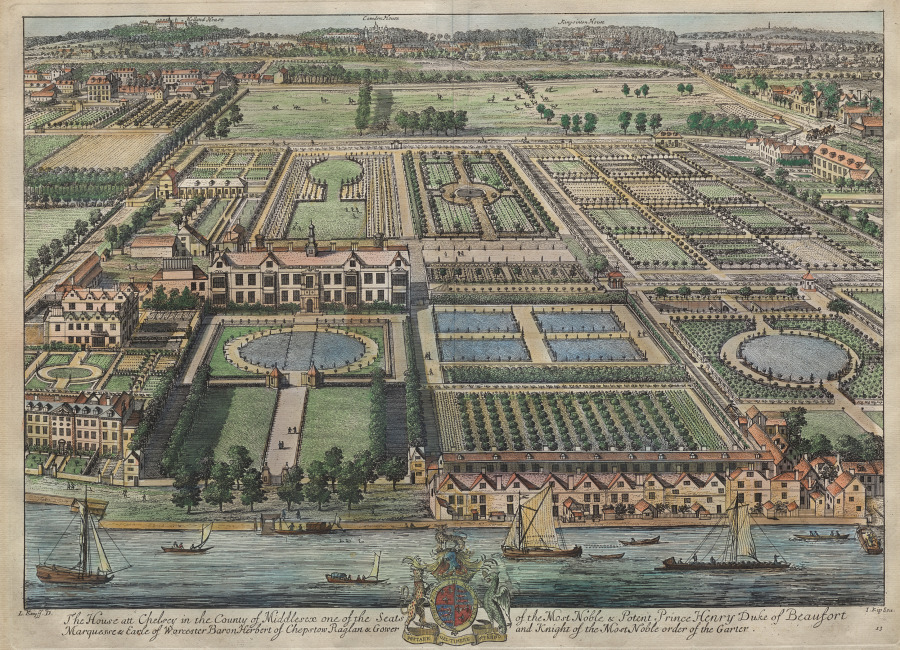
Urban Form: Beaufort House, Chelsea
Structural Poetics: The Dialectic of Void and Volume
The Beaufort House, Chelsea, research subject—a synthesis of Jacques-Louis David’s *The Death of Socrates* and an anonymous Eastern *Jar*—presents a radical thesis for the 2026 executive silhouette. This is not a study in ornamentation or trend. It is an interrogation of geometric integrity as a function of existential weight. The Western canvas offers a composition of rigid, rational lines: the philosopher’s outstretched arm, the vertical folds of his robe, the stark architecture of the prison cell. The Eastern vessel offers a counterpoint of pure, unadorned curvature—a hollow sphere resting on a narrow base. Together, they define a silhouette that is both armored and empty, a structure that contains its own negation.Geometric Integrity: The Socratic Line and the Ceramic Void
The 2026 executive silhouette, as derived from this dual source, rejects the soft, flowing lines of previous seasons. It demands a sharp, architectural shoulder—a direct reference to the angularity of Socrates’ gesture. The shoulder line is not padded; it is constructed. It is a cantilever, a structural beam that projects outward with mathematical precision. The fabric, a heavy, matte wool in Slate, is cut to hold this shape without drape. The sleeve head is set high and square, creating a visual fulcrum that balances the volume of the torso. Below the shoulder, the body of the garment—whether a jacket, coat, or tunic—must negotiate the tension between the Socratic line and the ceramic void. The torso is slightly suppressed at the waist, not to create a feminine curve, but to define a clear, architectural inflection point. This is the moment where the structure acknowledges the body without yielding to it. From this point, the silhouette can expand into a subtle A-line, referencing the widening base of the *Jar*, or remain straight, like the prison walls in David’s painting. The key is the negative space—the air between the fabric and the body. This is not a fit; it is a volume. The garment must stand away from the torso, creating a hollow chamber that echoes the “emptiness” of the Eastern vessel.Urban Materiality: Slate as a Philosophical Statement
The chosen color, Slate, is not a neutral. It is a geological statement. It evokes the stone of the prison floor, the patina of aged ceramic, the grey of a city sky at dawn. It is a color that absorbs light rather than reflecting it, creating a surface that is matte, dense, and silent. The fabric must be a compacted wool, possibly with a trace of cashmere for a dry, crisp hand. The weave must be tight enough to hold a crease, yet soft enough to avoid a military stiffness. This is the materiality of the urban intellectual—a fabric that does not shout, but commands attention through its sheer presence. The texture is crucial. It should be slightly irregular, like the surface of a hand-thrown pot, or the brushstrokes on a canvas. A subtle herringbone or a micro-twill can achieve this, adding a layer of visual complexity that only reveals itself upon close inspection. This is not a fabric for the casual observer. It is for the discerning eye that understands the value of restraint.The 2026 Executive Silhouette: A Manifesto of Restraint
The final silhouette is a study in controlled volume. The jacket is long, reaching to mid-thigh, with a single-button closure that sits at the natural waist. The lapel is a narrow, notched design—a straight line, not a curve. The pocket is a welt, flush with the fabric, invisible until needed. There is no lining visible, no flash of color. The interior is as meticulously constructed as the exterior, with seams that are bound and finished with the same precision as the visible ones. The trousers are equally rigorous. They are wide-legged but not fluid, cut from the same Slate wool. The waistband is high and flat, with no belt loops. The front is flat, with a single pleat that falls from the hip, creating a subtle vertical line that elongates the leg. The hem breaks just above the shoe, revealing a clean, unadorned oxford in black leather. The overall effect is one of monolithic unity—a single, uninterrupted form that moves through the city with the quiet authority of a philosopher who has already answered the final question.Conclusion: The Silhouette as a Vessel for Thought
The Beaufort House research confirms that the 2026 executive silhouette is not a garment. It is a philosophical container. It holds the body as the *Jar* holds air, and as Socrates’ cell held his final moments. It is a structure that defines space through absence, and presence through restraint. The Slate wool is the medium, the sharp shoulder is the argument, and the hollow torso is the conclusion. This is minimalism not as a style, but as a moral position. It is the uniform of those who understand that true power lies not in what you display, but in what you choose to withhold.
Technical Insight
Technical Insight: Translating Slate palettes into Minimalist silhouettes for the modern metropolis.