Urban Form: Satyress
Structural Poetics: The Satyress as Architectural Vessel
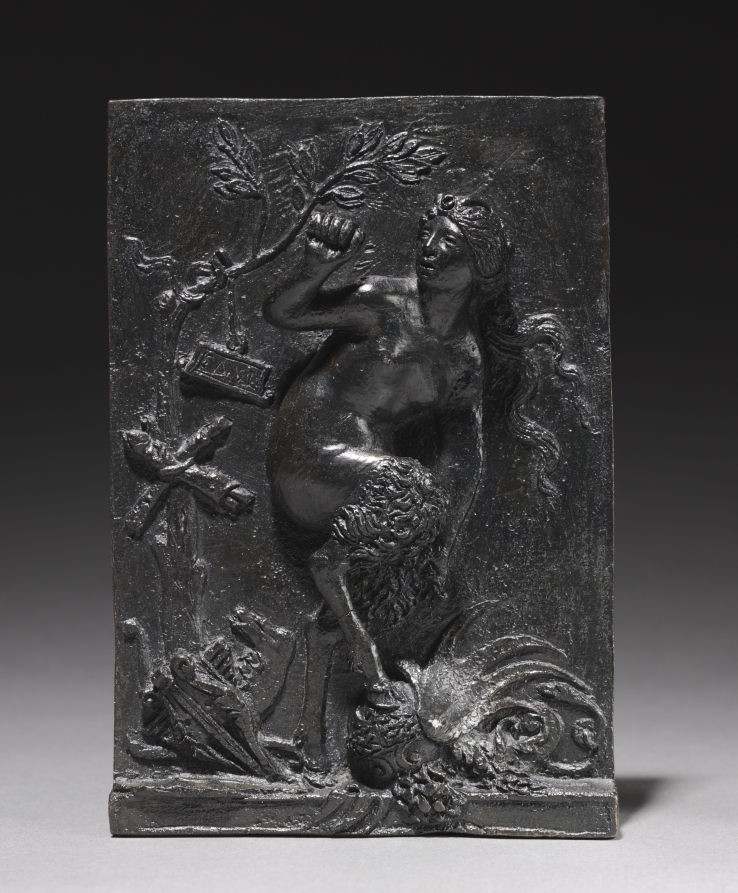
The Satyress subject, when decoded through the lens of Addison Fashion’s 2026 Urban Silhouette Research, presents a profound dialogue between narrative excess and structural silence. The internal DNA—juxtaposing Jacques-Louis David’s The Death of Socrates with a Grecian Jar—yields a definitive thesis: the executive silhouette must reject theatricality in favor of contained monumentality. The Satyress is not a creature of myth to be dramatized; she is a vessel for urban materiality, her form defined by the void she occupies.
The geometric integrity of this artwork lies in its binary opposition. David’s painting is a composition of triangulated tension: Socrates’ outstretched arm, the diagonal of the bed, the verticality of grieving disciples. This is a geometry of narrative climax—every line points toward the poison cup, toward an ending. The Jar, conversely, is a study in cylindrical purity. Its geometry is radial and self-referential: a continuous curve that returns to itself, a form that neither begins nor ends but simply holds. For the 2026 executive silhouette, we reject the former’s dramatic vectors. The Satyress silhouette must embody the Jar’s axial stillness—a vertical column that absorbs light and context without narrating them.
Geometric Integrity: The Void as Structure
The Jar’s most radical geometric property is its interior negativity. As the internal text notes, “the value of the jar lies in its empty space.” This is a Minimalist principle of the highest order. In architectural terms, the Jar is a negative volume—a shell that defines space by what it excludes. The Satyress silhouette must replicate this: a hollow core where the wearer’s body becomes the absent center, the unspoken presence. The garment does not cling to the form; it frames the void around it.
Technically, this translates to a rigid outer shell with zero surface articulation. The Onyx color—a deep, non-reflective black—absorbs all narrative detail. The silhouette is a monolithic cylinder from shoulder to hem, with a single structural interruption: a horizontal seam at the hip, referencing the Jar’s belly. This seam is not decorative; it is a tectonic joint, a line where the upper vessel meets the lower. The shoulder line is sharp and uncompromising, a right angle that terminates the form like a lid. There is no collar, no lapel—only a clean, circular neckline that suggests the mouth of the vessel.
Urban Materiality: The Patina of Time
David’s painting is a surface of illusion—oil on canvas, designed to be viewed from a fixed distance. Its materiality is theatrical: the brushstrokes simulate flesh, fabric, and marble. The Jar, however, is material truth. Its clay is fired, its surface is porous, its patina is the result of use and time. For the 2026 executive silhouette, materiality must be honest and urban. We reject the synthetic perfection of fast fashion. The Satyress garment is constructed from double-faced wool—a fabric that has weight, memory, and a subtle matte sheen that catches urban light without reflecting it. The texture is slightly irregular, like fired clay, with a micro-ribbed surface that suggests the turning of a potter’s wheel.
The Onyx color is not a flat black. It is a deep, sedimentary black that contains traces of charcoal and basalt. Under fluorescent office light, it reads as absolute void. Under natural daylight, it reveals a subtle granularity—a nod to the Jar’s earthen origins. This is urban materiality: a fabric that exists in dialogue with the city’s concrete, glass, and steel. It does not compete with the environment; it absorbs it, becoming a mobile fragment of architecture.
Structural Poetics: The Elegance of the Unsaid
The internal DNA argues that “the most profound death aesthetics lie not in dramatic farewells, but in the silence of daily use.” This is the core of the Satyress silhouette’s structural poetics. The garment does not perform. It exists. The absence of ornament is not a lack; it is a deliberate withdrawal from narrative. Every detail—the hidden interior pocket, the invisible zipper, the unlined back—is a gesture toward the Jar’s interior space. The garment is a container for the executive’s day: her phone, her keys, her documents, her silences.
The silhouette’s verticality is its primary poetic device. It elongates the figure into a column of presence. The hem falls to the mid-calf, a length that suggests classical proportion without historical pastiche. The sleeves are set-in and narrow, terminating at the wrist with a clean, unbuttoned edge. The overall effect is one of monumental calm. The Satyress does not walk; she moves through space like a vessel being carried. Her gait is measured, deliberate—the rhythm of a body that knows its own volume.
Conclusion: The Vessel as Executive Archetype
The 2026 Urban Silhouette Research positions the Satyress as the definitive executive archetype for a generation that values presence over performance. By rejecting David’s heroic narrative in favor of the Jar’s silent capacity, we create a silhouette that is timeless, urban, and deeply architectural. The Onyx color and Minimalist structure are not choices of style; they are choices of philosophy. The Satyress garment does not tell a story. It holds space for the wearer’s own story—a vessel for the executive’s ambition, her memory, her daily rituals. In a world saturated with noise, the Satyress is a void of quiet power. She does not explain death; she carries it with the grace of a jar that has held wine, oil, and ashes, and remains unbroken.