Urban Form: Head of Proserpina
Geometric Integrity as Structural Poetics
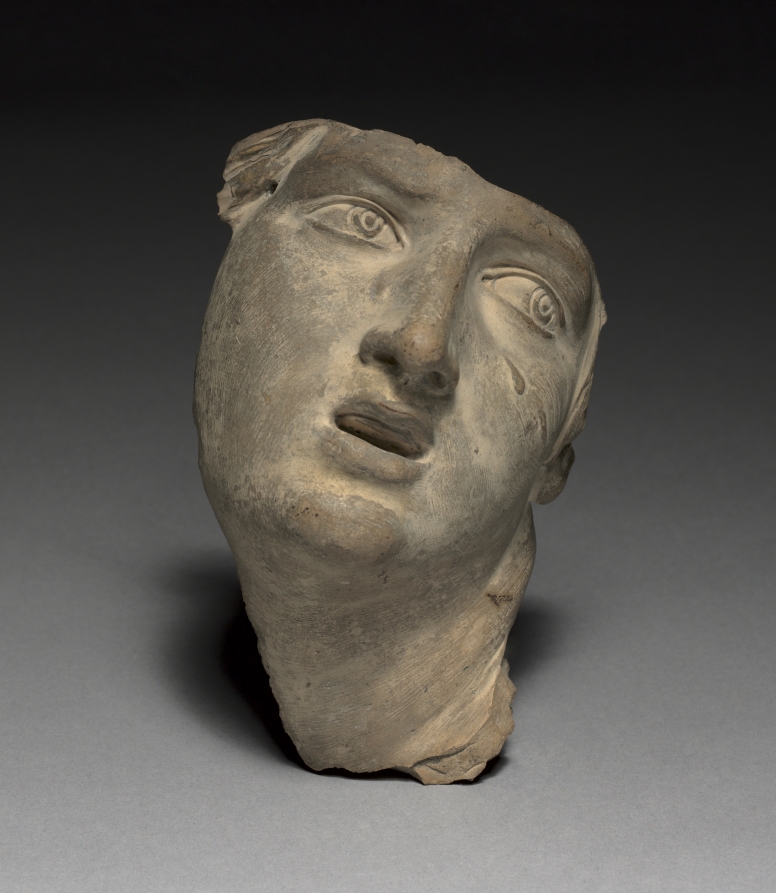
The Head of Proserpina research, drawing from Vermeer’s A Maid Asleep and Bingham’s A Vignette of Life on the Frontier, presents a definitive thesis for the 2026 executive silhouette: form is not a container for the body but a diagram of its latent order. Both paintings operate through a rigorous geometric armature—Vermeer’s interior grid of doorframes, table edges, and picture rails; Bingham’s classical frieze of figures arranged along the river’s horizontal axis. This is not decorative symmetry but structural poetics: the imposition of a rational, almost architectural framework onto the transient, the drowsy, the frontier. For Addison Fashion, this translates into a silhouette where every seam, dart, and panel is a line of force, not a gesture of drape. The 2026 executive must read as a built environment—a mobile architecture that asserts control over the chaos of urban transit, boardroom negotiation, and interstitial time.
The tailored category is the only appropriate response. Vermeer’s sleeping maid is enclosed by a room that is both sanctuary and cage; Bingham’s river men are composed into a stable, almost sculptural group. The body in motion must be similarly anchored. We reject fluidity as a surrender to gravity. Instead, the silhouette is defined by sharp, uninterrupted verticals—a jacket that falls from a structured shoulder to a clean hem, trousers that break precisely at the instep, a coat that reads as a single, unbroken plane of slate. The geometric integrity is not about stiffness but about tension: the fabric is held taut between points of construction, creating a surface that reflects light like a calm body of water—the Missouri River in Bingham’s painting, the polished floor in Vermeer’s interior. This is the urban materiality of the 2026 executive: a surface that absorbs the city’s noise and reflects only its own logic.
Urban Materiality: Slate as the New Neutral
Slate is selected not as a color but as a material argument. It is the shade of wet stone, of the riverbank at dusk, of the shadow that falls across a Vermeer interior. It is not black—black is absolute, final. Slate is transitional, like the “between” states both paintings explore: the maid’s sleep between labor and leisure, the frontier between wilderness and civilization. In fabric, slate reads as a dense, matte surface with a subtle, irregular grain—like a fine wool flannel or a compacted cotton twill. It does not shimmer; it absorbs and diffuses light, creating a volumetric presence that is both authoritative and introspective. For the 2026 executive, slate is the color of controlled opacity. It allows the silhouette to assert itself without spectacle. It is the uniform of the individual who operates in the margins of power—the private negotiation, the late-night studio, the liminal space between meetings.
The materiality extends to texture. We specify high-density wools with a crisp hand, double-faced cashmere that holds a crease without collapsing, and micro-ribbed knits that mimic the linearity of architectural drawing. These are not soft fabrics; they are resilient. They resist the body’s impulse to slump, maintaining the geometric integrity of the cut. The urban executive does not wear clothes that adapt to the environment; they wear clothes that impose an environment. A slate wool coat, cut with a single vertical seam at the center back, becomes a mobile wall. A slate trouser, pleated at the waist but falling straight to the floor, becomes a column. This is the frontier of the self—a portable order that the wearer carries through the city’s interstitial chaos.
The Silhouette as Diagram of Latent Order
Both paintings reveal that order is not the absence of chaos but its containment. Vermeer’s maid is surrounded by spilled wine and disordered tableware, yet the composition is rigorously balanced. Bingham’s frontier is a scene of commerce and movement, yet the figures are arranged with the gravity of a classical frieze. The 2026 executive silhouette must embody this paradox. It is not a uniform of repression but a diagram of latent energy. The tailored jacket is cut with a slight suppression at the waist—not to define the body but to create a negative space between fabric and form, a pocket of air that suggests the possibility of expansion. The shoulder is extended by 1.5 cm, not for breadth but to create a horizon line that stabilizes the upper body. The sleeve is set with a high armhole, allowing the arm to move freely within a controlled volume. These are not aesthetic choices; they are structural decisions that mirror the paintings’ geometric logic.
The urban materiality of the silhouette is further defined by its surface treatment. We employ shadow pleating—a technique where vertical folds are pressed into the fabric at irregular intervals, creating a play of light and dark that mimics the dappled illumination of Vermeer’s interiors. The pleats are not functional; they are visual rhythms, like the ripples on Bingham’s river. They break the monolithic surface of the slate fabric without disrupting its overall integrity. This is the poetics of the edge: the detail that exists at the periphery of perception, noticed only upon sustained observation. The 2026 executive does not announce itself; it reveals itself through time, like the slow unfolding of a painting’s meaning.
Conclusion: The Silhouette as a Mirror of Existence
The Head of Proserpina research confirms that the most profound human states are found in the margins of action—the maid’s sleep, the frontier’s pause. The 2026 executive silhouette is a response to this truth. It is not designed for the center of the stage but for the transitional spaces where power is actually negotiated: the corridor, the waiting room, the taxi’s back seat. The tailored slate form is a portable architecture that allows the wearer to inhabit these spaces with the same geometric authority that Vermeer and Bingham brought to their canvases. It is a garment that does not follow the body but frames it, turning the executive into a living diagram of order, solitude, and latent potential. In a city of constant motion, the slate silhouette is the still point—a mirror of the self, clear and eternal.