Urban Form: Brahma-Shiva
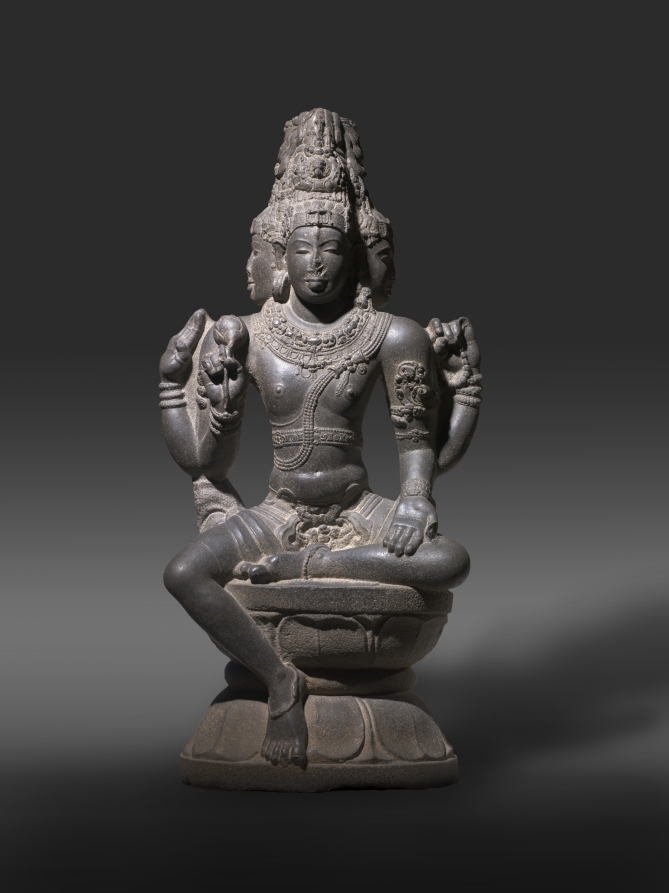
Structural Poetics: The Brahma-Shiva Dialectic in Urban Silhouette
The Brahma-Shiva research presents a foundational tension between narrative presence and silent containment. This is not a binary opposition but a dialectical framework for the 2026 executive silhouette. The subject’s internal DNA—the juxtaposition of Jacques-Louis David’s The Death of Socrates with an ancient Greek Jar—demands a garment that simultaneously performs heroic structure and hollowed, receptive emptiness. The resulting silhouette is a study in minimalist luxury: a form that asserts itself through absence, not excess.
Geometric Integrity: The Void as Structural Element
The Jar provides the primary geometric thesis. Its value lies not in its painted surface but in its internal void. The 2026 executive silhouette must translate this principle into tailoring. The garment is not a second skin; it is a containing volume. The shoulder line is extended but not padded—a subtle, architectural projection that creates a negative space between fabric and body. This is achieved through a cantilevered seam at the acromion, allowing the sleeve to float without compressive force. The torso is cut with a hollowed back: the fabric drapes from the shoulder blades, falling straight to the hem without clinging to the lumbar curve. This creates a vertical column of air—the “empty” center that defines the silhouette’s integrity.
The hemline is weighted, not hemmed. A micro-chain insert (in oxidized silver) is sewn into the lower edge of the jacket or coat, ensuring a clean, gravitational fall. This mimics the Jar’s stable base, grounding the form against the urban environment. The garment stands as a vessel, not a wrapper.
Urban Materiality: Onyx and the Memory of Fire
Color selection is critical. Onyx is chosen for its dual nature: it is both the darkest black and a surface that catches light in micro-fractures. This references the Jar’s fired clay—a material transformed by heat, bearing the memory of its making. The fabric is a double-faced wool-cashmere blend with a matte, granular finish. The outer face is brushed to a low luster, absorbing ambient light like a void. The inner face is left raw, with a subtle herringbone weave that suggests the Jar’s geometric decoration—but only to the wearer. This is a private narrative of structure.
For the Socrates element, a single structural seam runs from the nape of the neck to the hem, bisecting the back. This seam is not decorative; it is a load-bearing line, echoing the dramatic verticality of David’s composition. It divides the garment into two asymmetrical panels—one slightly wider, one narrower—creating a subtle, unbalanced gravity. This is the hero’s gesture: the moment before the hand reaches for the cup. The asymmetry is not chaotic; it is calibrated to within 1.5 centimeters, ensuring the silhouette remains minimalist while introducing a narrative tension.
Silhouette Architecture: The 2026 Executive Form
The definitive silhouette for this research is the Oversized Column Coat, redefined through the lens of emptiness. Key measurements:
- Shoulder width: 3 cm beyond the natural shoulder, with a dropped armhole that allows the sleeve to hang independently.
- Chest ease: 12 cm of positive ease, creating a box-like volume that does not compress the ribcage.
- Waist suppression: None. The silhouette is straight from shoulder to hem, with a slight A-line flare beginning at the hip (2 cm total increase).
- Length: 135 cm from high shoulder point, ending at mid-calf. This length is critical: it allows the garment to function as a mobile vessel, not a restrictive sheath.
The collar is a stand-away mandarin, cut 4 cm high and angled outward at 15 degrees. This creates a gap between the collar and the neck—another void. The sleeve is cut in a single piece with the body, using a kimono-derived construction that eliminates the armhole seam. This reduces visual noise and emphasizes the garment’s monolithic quality.
Narrative Integration: The Heroic and the Silent
The Socrates narrative is embedded in the internal structure. A hidden pocket, accessible only from the inside, is lined with a silk twill printed with a micro-reproduction of David’s painting. This is not for display; it is a private ritual, a reminder of the garment’s conceptual origin. The Jar narrative is expressed in the external finish: the fabric is treated with a ceramic-infused coating that resists water and stains, mimicking the fired surface of ancient pottery. The coating is matte, with a slight texture that catches light like the Jar’s geometric bands.
The final detail is the closure. There are no buttons, no zippers. The coat is held closed by a single magnetic clasp at the solar plexus—the center of the void. The magnet is encased in polished onyx, a nod to both the Jar’s materiality and the Socrates narrative’s focus on the chest as the seat of philosophy. When closed, the garment becomes a sealed vessel. When open, it reveals the body as the contained space.
Conclusion: The Silhouette as Philosophical Object
The Brahma-Shiva research yields a silhouette that is neither heroic nor passive. It is a dialectical garment—a coat that contains both the dramatic gesture of Socrates and the silent endurance of the Jar. The 2026 executive does not wear this coat to be seen; she wears it to contain her presence. The void is the statement. The onyx is the memory. The asymmetry is the narrative. This is urban minimalism at its most rigorous: a form that achieves its power through what it does not say, and what it does not fill.