Minimalist
Ivory
Urban Form: Saint Peter of Alcántara
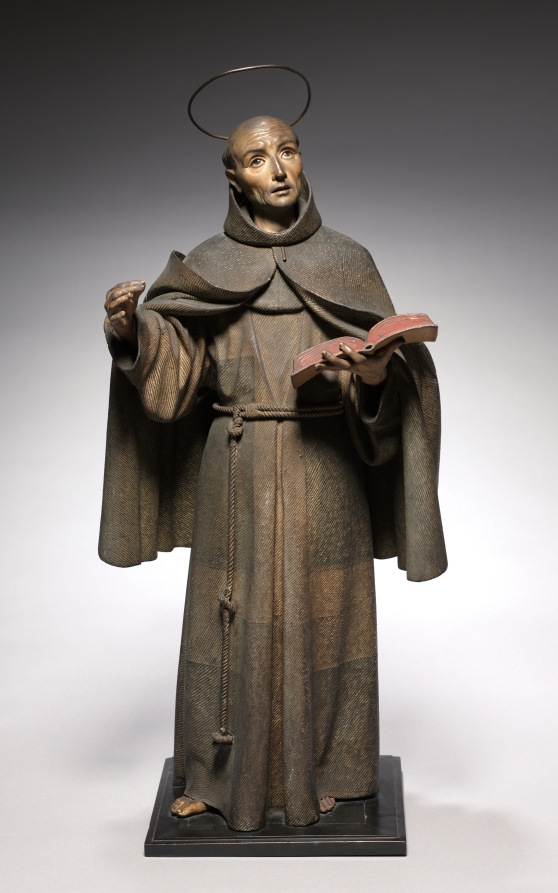
Technical Deconstruction: Saint Peter of Alcántara as Urban Silhouette Archetype
The subject of Saint Peter of Alcántara—a 16th-century Spanish Franciscan friar renowned for extreme asceticism, architectural minimalism, and a philosophy of radical reduction—provides an unexpected yet rigorously applicable framework for the 2026 NYC executive wardrobe. His life was a study in subtraction: he reduced his diet to bread and water, his sleep to one hour per night, and his living quarters to a cell so narrow he could not fully extend his arms. This is not deprivation; it is a deliberate, structural minimalism that prioritizes function over ornament, volume over clutter, and silence over noise. For Addison Fashion, Saint Peter becomes a DNA source for a silhouette that is monastic in its restraint, architectural in its precision, and urban in its adaptability.Form: The Architecture of Subtraction
The primary formal lesson from Saint Peter is the elimination of the superfluous. His habit—a coarse, undyed wool tunic—was not a garment of fashion but of necessity, yet its very lack of embellishment created a powerful, monolithic presence. In the 2026 executive wardrobe, this translates to a silhouette defined by clean, uninterrupted lines and zero surface distraction. The shoulder is the anchor: a sharp, structured point that references the Gothic arches of the friar’s own monastic architecture, but executed in a modern, un-padded construction. The sleeve drops straight from the shoulder, eliminating the traditional armhole curve to create a continuous, columnar flow from neck to wrist. This is the “cell” silhouette—a form that contains the body without constricting it, offering a quiet, powerful containment. The length is critical. Saint Peter’s habit fell to the ankle, a full-length volume that grounded his figure in the earth. For the urban executive, we translate this into a floor-length coat or culotte that grazes the top of the shoe, creating a single, unbroken vertical line. The hem is raw, un-hemmed, or faced with a whisper-weight silk to avoid any visual interruption. The waist is not defined; instead, the garment hangs from the shoulders, allowing the fabric to fall in a clean, A-line or straight column. This eliminates the need for belts, darts, or waistband seams—each of which is a visual “noise” that Saint Peter would have rejected. The interior construction mirrors the exterior philosophy. Seams are flat-felled and bound, not serged. Pockets are hidden in the side seams, invisible from the exterior. Buttons, if used, are covered in the same fabric as the garment, or replaced with a hidden magnetic closure. The goal is a surface so pure that the eye cannot find a point of entry—a garment that reads as a single, continuous form, much like the unbroken surface of a cell wall.Color: The Ivory Spectrum as Urban Silence
The color choice of Ivory is not arbitrary; it is a direct response to Saint Peter’s rejection of dyed fabrics. His habit was undyed wool—a natural, unbleached off-white that was neither white nor cream, but a living, breathing neutral that absorbed and reflected light differently depending on the hour. In the 2026 NYC context, Ivory functions as urban silence. It is the color of a blank canvas, a fresh sheet of paper, a monastic cell. It does not compete with the environment; it absorbs it. Technically, the Ivory we specify is a cool, slightly grayed ivory—not a warm, yellowed cream. This is achieved by blending a small percentage of black pigment into a white base, creating a tone that sits between pure white and pale stone. The result is a color that reads as architectural, not organic. It is the color of limestone, of parchment, of a perfectly blank wall in a SoHo gallery. This Ivory does not yellow under fluorescent office lighting; it remains stable, neutral, and authoritative. The fabric must support this color’s behavior. We recommend a double-faced wool crepe or a compact cotton-linen blend with a matte finish. The fabric should have enough weight to fall cleanly, but enough body to hold the silhouette’s sharp lines. The Ivory must be the same on both sides of the fabric, allowing for reversible construction or unlined finishes. Any sheen is forbidden; the surface must be as matte as a fresco.Silhouette Application: The 2026 Executive Wardrobe
From Saint Peter’s form and the Ivory spectrum, we derive three core pieces for the urban executive: 1. The Cell Coat: A floor-length, single-seam coat cut from a single piece of fabric. The front and back are one continuous panel, with the shoulder seam eliminated entirely. The sleeve is cut in one piece with the body, using a dolman or batwing construction. The coat closes with a single, hidden magnetic closure at the sternum. The collar is a high, standing band that references the friar’s cowl but is cut clean and sharp—no fold, no lapel. This coat is a mobile cell, a portable space of silence in the chaos of the city. 2. The Column Pant: A wide-leg, floor-grazing pant with no waistband. The waist is finished with a simple, turned-under facing, and the pant is held in place by a hidden internal elastic at the back, or by the weight of the fabric itself. The front is flat, with no fly, no pockets, no belt loops. The leg falls in a straight, uninterrupted line from hip to floor. This pant is the urban equivalent of the habit’s lower half—a monolithic, grounding element. 3. The Tunic Shell: A sleeveless, high-neck tunic that falls to mid-thigh. The neckline is a clean, round or boatneck, with no collar. The armholes are cut high and tight, eliminating any visible bra strap or undergarment. The tunic is worn over the Column Pant, creating a single, unbroken vertical block of Ivory. This is the base layer, the “cell” of the wardrobe, against which all other pieces are measured.Conclusion: The Aesthetics of Restraint
Saint Peter of Alcántara’s legacy is not one of denial, but of intentional reduction. His life proved that by removing the extraneous, one arrives at a more profound presence. For the 2026 NYC executive, this translates into a wardrobe that is not minimal in the sense of being sparse, but minimal in the sense of being complete. Every line, every seam, every shade of Ivory has been considered and retained only if it serves the whole. The result is a silhouette that commands attention through its silence, authority through its restraint, and power through its purity. This is not fashion as decoration; it is fashion as architecture—a structure for living, working, and moving through the city with the quiet, unassailable presence of a saint in a cell.
Technical Insight
NYC Perspective: Translating Ivory tones into Minimalist silhouettes.