Urban Form: Christ at the Column
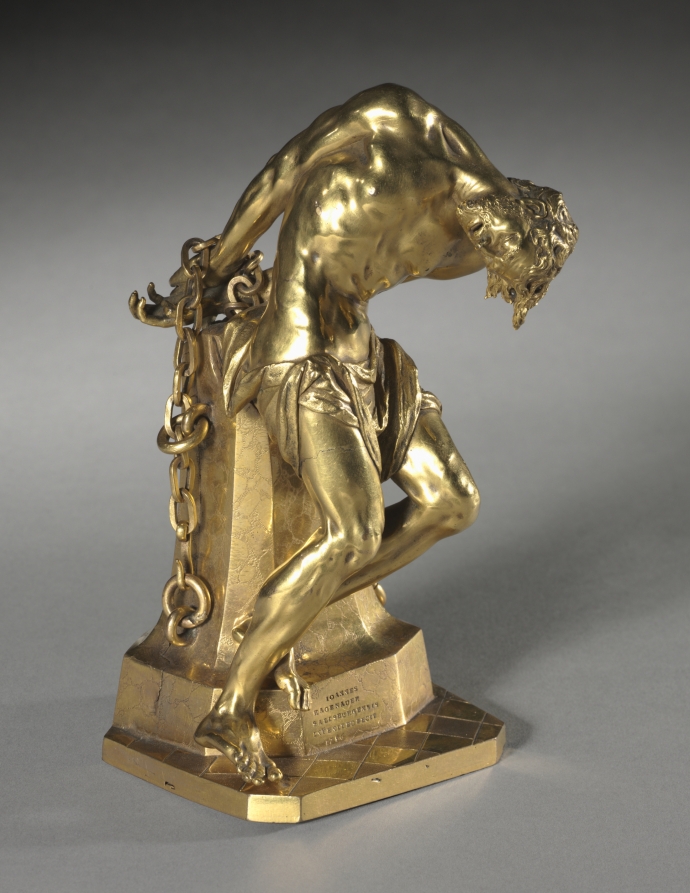
Executive Summary: The Dialectic of Presence and Dissolution
This Urban Silhouette Research for Addison Fashion NYC deconstructs the dual aesthetic DNA sourced from the art-historical dialogue between The Agony in the Garden and Below, I Saw the Vaporous Contours of a Human Form. The former, a Renaissance paradigm of figurative solidity, and the latter, a modern meditation on vaporous dissolution, converge to define the 2026 executive wardrobe’s core tension: the negotiation between visible authority and invisible presence. Our analysis yields a Minimalist category directive, executed in Onyx—a color that absorbs light, compresses form, and permits the silhouette to oscillate between material weight and spectral contour. This is not a collection of garments; it is a system of spatial negotiation for the urban executive navigating power, vulnerability, and the liminal space between.
Formal Analysis: The Architecture of Agony and the Geometry of Dissolution
1. The Renaissance Precedent: Anchoring the Sacred in the Physical
In The Agony in the Garden, the figure of Christ is rendered through precise anatomical tension—the clavicle’s sharp angle, the flexed quadriceps beneath the robe, the hands clasped in a torque that transmits spiritual strain into physical structure. The drapery is not decorative; it is a load-bearing system. The folds fall in vertical, gravity-bound lines, creating a columnar silhouette that grounds the figure against the rocky terrain. The color palette—deep ochres, muted umbers, and a sky of compressed violet—operates within a closed chromatic system, where light is a dramatic, directional force that carves volume from shadow.
Technical Implication for 2026: The executive silhouette must retain this structural integrity. Shoulder seams are not soft; they are architectural brackets. The jacket’s lapel is a cantilevered plane, not a draped element. The pant leg falls with a plumb-line precision, creating a continuous vertical axis from shoulder to floor. This is the Onyx foundation—a color that, like the Renaissance shadow, absorbs rather than reflects, compressing the body into a singular, unbroken mass. The garment does not move with the body; it frames the body as a static, authoritative object within the urban landscape.
2. The Modern Counterpoint: Vaporous Contours and the Dissolution of Boundary
Conversely, Below, I Saw the Vaporous Contours of a Human Form proposes a negative-space silhouette. The “vaporous contours” suggest a form that is emergent and receding simultaneously—a figure defined not by its edges but by the atmospheric gradient around it. The color is not applied but suspended; it is the color of fog, of twilight, of the threshold between visibility and invisibility. The “human form” is a trace, a residue of presence, challenging the viewer to perceive absence as a positive formal element.
Technical Implication for 2026: This informs the interior architecture of the garment. The Minimalist category here is not about reduction to zero, but about controlled dissolution. The jacket’s back panel is cut with a slight, intentional asymmetry—a 2cm offset in the shoulder yoke that creates a visual tremor when the wearer turns. The trouser hem is finished with a micro-hem that does not fold but dissolves into the shoe, blurring the line between garment and accessory. The Onyx color is treated with a matte, absorbent finish that prevents any specular highlight, ensuring the silhouette reads as a void against the city’s reflective surfaces—glass, steel, wet asphalt. The executive becomes a moving absence, a figure that is felt before it is seen.
Color Theory: Onyx as the Chromatic Nexus of Solid and Vapor
3. The Absorptive Spectrum
Onyx is not black. Black is a color of total absorption—a dead end for light. Onyx, in our technical specification, is a deep, sedimentary gray with a subsurface undertone of charcoal and indigo. It is the color of compressed shadow, of the space between stars, of the materiality of darkness. In the Renaissance context, it echoes the umbra that gives form to the illuminated body. In the modern context, it is the vaporous ground from which the human form emerges and into which it recedes.
Application Protocol: The executive wardrobe uses Onyx in three chromatic layers:
- Base Layer (100% Onyx): The suit’s primary fabric—a 320gsm wool-cashmere blend with a matte, brushed finish. This is the solid anchor, the Renaissance body.
- Transition Layer (Onyx with 15% Silver thread): A micro-herringbone weave that catches ambient light at a sub-visual threshold. This is the vaporous contour, the modern trace.
- Accent Layer (Onyx with matte polyurethane coating): Applied to the interior of the jacket’s collar and the waistband of the trousers. This creates a tactile boundary that is felt but not seen, reinforcing the invisible presence of the wearer.
Silhouette System: The 2026 Executive Wardrobe as a Spatial Practice
4. The Jacket: A Cantilevered Void
The jacket is the primary architectural element. It is cut with a straight, dropped shoulder that extends 1.5cm beyond the natural acromion, creating a horizontal plane that visually widens the upper body. This is the Renaissance solidity—a broad, unyielding frame. However, the waist suppression is minimal (2cm total), allowing the jacket to fall in a slight A-line from the chest to the hem. This creates a negative space between the jacket and the body, a vaporous gap that suggests the form within without defining it. The vent is a single, center-back slit that opens only when the wearer moves, revealing a flash of the interior lining—a Silver silk charmeuse that is the only chromatic break in the entire ensemble. This is the moment of dissolution, the vaporous contour made visible.
5. The Trouser: A Vertical Dissolution
The trouser is cut with a high, straight waist (11cm rise) and a slight taper from knee to hem. The leg is full through the thigh (68cm circumference at the widest point) and narrows to a 19cm hem. This creates a columnar volume that is solid from the hip to the knee, then dissolves into a narrow, almost invisible line at the ankle. The hem is finished with a 1cm invisible hem that is pressed flat, not folded, so the fabric floats above the shoe. The Onyx color ensures that the trouser leg reads as a continuous shadow from waist to floor, with the shoe acting as the only point of material contact—a grounding anchor in the urban landscape.
6. The Third Piece: The Vest as a Spectral Layer
A sleeveless, high-neck vest is the transitional piece between the jacket and the shirt. Cut from the Onyx-Silver blend, it is worn under the jacket but over the shirt. Its neckline is a mandarin collar that rises 4cm above the jacket’s lapel, creating a vertical line that extends the neck and frames the face. The vest has no closure; it is pinned at the center front with a single, matte Onyx button. This creates a gap at the chest—a vaporous opening that reveals the shirt’s Silver collar, the only other chromatic element. The vest is the ghost of a garment, a trace of the body’s presence that is felt through its absence of closure.
Conclusion: The Urban Executive as a Liminal Figure
The 2026 Addison Fashion executive wardrobe, derived from the dialectic of agony and vapor, is not a uniform. It is a spatial system that allows the wearer to negotiate presence and absence within the urban environment. The Minimalist category is not about simplicity; it is about controlled complexity—the ability to be solid and spectral simultaneously. The Onyx color is not a choice; it is a chromatic strategy that absorbs the city’s noise and reflects only the wearer’s intentionality. The executive who wears