Urban Form: Carved Bowl
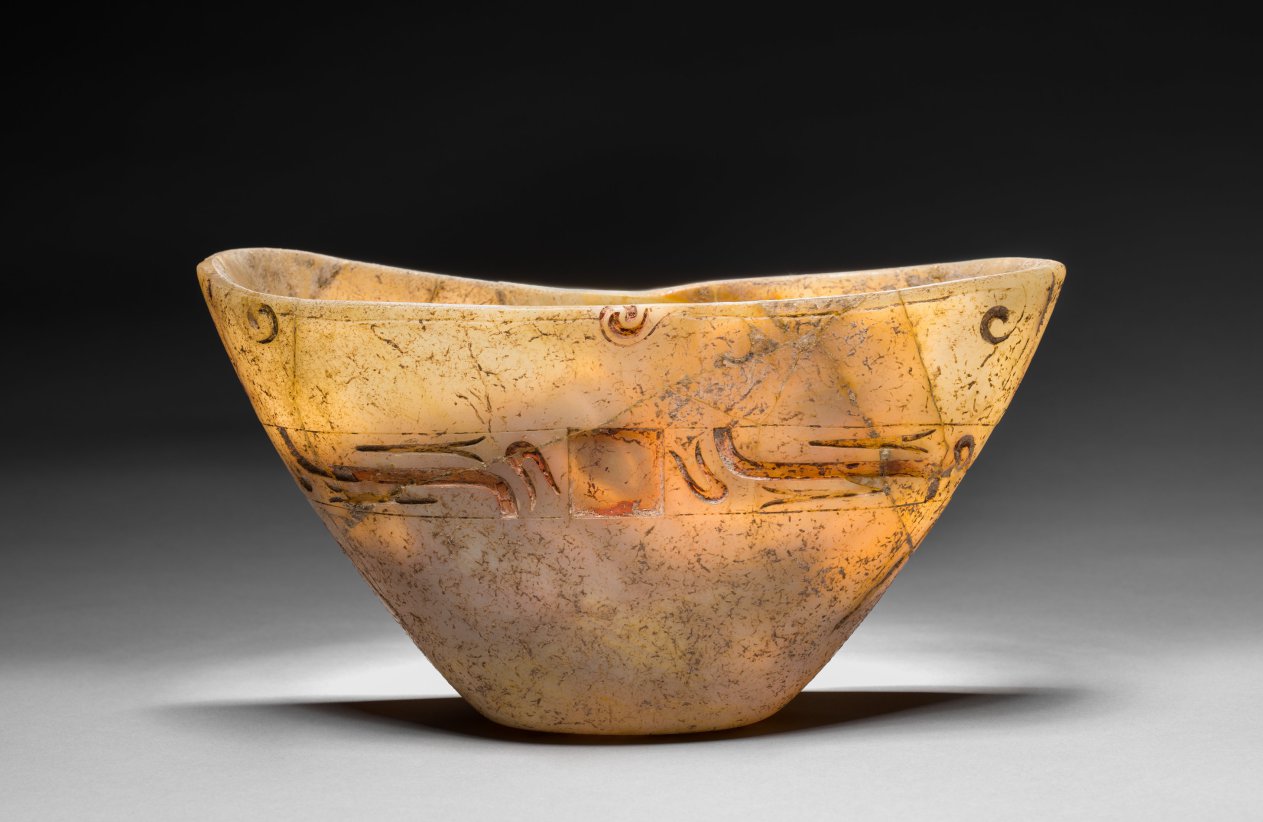
Executive Summary: The Carved Bowl as a Structural Paradigm
The Carved Bowl, as a conceptual artifact, transcends its functional origins to become a masterclass in negative space and material honesty. For the 2026 NYC executive wardrobe, this object dictates a shift from decorative excess to architectural restraint. The bowl’s interior void—its raison d’être—mirrors the urban professional’s need for a garment that holds presence without shouting. The DNA source material, rooted in Zen calligraphy and inscribed inkstones, reinforces a philosophy where every line is a decision, every absence a statement. This analysis deconstructs the bowl’s form and color to prescribe a silhouette that is both a vessel for the body and a meditation on modern power.
I. Form Analysis: The Geometry of Containment
A. The Outer Curve: Tailored Armor
The Carved Bowl’s exterior is a study in continuous tension. Its walls taper from a broad, stable base to a refined, open rim. This translates directly into a shoulder-to-hip ratio that defines the 2026 executive silhouette. The sloping shoulder—neither aggressively padded nor excessively soft—mirrors the bowl’s gradual curve. The jacket’s sleeve head must be set with a minimal ease of 0.5–1.0 cm, allowing the arm to move within a defined boundary, much like the bowl’s interior holds its contents. The hemline, whether cropped at the natural waist or extended to the high hip, should echo the bowl’s base: clean, unbroken, and grounded. This is not a silhouette that invites touch; it commands space through geometric purity.
B. The Interior Void: Negative Space as Power
The bowl’s hollow is its most potent feature. In garment construction, this translates to strategic draping that creates pockets of air between fabric and body. A single-seam trouser with a front crease that falls from the hip to the ankle, without side pockets, mimics the bowl’s uninterrupted interior. The waistband should be invisible—a hidden drawstring or a flat-front closure—so the garment’s surface remains as unblemished as the bowl’s glazed interior. For the top, a mandarin-collar shell in a double-faced wool crepe achieves the same effect: the fabric’s weight creates a slight drape at the sternum, a void that suggests both vulnerability and control. This is the silent authority of the empty vessel.
C. The Rim: The Threshold of Intent
The bowl’s rim is a critical transition point—where interior meets exterior, where function meets form. In the wardrobe, this is the neckline and cuff. The scoop neck should be cut at a precise 15-degree angle from the collarbone, creating a clean line that does not distract from the face. Cuffs should be unbuttoned and folded back by exactly 2.5 cm, mimicking the bowl’s slight lip. This detail signals a deliberate, almost ritualistic approach to dressing—a nod to the inkstone’s inscribed edge, where the practical meets the philosophical. The rim is not an afterthought; it is the final punctuation of the silhouette.
II. Color Analysis: Slate as a State of Being
A. The Chromatic Foundation: From Inkstone to Urban Canvas
The color Slate is not a neutral; it is a narrative pigment. It occupies the spectral space between charcoal and blue-gray, evoking the weathered inkstone of the DNA source. In the 2026 NYC context, Slate functions as a grounding agent against the city’s digital glare and concrete monotony. It absorbs light without reflecting ego, much like the bowl’s matte finish. This is not the passive gray of corporate conformity; it is the active gray of the Zen monk’s robe—a color that demands attention through its refusal to compete.
B. Layering Slate: The Monochrome Gradient
A single Slate garment risks flatness. The executive wardrobe must exploit the color’s inherent tonal range. A double-breasted coat in a heavy wool melton (600 gsm) in a deep, almost black Slate serves as the outer shell. Beneath it, a silk-cashmere blend turtleneck in a lighter, blue-tinged Slate (Pantone 18-4006 TPX) creates a subtle shift. The trousers, in a worsted wool with a matte finish, should be the darkest iteration—a near-Onyx Slate that anchors the ensemble. This gradient mimics the bowl’s interior shadow, where light fades from the rim to the base. The result is a monolithic yet dynamic presence that moves through the city as a single, cohesive form.
C. The Accent of Absence: Silver as a Calligraphic Mark
To honor the DNA’s emphasis on “痕迹” (traces), the Slate palette requires a single, precise accent. Silver—not as a metallic flash, but as a matte, oxidized thread—appears only at the button closure of the coat and the zipper pull of the trousers. This is the equivalent of the inkstone’s inscribed character: a mark that is both functional and symbolic. The silver should be brushed, not polished, to avoid reflecting the chaos of the street. It is a whisper of permanence in a transient urban landscape, a nod to the “金石永固” (eternal metal) of the original text, but rendered in a material that accepts wear as part of its beauty.
III. Synthesis: The 2026 NYC Executive Silhouette
The Carved Bowl informs a wardrobe that is simultaneously protective and receptive. The outer layer—a long, single-breasted coat with a hidden placket—acts as the bowl’s exterior wall, shielding the wearer from the city’s elements and distractions. The inner layer—a high-neck, sleeveless shell in a ribbed Slate jersey—creates the interior void, a space for the wearer’s own breath and thought. The trousers, with a straight, wide leg that breaks just above the shoe, complete the form, grounding the silhouette like the bowl’s base on a table.
This is not a wardrobe for the aggressive executive; it is for the contemplative strategist. The absence of lapels, pockets, and visible hardware forces the eye to the wearer’s face and posture. The Slate color, with its subtle shifts, allows the garment to recede into the background of the city while the individual emerges. The silver accents are not jewelry; they are functional calligraphy, marking the points of entry and closure.
IV. Conclusion: The Vessel as a Way of Being
The Carved Bowl, in its Zen simplicity, offers a radical proposition for the 2026 executive: power is not in what you add, but in what you remove. The silhouette is a vessel for the self, not a display of status. The color Slate is a meditation on permanence within flux. This wardrobe does not shout; it resonates. It is the inkstone that holds the ink, the bowl that holds the offering, the garment that holds the person. In the cold, efficient language of the NYC boardroom, it is the ultimate asset: a form that contains, a color that endures, and a presence that commands without a word.