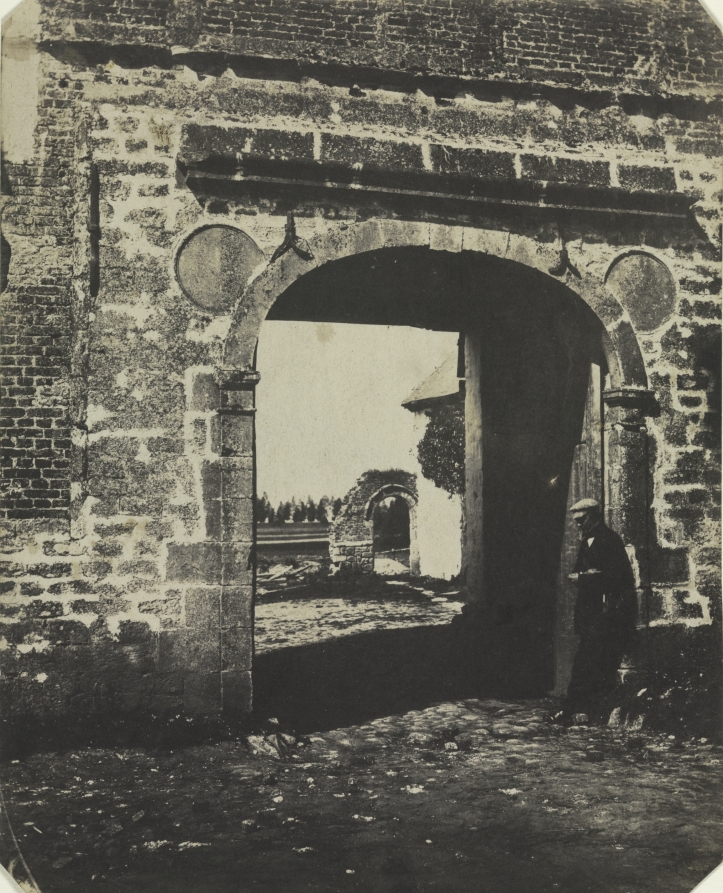
Urban Form: Arch in Farmyard, Swansea
Structural Poetics: The Architectural Silhouette as Urban Armature
The Arch in Farmyard, Swansea presents a compelling paradox for the 2026 executive silhouette: a monumental architectural fragment embedded within a pastoral, decaying context. This juxtaposition—the rigid, engineered arch against the organic, weathered farmyard—mirrors the core tension of contemporary urban dressing. The arch is not merely a passage; it is a structural statement of weight, span, and permanence. For Addison Fashion, this translates into an Oversized silhouette defined by exaggerated shoulders, a reinforced collarbone line, and a sweeping, columnar body that mimics the arch’s vertical thrust and horizontal containment. The geometry is unyielding: a sharp, trapezoidal torso that narrows at the waist only to flare into a sculpted hemline, echoing the arch’s keystone and its supporting piers. This is not soft tailoring; it is architectural armature for the urban executive, a garment that imposes space rather than conforming to the body.
Geometric Integrity: The Arch as Silhouette Blueprint
The arch’s defining feature is its pure, semicircular geometry—a perfect half-circle resting on two vertical supports. In the 2026 silhouette, this translates into a shoulder line that is both broad and precisely curved, like the arch’s intrados. The sleeve head is engineered with a subtle, rigid crescent shape, creating a cantilevered effect that visually extends the shoulder beyond the natural bone structure. The body of the garment drops in a clean, uninterrupted line from this point, mimicking the arch’s vertical piers. The waist is not cinched but rather implied through negative space—a slight inward curve at the side seam that suggests the arch’s springing point. The hem is a deliberate, horizontal terminus, as absolute as the arch’s base, grounding the silhouette in a sense of structural finality. This is a silhouette that rejects organic draping in favor of engineered volume, where every seam is a load-bearing line.
The materiality must support this geometry. We specify a double-faced wool-cashmere blend in Slate—a color that captures the arch’s weathered stone, the damp Swansea air, and the urban patina of oxidized metal. The fabric’s weight (approximately 480 GSM) provides the necessary compressive strength to hold the silhouette’s shape without internal padding. The surface is felted and brushed to a matte, almost granular finish, absorbing light rather than reflecting it, much like the porous limestone of the arch. This is not a fabric that moves; it is a fabric that stands, creating a monolithic presence.
Urban Materiality: The Farmyard as Textile Archive
The farmyard context—rusted iron, cracked concrete, weathered timber, and overgrown moss—provides a textural vocabulary for the garment’s surface treatment. The arch itself, though stone, is marked by lichen, water stains, and granular erosion. We translate this into a subtle, irregular jacquard weave that mimics the organic decay of the built environment. The pattern is not a literal reproduction but a structural abstraction: a grid of micro-ridges and valleys that catch light at oblique angles, creating a shifting, topographical surface. This is urban camouflage—a garment that belongs to the city’s hard edges and forgotten corners.
Internal DNA: The Fabric of Power and Surface
The dialogue between Famous Women and Caparisoned Elephant informs the decorative logic of this silhouette. Like the wedding chest, the garment’s surface is a narrative field—but one that speaks of control, structure, and the aesthetics of authority. The Slate fabric is not merely a color; it is a political statement. It evokes the grey of bureaucratic power, the stone of institutional architecture, and the shadow of the urban canyon. The oversized silhouette, like the caparisoned elephant, redefines the body as a carrier of symbolic weight. The garment does not serve the wearer; the wearer becomes a pedestal for the garment, a living armature for a structure that commands space.
The surface treatment is where the two artworks converge. The chest’s painted narratives and the elephant’s embroidered textiles both use dense, repetitive patterning to create a hypnotic visual field. For the 2026 executive, we apply this as a subtle, tone-on-tone jacquard—a geometric motif derived from the arch’s voussoirs (the wedge-shaped stones forming the curve). This pattern is barely perceptible at a distance but becomes a rigorous, almost obsessive grid upon close inspection. It is a secret language of order, visible only to those who look closely—a nod to the hidden power structures that both artworks critique.
Conclusion: The Silhouette as Ideological Armor
The Arch in Farmyard, Swansea is not a romantic ruin; it is a structural relic that speaks to the permanence of power and the inevitability of decay. The 2026 executive silhouette, rendered in Slate and engineered with Oversized precision, is a contemporary armor for navigating this landscape. It borrows the arch’s geometric purity to create a silhouette that is both protective and imposing. The materiality—heavy, matte, and subtly textured—anchors the garment in the urban real, while the surface pattern references the decorative politics of historical power. This is not fashion as expression; it is fashion as architecture—a garment that builds a space around the body, a portable monument for the executive who understands that the most powerful statements are often the most structurally silent.