Fluid
Slate
Urban Form: Rock at Sea
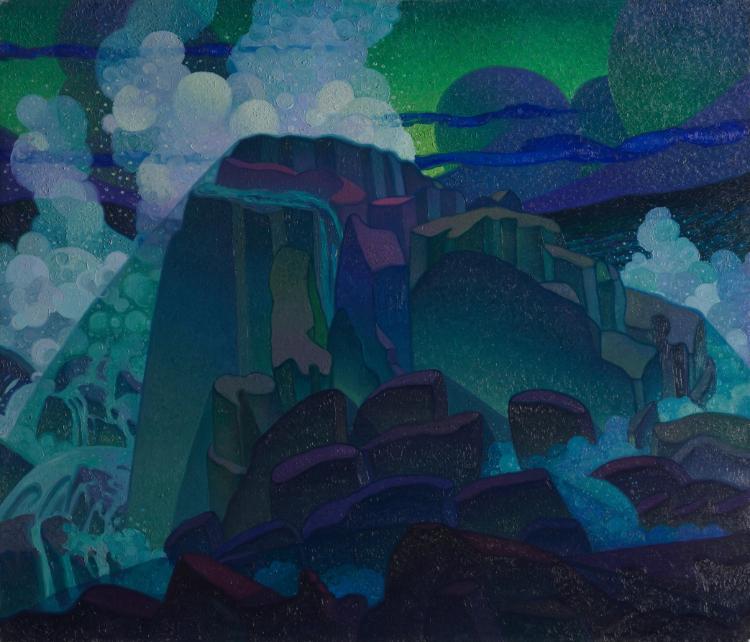
Technical Deconstruction: The Fluid Silhouette as a Conduit for Transcendence
The subject “Rock at Sea” presents a paradox of stability and motion, a tension that finds its most sophisticated expression in the Fluid silhouette. This is not a silhouette of softness or drape for comfort’s sake. Rather, it is a calculated architectural response to the spiritual duality outlined in the DNA source: the static, meditative perfection of the Bodhisattva versus the dynamic, protective hybridity of the bovine-headed amulet. For the 2026 NYC executive, the Fluid silhouette becomes a wearable thesis on how to occupy space with both authority and ethereality—a corporeal negotiation between the anchor of the “rock” and the flux of the “sea.”Form as a Visual Meditation: The Bodhisattva’s “Stillness in Motion”
The Bodhisattva’s aesthetic is defined by a controlled, internalized energy. The “silent dignity” is not passive; it is a high-tension equilibrium. In our Fluid silhouette, this translates to a garment that appears to be in a state of perpetual, graceful fall, yet is meticulously engineered to hold its structure. Consider a double-faced wool crepe coat. The fabric’s weight—ideally 380-420 GSM—provides the “rock,” the gravitational anchor. The cut, however, must be the “sea.” A raglan sleeve with a deep, 12-inch armhole allows the fabric to pool at the shoulder before cascading in a clean, uninterrupted line to the hem. The hem itself is not straight; it is a subtle, asymmetrical curve, mimicking the gentle, unbroken line of a seated figure’s robe as it spills over a pedestal. The critical technical detail is the **internal seam structure**. To achieve the Bodhisattva’s “flow without chaos,” we must eliminate any visual interruption. All seams—side, shoulder, sleeve—are felled and pressed open, then secured with a micro-silk organza stay. This prevents the fabric from twisting or buckling, ensuring that the “fall” is pure, linear, and meditative. The collar is a key signifier. A high, standing band collar, cut on the bias, will not stand rigidly. Instead, it will gently fold and recede, echoing the Bodhisattva’s lowered gaze—an invitation inward, not a declaration outward. The color Slate is essential here. It is not a neutral; it is a non-color, a visual silence. It absorbs light rather than reflecting it, allowing the form to speak without chromatic distraction. This is the executive’s armor for high-stakes negotiation: a presence that is felt, not announced.Hybridity and Protection: The Amulet’s “Functional Tension”
The bovine-headed amulet introduces a radically different formal logic: the hybrid. It is a fusion of the animal (force, protection, earth) and the human (consciousness, transcendence). For the Fluid silhouette, this manifests as a deliberate disruption of the pure, flowing line. We introduce a structural “intervention” that serves as the garment’s protective talisman. The application is a **sculpted, asymmetrical shoulder yoke**. Constructed from a bonded, double-faced technical jersey (a 220 GSM polyamide-spandex core fused to a 150 GSM wool face), this yoke is not sewn; it is laser-cut and fused to the primary shell fabric using a high-temperature, water-soluble adhesive film. The result is a seamless, organic integration—a “growth,” not an attachment. The yoke’s shape is inspired by the amulet’s bovine head: a broad, protective curve over the right shoulder, tapering to a sharp, angular point at the left clavicle. This creates a visual and tactile tension. The soft, fluid body of the garment (the “sea”) is held in check by this rigid, protective element (the “rock”). The functional purpose is twofold. First, it provides a literal anchor point for the garment’s drape, preventing the fabric from overwhelming the wearer’s frame. Second, it acts as a psychological shield. In the same way the amulet was worn close to the body for protection, this yoke sits at the executive’s “power point”—the shoulder, the site of burden and authority. The internal construction is critical: the yoke must be padded with a 3mm layer of memory foam, quilted in a micro-grid pattern to prevent shifting. This gives the yoke a subtle, protective volume, a physical reminder of the amulet’s apotropaic function. The Slate color here takes on a different quality. Against the matte wool crepe, the technical jersey has a slight, almost imperceptible sheen, creating a tonal shift that reads as a material “otherness”—the hybrid element made manifest.Color as a Spiritual Ecosystem: Slate’s Dual Register
The choice of Slate is not arbitrary. It is the only color that can simultaneously represent the Bodhisattva’s transcendent stillness and the amulet’s grounded, earthy power. In the context of the Fluid silhouette, Slate operates on two registers. **Register One: The Meditative Void.** For the primary garment (the coat, the tunic, the wide-leg pant), Slate is the color of deep space, of the mind emptied of distraction. It is the visual equivalent of the Bodhisattva’s half-closed eyes. This is achieved through a pigment-dyed, unbrushed wool crepe. The dye process is extended by 20% to ensure the color penetrates the fiber completely, eliminating any surface reflection. The result is a “dead” matte finish—a color that absorbs the gaze rather than returning it. **Register Two: The Protective Sheen.** For the hybrid yoke or any structural intervention, Slate is shifted toward a cooler, metallic register. A micro-fine silver thread (0.02mm) is woven into the technical jersey at a 5% density. This is not a shimmer; it is a subtle, mineral glint, like light catching the surface of a wet stone. This registers as the amulet’s “power”—a latent, protective energy that is only visible under specific conditions. For the 2026 executive, this means the garment reads as purely minimal in a boardroom, but under the harsh light of a presentation screen, the protective element reveals itself. It is a secret, a talisman for the wearer alone.Construction Protocol for the 2026 Executive Wardrobe
The final garment—a Fluid coat with a hybrid yoke—must adhere to the following technical specifications to achieve the “Rock at Sea” thesis: 1. **Primary Fabric:** 400 GSM double-faced wool crepe, pigment-dyed Slate. Pre-washed three times to achieve a 2% shrinkage, ensuring the final drape is soft but not limp. 2. **Structural Intervention:** Bonded technical jersey yoke, laser-cut and fused. Memory foam padding (3mm) quilted in a 5mm grid. The yoke must extend 8 inches from the shoulder seam at its widest point. 3. **Seam Allowance:** All seams are 1.5 cm, felled and pressed open. Internal stays of silk organza (10mm width) are fused over every major seam to prevent distortion. 4. **Hemline:** Asymmetrical, with a 4-inch differential from front to back. The hem is weighted with a 1cm chain encased in a bias-bound channel, ensuring the fabric falls in a clean, vertical line. 5. **Closure:** No buttons or zippers. The garment is designed to be wrapped and secured with a single, internal tie at the waist, mimicking the Bodhisattva’s sash. This tie is made from the same technical jersey as the yoke, creating a visual echo. This is not fashion. It is a formal system for encoding spiritual and psychological states into wearable architecture. The Fluid silhouette, executed in Slate, is the 2026 executive’s answer to the question posed by the Bodhisattva and the amulet: how to be both the anchor and the current, the rock and the sea.
Technical Insight
NYC Perspective: Translating Slate tones into Fluid silhouettes.