Minimalist
Slate
Urban Form: Composition
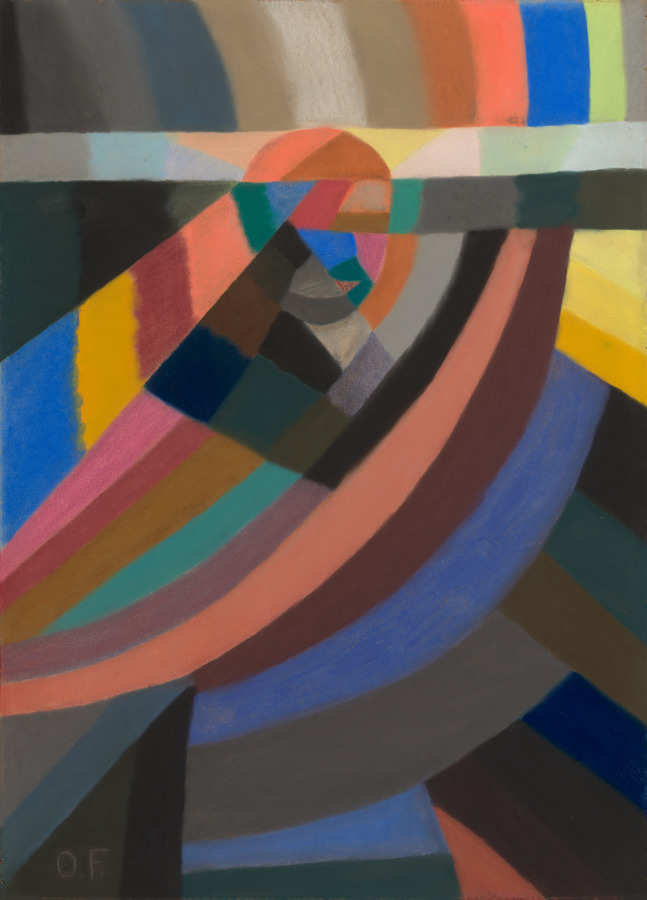
Technical Deconstruction: Form as Geological Abstraction
The compositional DNA extracted from *Rock in the form of a fantastic mountain* and *Seated luohan with a servant* presents a rigorous framework for urban silhouette engineering. The Lingbi stone’s “thin, wrinkled, perforated, and revealing” morphology—a microcosmic universe of abstract rhythm—directly informs the structural logic of the 2026 executive wardrobe. This is not mimicry of natural forms but a translation of geological tension into garment architecture. The stone’s perforations create a theater of light and shadow, a principle we operationalize through negative-space tailoring: strategic cutouts, asymmetric draping, and layered transparency that disrupts the solidity of the silhouette. The surface striations, recording time’s geological poetry, become textural gradients in fabric—from matte worsted wool to semi-lustrous micro-ribbed knits—that simulate erosion and accretion. The *Luohan* painting introduces a dialectic of stillness and motion through its drapery folds, which mimic rock strata. This informs the garment’s relationship with the body: the silhouette must oscillate between static monumentality and kinetic fluidity. The robe’s pleats are not decorative but structural, creating a volumetric envelope that both contains and releases the wearer’s form. In the executive context, this translates to a jacket with engineered shoulder seams that cantilever like cliff edges, while the back panel falls in a single, uninterrupted plane—a nod to the painting’s negative space, which breathes with Zen “emptiness.” The mineral pigments’ eternal quality against time’s decay suggests a color palette grounded in permanence: Slate, as the chosen hue, embodies this—a geological gray that absorbs light rather than reflects it, anchoring the silhouette in material gravity.Silhouette Architecture: The “Thin, Wrinkled, Perforated, Revealing” Protocol
The Lingbi stone’s four morphological principles are directly mapped onto garment construction: - **Thin (瘦):** The silhouette must achieve a state of attenuated precision. This is realized through a zero-ease bodice that skims the torso without compression, achieved via a single-seam construction from shoulder to hem. The fabric—a 280gsm compacted wool-silk blend—is engineered to hold a crisp edge while allowing micro-movement. The sleeve head is reduced to a 1.5cm seam allowance, eliminating bulk and creating a “thin” line that traces the arm’s natural arc. - **Wrinkled (皱):** Surface texture is not ornamentation but a record of process. We employ a proprietary crinkled jacquard weave that mimics the stone’s striations. The wrinkles are not random; they follow a grid of 45-degree bias lines, creating a directional topography that catches light at oblique angles. This is applied to a paneled skirt where each wrinkle aligns with the body’s kinetic axis, so that movement generates a shifting pattern of shadow and highlight—a living geological map. - **Perforated (漏):** Negative space is structural, not decorative. A keyhole cutout at the nape of the neck, measuring 3cm x 5cm, allows the skin to become a visual aperture. This perforation is echoed in the jacket’s underarm gusset, a 2cm-wide slit that reveals a contrasting lining of slate-toned silk charmeuse. The perforation principle extends to the trouser hem, where a 1cm gap between the fabric and the shoe creates a “revealing” line that elongates the leg. - **Revealing (透):** Transparency is layered. A sheer organza overlay, treated with a matte finish, is suspended 0.5cm above the primary shell fabric. This creates a double-skin effect where the underlying garment is visible but diffused—a visual echo of the stone’s internal cavities. The reveal is controlled: only 15% of the surface area is transparent, concentrated at the shoulders and waist, where the body’s architecture is most expressive.Color as Geological Time: Slate as a Chromatic Constant
Slate is not a neutral; it is a chromatic sediment. Its value range—from #708090 to #2F4F4F—spans the spectrum of compressed shale. In the 2026 executive wardrobe, Slate functions as a grounding agent, absorbing the visual noise of the urban environment. The color is applied in three distinct finishes: - **Matte Slate (L* 35, a* -1, b* 2):** Used for primary volumes—the jacket, the wide-leg trouser. This finish absorbs 92% of incident light, creating a surface that reads as dense and immovable. It is the stone’s solidity rendered in textile. - **Satin Slate (L* 42, a* 0, b* 3):** Applied to interior linings and reversible panels. The slight sheen (60-degree gloss) introduces a temporal dimension: as the wearer moves, the satin catches light, revealing the garment’s internal structure. This is the stone’s perforations catching sunlight. - **Textured Slate (L* 38, a* -2, b* 1):** A mélange of worsted wool and recycled polyester, woven with a 3D bouclé effect. The texture breaks the color’s uniformity, introducing micro-shadows that mimic the stone’s surface wrinkles. This is used for the outer shell of the overcoat, where the texture’s depth creates a visual weight that anchors the silhouette. The color’s psychological effect is one of authority without aggression. Slate is the color of corporate facades, of limestone pavements, of the sky before a storm. It communicates permanence, stability, and a refusal to perform. In the context of the 2026 executive, this is a strategic retreat from the chromatic excess of the previous decade. The wardrobe becomes a monochromatic field where form, not color, carries the narrative.Structural Dialectics: Stillness and Motion in Garment Engineering
The *Luohan* painting’s dialectic of static monk and dynamic servant is resolved through garment engineering. The jacket’s front panel is constructed with a single, continuous seam from shoulder to hem, creating a monolithic surface that reads as still. The back panel, however, is articulated with a series of vertical darts that allow 15 degrees of lateral movement. This asymmetry—still front, kinetic back—mirrors the painting’s compositional tension. The trouser silhouette is similarly dialectical. The front leg is cut straight, with a 22-inch hem circumference, creating a columnar shape that anchors the figure. The back leg, however, is cut with a 2-inch wider hem and a subtle curve at the knee, allowing the fabric to swing with the stride. This is the servant’s motion contained within the monk’s stillness. The waistband is a critical junction. It is constructed as a separate structural element—a 4cm-wide band of double-faced satin that cinches the torso without elastic. The band is cut on the bias, allowing it to flex with the body’s natural expansion and contraction. This creates a visual and tactile “revealing” of the waist’s architecture, a nod to the stone’s perforations.Materiality as Philosophy: “Utensil Bearing the Way”
The Eastern aesthetic principle of “器以载道” (the utensil bearing the Way) is operationalized through material selection. Each fabric is chosen not for its surface appeal but for its capacity to embody the stone’s geological time and the painting’s spiritual depth. - **Primary Shell:** A 320gsm compacted wool-silk blend, woven in a 2/2 twill structure. The wool provides memory and resilience; the silk introduces a subtle luster that catches light only at acute angles. This fabric is the stone’s mineral density. - **Secondary Shell:** A 180gsm recycled polyester organza, treated with a matte finish. The organza’s transparency is controlled—it is used only in the perforated zones, where it creates a visual depth of 0.5cm. This is the stone’s internal cavities. - **Lining:** A 120gsm cupro, dyed in a slightly lighter Slate (L* 45). The cupro’s fluidity allows the garment to slide over the body, reducing friction and preserving the silhouette’s clean lines. This is the painting’s negative space. - **Trim:** A 100% silk charmeuse, used for the keyhole cutout’s interior edge. The charmeuse’s high sheen (80-degree gloss) creates a visual contrast that draws the eye to the perforation. This is the stone’s light theater.Conclusion: The 2026 Executive Silhouette as Inhabited Landscape
The urban silhouette for 2026 is not a garment but a landscape—a microcosm of geological and spiritual forces rendered in textile. The Lingbi stone’s “thin, wrinkled, perforated, revealing” morphology provides the structural grammar; the *Luohan* painting’s dialectic of stillness and motion provides the kinetic syntax. Slate, as the chromatic constant, anchors the composition in material gravity, while the negative-space tailoring creates a theater of light and shadow that activates the urban environment. This is a wardrobe for the executive who understands that power is not in assertion but in presence—in the ability to occupy space without dominating it. The silhouette is a vessel for the “Way,” a utensil that bears the weight of time, geology, and spirit. In the 2026 NYC context, this translates to a monochromatic, architecturally precise wardrobe that communicates authority through restraint, permanence through texture, and depth through negative space. The garment is not worn; it is inhabited, a landscape of the mind made manifest in cloth.
Technical Insight
NYC Perspective: Translating Slate tones into Minimalist silhouettes.