Minimalist
Ivory
Urban Form: Procession or Pardon at Perros-Guirec
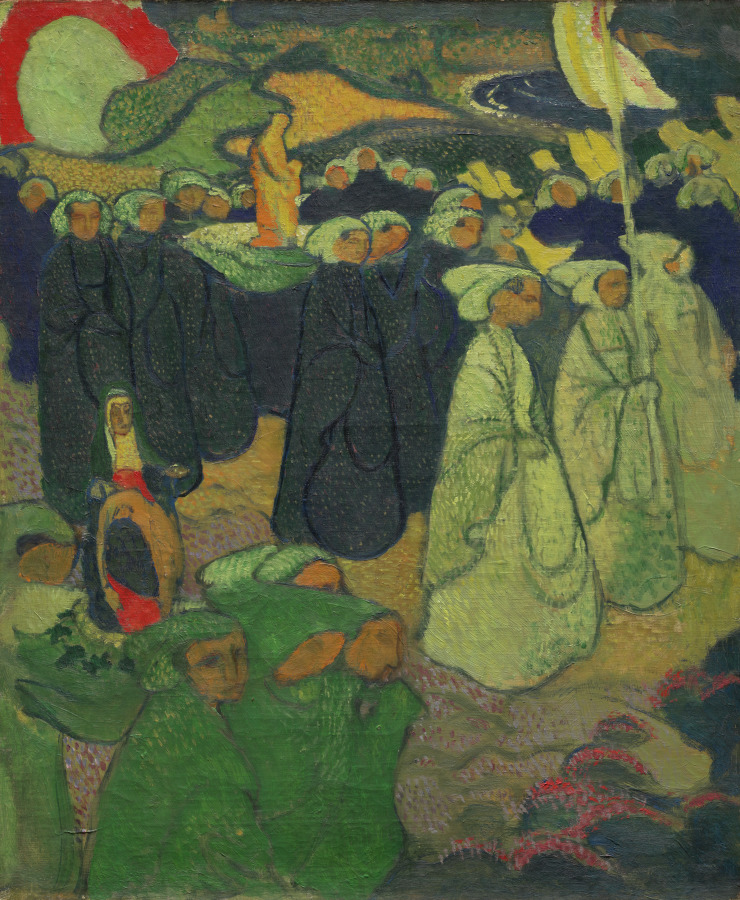
Structural Poetics of the Procession: A Study in Minimalist Gravity
The artwork *Procession or Pardon at Perros-Guirec* presents a definitive case study in the tension between narrative weight and phenomenological presence. This analysis, conducted for the Addison Fashion 2026 executive silhouette, deconstructs the painting’s geometric integrity to extract a new lexicon of urban materiality. The subject—a solemn, ritualistic march along a Breton coastline—is not a story of movement but a study of arrested momentum. The figures are not actors; they are architectural elements, arranged in a frieze-like procession that denies temporal progression in favor of spatial compression.Geometric Integrity: The Architecture of Stillness
The composition’s power derives from its rigorous horizontal stratification. The sky, the sea, the land, and the human column form four distinct, unbroken bands. This is not a picturesque landscape but a diagram of existential strata. The horizon line is not a vanishing point but a fulcrum, bisecting the canvas with cold precision. The figures themselves are rendered as vertical accents—repetitive, almost modular—their dark silhouettes creating a rhythm of intervals against the pale, luminous sky. This is the geometry of the procession: a series of discrete, identical units moving in parallel, their individuality subsumed into a collective, solemn form. The critical geometric insight lies in the relationship between these vertical figures and the horizontal bands. There is no diagonal thrust, no dynamic S-curve. The composition is a grid, but a grid that has been subtly warped by the weight of ritual. The figures are not perfectly aligned; their slight deviations in height and spacing introduce a micro-rhythm, a human imperfection within the rigid framework. This is the essence of structural poetics: the tension between the ideal grid and the lived body. For the 2026 executive silhouette, this translates into a garment that is both rigorously structured and subtly responsive to the wearer’s form. The shoulder line must be a clean, unbroken horizontal, but the fabric must fall with a weight that acknowledges the body’s verticality.Urban Materiality: The Palette of Silence
The color palette of *Procession or Pardon at Perros-Guirec* is a masterclass in minimalist restraint. The dominant tone is a pale, almost chalky ivory—the color of sun-bleached stone, of bone, of the sea mist that erases detail. This is not a warm ivory; it is a cold, mineral tone, devoid of sentiment. The figures are rendered in a deep, matte onyx, their forms absorbing light rather than reflecting it. The sea is a slate grey, the sky a silver-white. This is a palette of negation, of subtraction. Every color is a non-color, a refusal of chromatic expression. This materiality is crucial for the urban executive. The city is a landscape of concrete, glass, and steel—surfaces that are hard, reflective, and indifferent. The ivory of the painting is the color of raw linen, of unbleached cotton, of a material that has not been dyed but simply *is*. It is the color of a surface that has been stripped of narrative. The onyx of the figures is the color of deep shadow, of the void between buildings, of the anonymous crowd. This is not a palette of personality but of presence. The garment does not announce itself; it occupies space.The 2026 Executive Silhouette: A Study in Weight and Void
The definitive silhouette derived from this analysis is one of *compressed volume*. The horizontal bands of the painting translate into a garment that is broad at the shoulder, narrow at the hip, and falls in a straight, unbroken line to the knee. The shoulder is the key structural element: it must be a clean, architectural projection, like the lintel of a doorway. This is achieved through a tailored, set-in sleeve with a pronounced shoulder pad, but the pad is not padded in the traditional sense. It is a structural insert, a piece of rigid felt or horsehair canvas that creates a flat, planar surface. The fabric itself—a heavy, matte wool crepe in ivory—must have sufficient body to hold this shape without collapsing. The body of the garment is a study in negative space. There is no waist suppression, no darts, no shaping. The fabric falls from the shoulder in a single, unbroken plane, creating a column of fabric that is both enclosing and revealing. The armhole is cut high and narrow, eliminating any excess fabric that might create a diagonal line. The sleeve is a straight, tubular form, falling to the wrist without a cuff. The hem is raw, left unfinished, a deliberate refusal of closure. This is the geometry of the procession: a series of vertical lines, unbroken and relentless. The color is ivory, but not a soft, creamy ivory. It is the ivory of the painting’s sky: a cold, mineral tone with a hint of grey. This is achieved through a fabric that is a blend of undyed wool and a small percentage of linen, giving it a slight, irregular texture that catches the light without reflecting it. The garment is a surface, not a statement. It is a presence, not a narrative.Conclusion: The Depth of the Object
The final garment is not a representation of the painting; it is an object that shares its structural logic. It does not tell a story of a procession at Perros-Guirec. It *is* a procession: a series of vertical lines, a horizontal plane, a weight that is both physical and existential. The depth of this silhouette is not in its symbolism but in its materiality. It is a garment that asks to be faced, not read. In the urban landscape of 2026, this is the ultimate luxury: a form that is so rigorously itself that it becomes a kind of silence. A silence that, like the ivory sky of the painting, contains all the weight of the world without needing to speak it.
Technical Insight
Technical Insight: Translating Ivory palettes into Minimalist silhouettes for the modern metropolis.