Minimalist
Onyx
Urban Form: A Philosopher
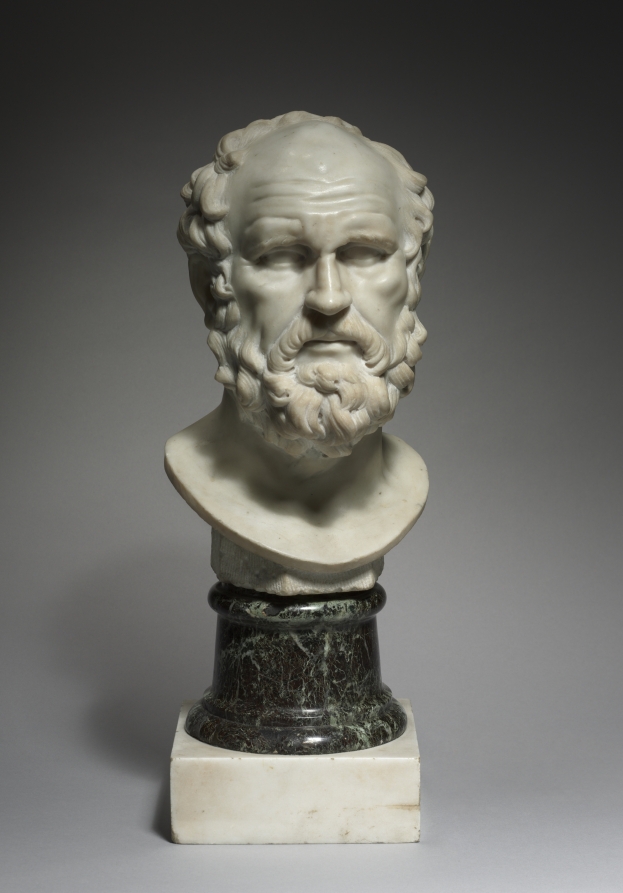
Technical Deconstruction of Form: The Philosopher’s Silhouette
The subject, a Philosopher, presents a unique challenge to the urban wardrobe. Unlike the athlete or the executive, the philosopher’s primary action is contemplation—a static, internalized dynamism. The form must therefore prioritize stillness and presence over kinetic efficiency. Drawing from the dialectic between the *Cup and Stand* and *The Death of Socrates*, we identify two opposing yet reconcilable formal principles: the “Vessel” (static, contained, harmonious) and the “Monument” (dramatic, declarative, ideological). The 2026 NYC executive wardrobe for this archetype must synthesize these into a single, coherent silhouette.1. The Vessel Principle: Static Equilibrium and Contained Volume
The *Cup and Stand* embodies a philosophy of proportional restraint. Its beauty lies not in ornament but in the precise relationship between its parts—the curve of the cup, the verticality of the stem, the weighted base. This is a form that waits. It does not demand attention; it commands respect through its equilibrium. For the philosopher’s silhouette, this translates into a structured, anchored top block. The jacket is the primary vessel. It must feature: - High, clean armholes that create a smooth, uninterrupted line from shoulder to torso, eliminating visual noise. - A suppressed waist that is not cinched but subtly defined, creating an internal “curve” that mirrors the cup’s transition from body to stem. - A weighted hem that falls just below the hip, providing a visual “base” that grounds the figure. The fabric must have sufficient density (e.g., a 380gsm wool-mohair blend) to resist flutter, ensuring the silhouette remains a static, monolithic block. The color Onyx is critical here. It is not a void; it is a material presence. Onyx absorbs light, rendering the jacket as a solid, impenetrable volume—a vessel for the intellect. It eschews the reflective vanity of silver or the softness of ivory, aligning with the philosopher’s rejection of superficiality.2. The Monument Principle: Dramatic Verticality and Ideological Line
*The Death of Socrates* is a composition of declarative lines. The philosopher’s pointing finger, the rigid column of his spine, the stark geometry of the prison cell—all serve to direct the eye upward, toward the transcendental. This is not a passive form; it is a statement of intent. To integrate this monumentality into the wardrobe, we introduce a single, unbroken vertical line that runs from the collar to the floor. This is achieved through: - An elongated, single-breasted silhouette with a two-button closure placed higher than standard (at the natural waistline), creating a longer lapel stroke that visually extends the torso. - Pleated trousers with a high, fixed waist. The pleats are not for mobility but for sculptural volume. They create a series of vertical shadows that echo the fluting of a classical column. The hem must break cleanly over the shoe, with no pooling fabric—a precise, architectural termination. - A stark, unadorned shirting layer. A high-neck, band-collar shirt in a matte silk-cotton blend. No tie. The absence of a necktie is a deliberate negation of corporate ornament, replacing it with a clean, uninterrupted column of fabric that mirrors Socrates’ unadorned tunic.3. The Synthesis: From Object to Idea
The genius of the philosopher’s wardrobe lies in the tension between these two principles. The jacket is the Vessel—still, contained, waiting. The trousers and shirt are the Monument—vertical, declarative, pointing toward the ideal. The ensemble does not move; it holds space. Consider the interaction of textures. The jacket, in Onyx, is a dense, matte wool—absorbent, silent. The trousers, in a slightly lighter shade of Onyx (a charcoal-black), are a wool-cashmere blend with a subtle, dry hand. This micro-contrast creates a visual hierarchy: the jacket is the solid base; the trousers are the flowing column. The shirt, in a matte ivory silk, provides the only point of light—a small, focused area of reflection, akin to the light that falls on Socrates’ chest in David’s painting.Color Psychology: Onyx as the Color of Pure Intellect
Onyx is not merely a color; it is a philosophical position. It rejects the warmth of Sand, the neutrality of Slate, the purity of Ivory. It is the color of the void before creation, the ink of the written word, the polished stone of a scholar’s desk. In the context of the 2026 NYC executive, Onyx signals a refusal to participate in the spectacle of color. It is the uniform of the observer, not the performer. The application must be absolute. No tonal variations, no pattern, no hardware. Buttons should be covered in the same Onyx fabric. Stitching must be invisible. The goal is to create a form that is perceived as a single, continuous material—a monolith of thought.Conclusion: The Urban Silhouette as a Philosophical Statement
The philosopher’s wardrobe for Addison Fashion NYC is not about comfort, trend, or even utility. It is about form as ideology. The Vessel principle provides the stillness necessary for contemplation. The Monument principle provides the direction necessary for conviction. Together, they create a silhouette that is both a refuge and a declaration. The executive who wears this is not dressing for a meeting. They are dressing for a dialectic. Their body becomes the *Cup and Stand*—a vessel of potential. Their posture becomes *The Death of Socrates*—a monument to a principle. In the cold, hard light of the Manhattan grid, this silhouette does not blend in. It stands, waits, and points toward something greater.
Technical Insight
NYC Perspective: Translating Onyx tones into Minimalist silhouettes.