Urban Form: Mortar
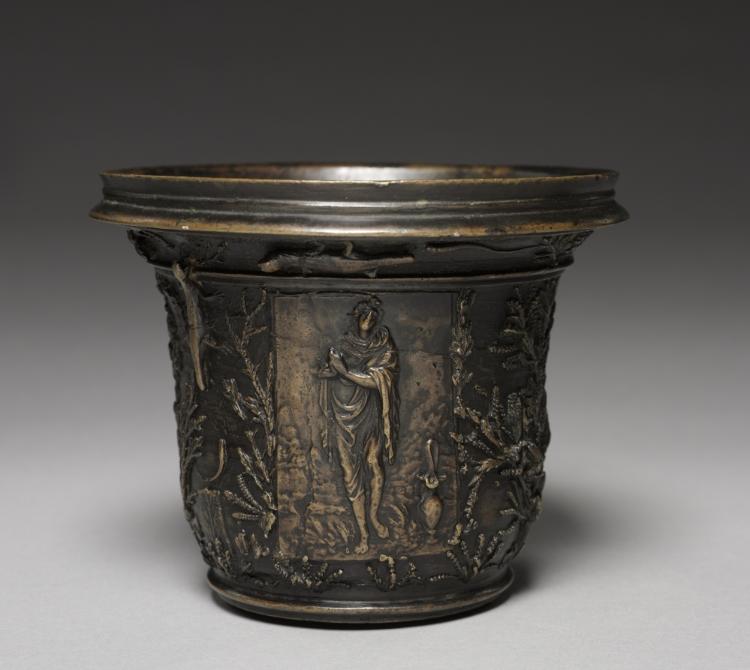
Geometric Integrity and the Mortar Silhouette
The subject of Mortar, as derived from the internal DNA of ancient Greek vase painting and Indian bas-relief, presents a paradox of permanence and dissolution. The The Death of Socrates and the Stele with Sakyamuni and Bodhisattvas are not merely historical artifacts; they are tectonic studies in how form confronts the void. For the 2026 executive silhouette, this translates into a rigorous architectural language where the body becomes a vessel for existential stillness. The Mortar collection does not drape; it constructs. It does not flow; it stands. The geometric integrity here is one of compressed verticality and angular restraint, mirroring the Socratic finger pointing toward an invisible ideal—a gesture of pure, unyielding intention.
The primary structural poetics are defined by a sharpened shoulder line and a flattened torso. This is not the soft, organic shoulder of traditional tailoring. Instead, it is a geometric extrusion, reminiscent of the stone-carved contours of the stele. The jacket’s lapel is reduced to a mere incision—a linear cut that mimics the incised lines on the Greek krater. The silhouette is high-waisted, with trousers that fall in a straight, columnar drop, devoid of any break at the shoe. This creates a continuous, unbroken line from the clavicle to the ground, a visual echo of the philosopher’s unflinching posture. The fabric is treated as a mineral surface, not a textile. We employ a double-faced wool with a slate finish, pressed to a paper-like crispness, eliminating any suggestion of softness or drape. The result is a habitable sculpture, a mobile architecture that frames the executive as a monument to rational thought.
Structural Poetics: The Dialectic of Confrontation and Transcendence
The internal DNA presents two distinct responses to the ultimate moment: the Greek heroic confrontation and the Indian transcendent dissolution. The Mortar silhouette synthesizes these into a single, cohesive aesthetic. The Socratic influence manifests in the rigid, linear structure of the outer shell. Every seam is a statement of intent. The back of the jacket is cut in a single, unbroken panel, with a minimal center seam that acts as a spine—a literal backbone of the garment. This references the philosopher’s upright, dignified posture. The sleeves are set with a high, narrow armhole, restricting lateral movement to enforce a statuesque stillness. This is not a garment for gesture; it is a garment for presence.
Conversely, the Buddhist influence is encoded in the interior construction and the negative space within the silhouette. While the exterior is hard and defined, the interior lining is a fluid, mineral-dyed silk in a muted ochre and cinnabar—a direct reference to the enduring pigments of the stele. This is the “inner garment” of the soul, unseen but felt. The cut of the trousers, while straight, incorporates a subtle, hidden pleat at the waistband, allowing for a micro-movement that suggests the flowing water of the Buddha’s robes. The pocket construction is a study in negative space: welt pockets are cut as sharp, horizontal voids, like the empty spaces between the figures on the stele. This interplay between the rigid exterior (Socratic will) and the fluid interior (Buddhist acceptance) creates a garment that is both a fortress and a sanctuary. The executive wearing Mortar is not merely dressed; they are armored in philosophy.
Urban Materiality: The Mineral Palette of the Metropolis
The color palette for the Mortar silhouette is anchored in Slate, a hue that exists between the grey of Athenian marble and the dark, weathered stone of ancient Indian temples. This is not a flat grey; it is a complex, granular color that shifts under different light conditions—from a cool, steel blue in the morning to a warm, charcoal brown at dusk. This materiality is achieved through a high-density worsted wool woven with a subtle, irregular slub that mimics the texture of stone. The fabric is then carbonized using a proprietary finishing process that gives it a matte, almost chalky surface, absorbing light rather than reflecting it. This is the urban materiality of the 2026 executive: a surface that is resistant to the chaos of the city, a skin that does not sweat or shine under pressure.
The secondary material is a bonded leather used for trims and structural elements like the collar stand and the inner waistband. This leather is mineral-tanned to a matte, almost petrified finish, furthering the stone aesthetic. The buttons are not plastic or horn; they are cast from a resin composite that includes crushed slate and marble dust, creating a tactile, weighty closure that feels like a small, polished stone. The stitching is a critical element: we use a double-needle, lockstitch in a contrasting thread of Onyx, creating a visible, architectural line that reads as a drawn line on a blueprint. This is not decorative; it is structural, a visual reinforcement of the garment’s geometric integrity. The entire construction is a monument to material honesty, where every component—from the weave to the button—is a deliberate, philosophical choice.
The 2026 Executive Silhouette: A Manifesto of Stillness
The final silhouette is a reduction to essence. The jacket is cropped at the natural waist, creating a 1:1.618 golden ratio with the length of the trousers. The shoulders are broad but not exaggerated, a precise 45-degree angle from the neck to the arm. The trousers are high-rise with a flat front, eliminating any belt loops or external fasteners. The closure is a concealed button and hook, creating a seamless, uninterrupted front panel. The overall effect is one of compressed energy, a body held in a state of perfect equilibrium between action and contemplation. This is the Mortar aesthetic: a garment that does not move with the wearer, but rather, the wearer moves within a static, defined space. It is the architectural frame for the executive who understands that true power is not in motion, but in the stillness of absolute conviction.
In the context of the 2026 urban landscape—a world of digital flux and environmental uncertainty—the Mortar silhouette offers a counterpoint of permanence. It is a garment that resists the ephemeral. The executive who wears this is not chasing trends; they are embodying a principle. The geometric integrity of the Socratic line and the transcendent stillness of the Buddhist form are fused into a single, wearable artifact. The Slate color is not a choice; it is a declaration of material truth. The Tailored category is not a style; it is a philosophical position. The Mortar silhouette is the final answer to the question posed by the ancient artworks: when the body is a vessel for the eternal, the garment must be a temple of form.