Minimalist
Slate
Urban Form: Rock at Sea
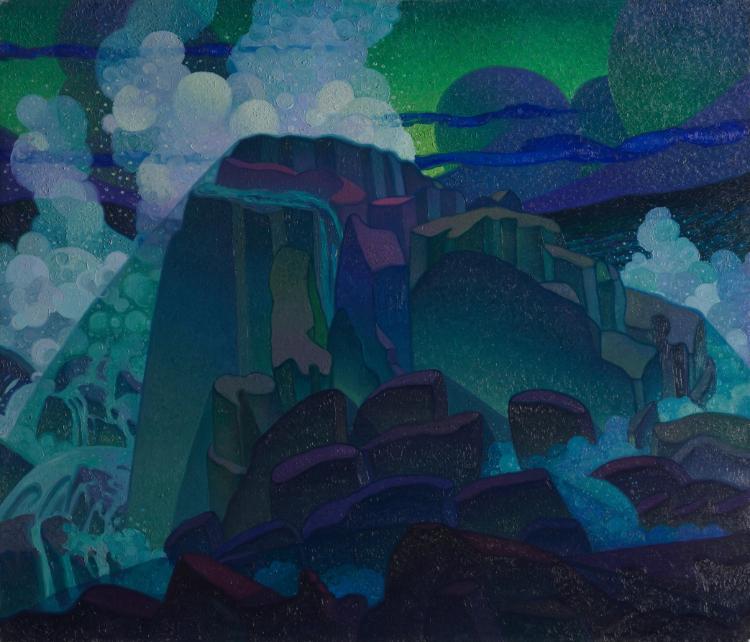
Formal Deconstruction: The Dialectic of Stillness and Velocity in Urban Silhouette
The subject “Rock at Sea” presents a dualistic tension that is foundational to the 2026 executive wardrobe: the collision between the static, objectified death of *The Death of Socrates* and the kinetic, suspended mortality of *The Hunt*. In the former, the poison cup, the draped fabric, the reclining philosopher—all are compressed into a ritualistic stillness. The body becomes an artifact, a piece of furniture in the theater of philosophy. In the latter, the muscular arc of the hunter, the leaping hounds, the taut bowstring—every element is a vector of impending action, a freeze-frame of a trajectory that never lands. For the NYC executive, this is not an academic exercise. It is a blueprint for power dressing in an era of perpetual precarity. The modern silhouette must reconcile two opposing demands: the need to appear *settled* (authoritative, grounded, timeless) and the need to appear *agile* (prepared, adaptive, forward-moving). The “Rock at Sea” analysis reveals that true urban sophistication is not about choosing one mode over the other, but about engineering a garment that contains both states simultaneously—a fabric that holds the memory of stillness while promising the energy of motion.I. The Static Object: Silhouette as Monument
The Socrates Principle dictates that the garment must first function as a *container*—a vessel that arrests time. In the painting, the philosopher’s body is not dying; it is *being* death. The folds of his robe, the precise geometry of his reclining form, the cold rim of the cup—these are not narrative elements but *architectural* ones. They create a structure that the viewer can inhabit, a space for contemplation. Translating this to the 2026 executive wardrobe requires a commitment to Minimalist construction. The silhouette must be *carved*, not draped. Shoulders should be defined but not aggressive—a clean, architectural line that suggests a body that has already made its peace with the world. The jacket’s lapel should be a straight, sharp edge, like the rim of the poison cup, creating a visual boundary between the wearer and the environment. The length of the coat should fall to the mid-calf, creating a vertical column that anchors the figure to the ground, resisting the chaos of the street. The fabric must be dense and quiet. A Slate wool-cashmere blend, 400 grams per square meter, offers the necessary weight. It does not flutter; it falls. It does not reflect; it absorbs. This is the fabric of a monument. The internal construction—the canvas, the shoulder pads, the lining—must be equally rigorous. Every seam is a philosophical statement: *this is where the body ends and the world begins*. The garment is not worn; it is *inhabited*. It is the architectural shell that allows the executive to exist as a fixed point in a fluid city.II. The Kinetic Vector: Silhouette as Propulsion
The Hunt Principle inverts this. Here, the garment must not contain but *project*. The hunter’s body is a coiled spring, a system of tensions. The bowstring is the line of sight; the horse’s haunches are the engine. The death is not in the frame; it is in the *next* frame, which the viewer is forced to imagine. The garment, therefore, must be a promise of action, a silhouette that is always *about to move*. For the executive, this translates into a demand for Fluid elements within the Minimalist frame. The coat, while anchored, must have a back vent that opens with a stride, revealing a flash of the lining—a subtle, kinetic secret. The trousers must be cut with a slight taper, but with enough fabric in the thigh to allow for a full, unencumbered step. The sleeve of the jacket should be set with a high armhole, allowing the arm to reach, to gesture, to command a room without pulling the entire garment out of alignment. The color Slate is critical here. It is not a static gray; it is the color of a storm cloud before the rain, of a stone about to be thrown. It contains the potential for both light and dark, for stillness and violence. The fabric’s texture—a subtle, herringbone weave—creates a surface that catches the light differently with every movement. This is not the uniform of a stationary executive; it is the uniform of one who is always in transit, always on the verge of a decision. The garment is a vector, not a container.III. The Synthesis: The Dialectic of the 2026 Silhouette
The true innovation of the “Rock at Sea” analysis is the recognition that these two modes are not opposites but complements. The Minimalist silhouette must be *both* monument and vector. It must offer the viewer a place to rest the eye (the clean line of the shoulder, the unbroken column of the coat) while simultaneously suggesting an imminent departure (the slight flare of the trouser, the hidden vent, the weight of the fabric that seems to pull the body forward). This is achieved through a rigorous editing process. Every unnecessary detail—every pocket, every button, every seam—is a distraction from the core dialectic. The garment must be reduced to its essential elements: the line, the weight, the color. The Slate palette is chosen precisely because it refuses to be decorative. It is a functional color, a color of infrastructure. It is the color of the city itself—the pavement, the sky, the steel. The final silhouette is a paradox: a garment that feels both heavy and light, both permanent and provisional. The executive wearing it appears as a fixed point in the urban flow, yet also as a force that is moving through it. This is the aesthetic of the 2026 NYC executive: a being who has accepted the inevitability of change (the death of the old order, the constant churn of the market) and has chosen to meet it not with resistance but with a perfectly engineered form. The garment is the vessel that carries the executive from the stillness of the boardroom to the velocity of the street, a silent negotiation between the monument and the hunt.
Technical Insight
NYC Perspective: Translating Slate tones into Minimalist silhouettes.