Urban Form: Kneeling Angel
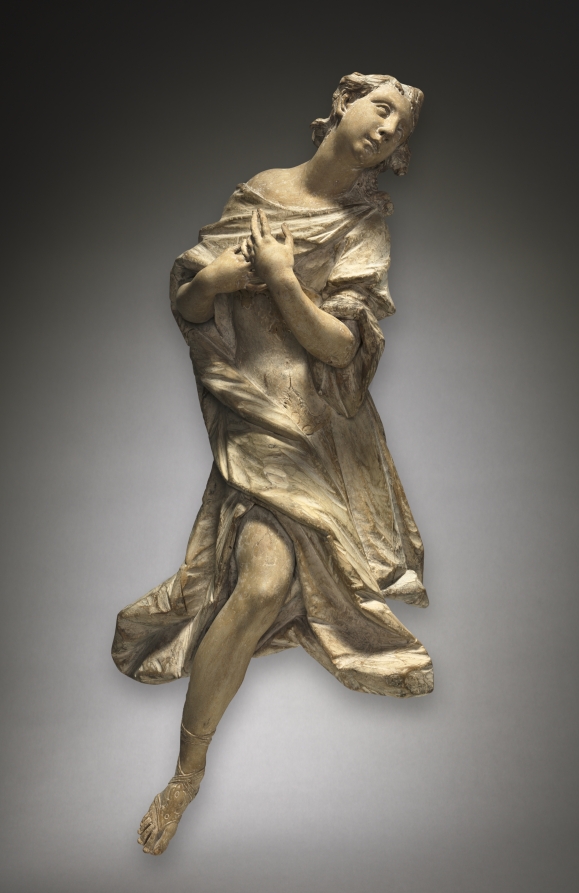
Technical Deconstruction of the Kneeling Angel Silhouette
I. Formal Dialectic: The Architecture of Restraint and Release
The Kneeling Angel silhouette emerges from a dualistic tension between two opposing aesthetic regimes: the geometric containment of Delftware’s concentric waves and the expansive turbulence of Boschian temptation. For the 2026 NYC executive wardrobe, this translates into a tailored form that does not merely drape the body but structures it as a vessel—a finite container for infinite psychological and professional complexity.
The primary formal innovation lies in the shoulder-to-hip ratio. Borrowing from the bowl’s circular harmony, the jacket’s shoulder line is slightly extended but softened, avoiding the aggressive power-shoulder of the 1980s. Instead, it mimics the arc of a wave crest—a curve that suggests momentum without breaking. The waist suppression is precise but not severe, echoing the bowl’s interior curvature that holds water without spilling. This creates a silhouette of poised containment: the body is not liberated nor constrained, but held in a state of dynamic equilibrium.
Contrast this with the lower hemline and pant structure. Here, the influence of Saint Anthony’s temptation manifests as controlled asymmetry. The trouser leg, for instance, features a single pleat that begins at the knee and cascades downward, referencing the distorted limbs and spatial disorientation of the painting. This is not chaos but calculated disruption—a visual reminder that even the most tailored executive must navigate moral and strategic ambiguity. The hem is cuffed at a 2.5-inch width, grounding the silhouette with a weight that suggests permanence, while the slight break over the shoe introduces a fractional imbalance, akin to the bowl’s crackle glaze—imperfection as authenticity.
II. Color Theory: Slate as the Chromatic Nexus
The selection of Slate as the foundational color is not arbitrary but a strategic synthesis of the two DNA sources. Slate occupies a liminal zone between the icy blue-white of Delftware and the charred, sulfurous browns of Bosch’s hellscapes. It is a color of urban twilight—the moment when daylight surrenders to neon, when the corporate tower casts its longest shadow.
In the Delftware bowl, the blue is translucent, aqueous, and reflective. Slate, by contrast, is opaque, sedimentary, and absorptive. It captures the depth of water without its liquidity, the stillness of a frozen pond. For the executive wardrobe, this translates into a matte finish with subtle tonal variation—achieved through a wool-cashmere blend with a 2% metallic thread woven into the warp. Under fluorescent office lighting, the fabric reads as uniformly dark; in natural light, it fractures into a spectrum of grey-blue, mimicking the bowl’s crackle pattern. This is chromatic intelligence: the garment adapts to its environment without losing its identity.
The secondary accent draws from Saint Anthony’s palette: a burnt umber used for interior linings and pocket welts. This is the color of earth after fire, of temptation’s residue. It appears only in hidden moments—the inside of a cuff, the reverse of a lapel—serving as a private reminder of the struggle between order and chaos. The contrast is not decorative but semiotic: the slate exterior projects executive composure; the umber interior acknowledges the psychological cost of that composure.
III. Silhouette Mechanics: The Kneeling Angel as Structural Metaphor
The name Kneeling Angel is a paradox of posture. An angel, traditionally upright and transcendent, is here lowered to a position of supplication or exhaustion. This informs the garment’s core structural gesture: a forward tilt in the jacket’s back panel, achieved through a 3-degree shoulder slope and a shortened back length. The wearer’s posture is subtly redirected forward, not in submission but in attentive readiness—the stance of someone who listens before acting, who kneels to the demands of the moment.
The sleeve head is constructed with a soft roll rather than a rigid cap, referencing the folded wings of a resting bird. This softness is engineered through a bias-cut interfacing that allows the sleeve to drape with a slight, organic curve—a departure from the rigid, vertical lines of traditional tailoring. The effect is simultaneously protective and vulnerable, like armor that acknowledges its own weight.
In the trousers, the knee is the fulcrum. A hidden dart at the back of the knee creates a micro-pleat that releases when the wearer sits, echoing the bowl’s concentric rings—a pattern of expansion from a central point. This is functional poetry: the garment remembers its geometry even as it accommodates movement. The ankle taper is sharp but not aggressive, ending at a 14-inch circumference that frames the shoe without overwhelming it. This is the executive’s equivalent of the bowl’s rim—a boundary that defines the contained space.
IV. Urban Poetics: The 2026 NYC Executive as a Walking Dialectic
In the context of 2026 New York City, the Kneeling Angel silhouette addresses a specific psychogeographic need: the executive who navigates glass towers and subway grates, boardroom silence and street-level noise. The tailored form is not a uniform of conformity but a portable architecture—a mobile vessel that carries the tension between the Delftware’s serene order and the Boschian chaos of urban life.
The Slate color functions as urban camouflage, blending with concrete and steel, yet its metallic thread catches the light of passing taxis, announcing the wearer’s presence without shouting. The forward tilt of the jacket is a posture of engagement in a city that demands constant negotiation. The hidden umber accents are the private symbols of resilience—the knowledge that every executive carries their own temptation and trial beneath a composed surface.
This is not a silhouette for the passive or the decorative. It is for the strategic actor who understands that form is function, that restraint is power, and that the most profound statements are made in the language of structure. The Kneeling Angel is a manifesto in fabric: a declaration that the executive of 2026 must be both vessel and warrior, container and disruptor, kneeling not in defeat but in preparation for ascent.