Minimalist
Onyx
Urban Form: Terpsichore Lyran (Muse of Lyric Poetry)
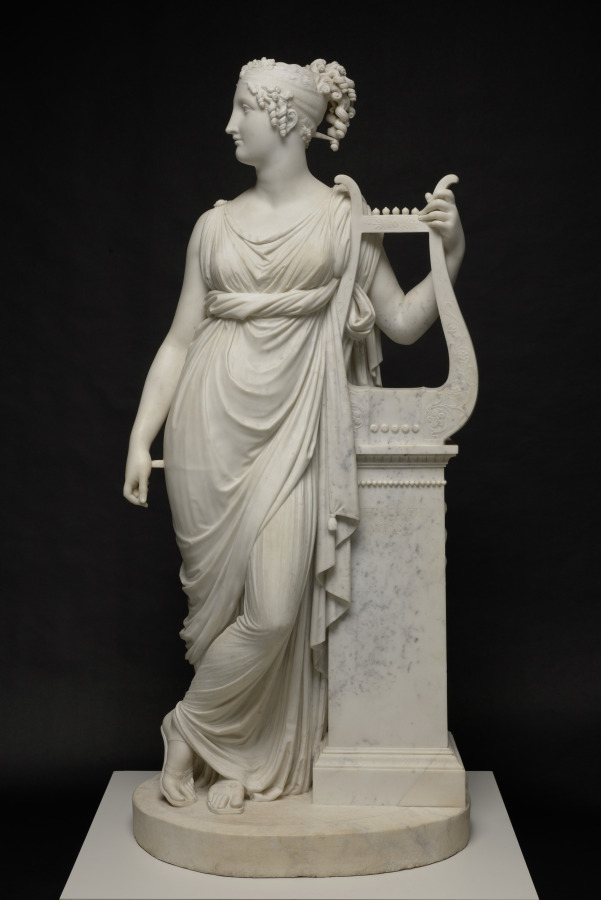
Structural Dialectics: The Lyran Silhouette as Urban Poetics
The aesthetic DNA of Terpsichore Lyran, as rendered through the dual lenses of Han Gan’s *Night Shining White* and Yun Shouping’s *Hundred Flowers Scroll*, presents a paradigm of extreme compression and expansive release. For the 2026 executive silhouette, this is not a mere stylistic reference but a rigorous formal thesis. The core architectural principle is the tension between a monolithic, almost brutalist outer shell and an interior logic of fluid, organic articulation. This is the urban materiality of Onyx—a color that absorbs light, defines mass, and refuses sentimentality.Geometric Integrity: The Column and the Gallop
The foundational geometry of the Lyran silhouette is derived from Han Gan’s structural paradox: the tethered horse. The verticality of the tethering post—a rigid, unyielding column—becomes the primary structural axis. In garment terms, this translates to a sharply defined, elongated torso. The shoulder line is not draped but constructed, a clean architectural plane that extends from a high, structured armhole. The sleeve, however, is where the “gallop” occurs. It is cut with a deliberate, controlled fullness—a deep, folded volume that originates at the shoulder blade and cascades toward the wrist, where it is cinched by a precise, metallic cuff. This is not a bell sleeve; it is a geometric arc, a frozen parabola of movement. The fabric, a double-faced wool with a matte Onyx finish, holds this shape without collapsing, its weight creating a gravitational pull that mimics the horse’s straining musculature. The pant, conversely, is a study in negative space. It is a straight, columnar form, narrow through the hip and falling to a clean break at the shoe. The interior leg seam is subtly shifted forward, creating a slight, almost imperceptible torsion—a reference to the twisting tension of the horse’s haunches. This is not a relaxed fit; it is a controlled, vertical line that anchors the entire composition. The waistband is a wide, structural band, devoid of belt loops, and fastened with a single, hidden Onyx-enameled clasp. The silhouette is thus a dialogue: the upper body, a contained explosion of kinetic energy; the lower body, a disciplined, grounded column.Color as Material Philosophy: The Onyx Spectrum
Onyx is not a neutral. It is a chromatic void that demands a specific materiality. For the Lyran collection, the color is achieved through a proprietary dye process that imbues the fabric with a deep, non-reflective black, punctuated by microscopic, irregular flecks of silver—a reference to the “moonlight” that defines *Night Shining White*. This is not a glitter; it is a geological memory, a trace of mineral light trapped within the darkness. The effect is a surface that shifts from absolute matte to a subtle, granular shimmer under direct light, mimicking the texture of polished stone. This Onyx is deployed in two distinct material registers. The primary shell—the jacket and pant—is a worsted wool with a tight, plain weave, its surface as smooth and unyielding as the painting’s ink-wash ground. The secondary register, used for the interior lining and the sleeve’s internal pleats, is a silk charmeuse dyed in a gradient of “Peony Smoke”—a muted, desaturated pink that references Yun Shouping’s floral palette. This color is never seen in full; it is revealed only in motion, a fleeting glimpse of the “hundred flowers” hidden within the Onyx monolith. This is the structural poetics of concealment and revelation, a direct translation of the scroll’s intimate, interior world.Urban Materiality: The Architecture of Restraint
The Lyran silhouette rejects the soft, draped femininity often associated with floral motifs. Instead, it appropriates the structural logic of Yun Shouping’s “boneless” technique—the absence of a hard outline—as a principle of construction. The jacket’s seams are not topstitched; they are fused and pressed to an invisible edge. The collar is a high, standing band that wraps the neck like a ceramic rim, its interior reinforced with a horsehair canvas to maintain its rigid arc. The closure is asymmetrical, a single, long, hidden placket that runs from the collarbone to the hip, secured by a series of magnetic Onyx discs. This creates a clean, uninterrupted front plane, a “blank scroll” upon which the wearer’s movement writes. The urban context demands durability. The wool is treated with a nano-coating that repels moisture and resists pilling, ensuring the silhouette retains its sharp geometry through a 14-hour workday. The interior seams are bound with a silk twill tape in the same Peony Smoke, a detail invisible to the observer but felt by the wearer as a tactile counterpoint to the wool’s austerity. The pockets are not slashed but integrated into the seam lines, appearing as subtle, vertical slits that do not disrupt the garment’s monolithic surface.Conclusion: The Lyran Synthesis
The 2026 executive silhouette for Terpsichore Lyran is a study in controlled contradiction. It is Minimalist in its reduction to a single, dominant color and a clear, geometric core. Yet it is profoundly complex in its internal logic, borrowing the tensile energy of a galloping horse and the layered, hidden beauty of a painted flower. The Onyx shell is a fortress; the Peony Smoke interior is a garden. The wearer is not adorned but architecturally framed, their presence defined by the space they occupy and the movement they contain. This is not fashion as decoration; it is fashion as a structural manifesto for the urban landscape.
Technical Insight
Technical Insight: Translating Onyx palettes into Minimalist silhouettes for the modern metropolis.