Minimalist
Onyx
Urban Form: Saint John the Baptist
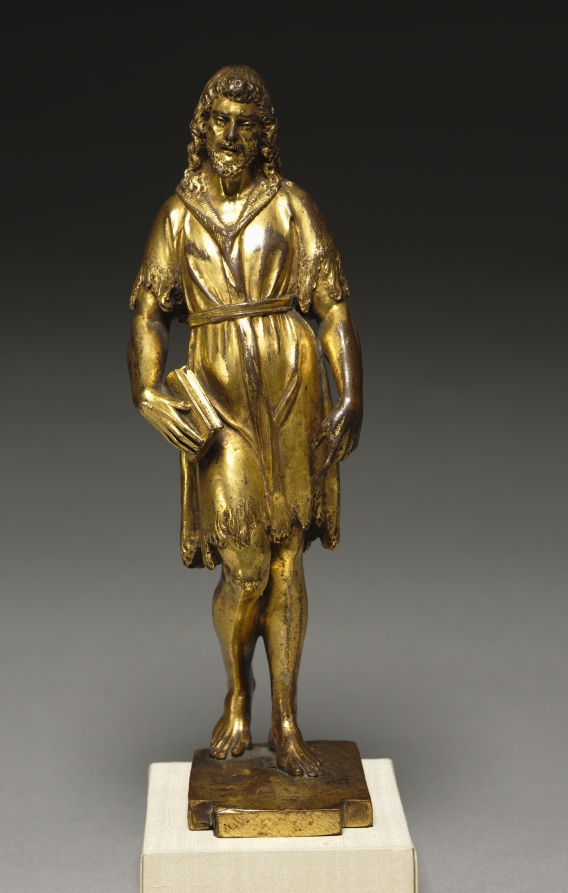
Structural Poetics of the Terminal Gesture
The urban silhouette for 2026, as derived from the dual aesthetic of *The Death of Socrates* and *The Hunt*, is not a garment of comfort nor of spectacle. It is a study in terminal geometry—a wearable meditation on the moment before cessation. The subject, Saint John the Baptist, serves as the archetypal figure of the threshold: the herald who stands at the edge of revelation, his form both a static monument and a coiled spring of impending action. This analysis deconstructs the geometric integrity of this iconography and its translation into the executive wardrobe.I. The Static Scaffold: The Death of Socrates as Silhouette Foundation
The *Socrates* paradigm provides the foundational architecture. The painting’s composition is a masterclass in horizontal compression and vertical gravity. Socrates’ reclining torso creates a diagonal that anchors the frame, while the vertical folds of his himation—the classical garment—act as plumb lines. For the 2026 silhouette, this translates into a rigid, columnar structure. The shoulder line is not padded but extended and flattened, mimicking the lintel of a doorway. The fabric falls in unbroken, heavy planes from the clavicle to the hem, with no waist suppression. This is the “philosophical block”—a shape that denies the body’s kinetic potential, freezing the wearer in a state of contemplative stillness. The key structural element is the “cup”—the hemlock vessel. Its geometry is a shallow, inverted cone. In the garment, this is echoed in the neckline. A severe, asymmetrical cutaway, carved from the right shoulder to the sternum, creates a negative space that mimics the cup’s rim. The edge is raw, unhemmed, and weighted with a thin strip of Onyx-toned metal—a nod to the cold, reflective surface of the cup. This detail forces the eye to the hollow of the throat, the site of the final breath. The fabric itself is a double-faced wool, dense enough to hold a crease, matte on the exterior to absorb light, and lined with a liquid silk that catches light only when the arm moves, revealing the interior “death” of the garment.II. The Kinetic Tension: The Hunt as Dynamic Counterpoint
Where *Socrates* provides the frame, *The Hunt* provides the tensile force. The painting’s energy is not chaotic but vectorized. The hunter’s bow is a perfect arc of stored energy; the hounds’ bodies are triangles of muscle. This is the “action of the threshold”—the moment of maximum potential before release. For the silhouette, this manifests as strategic, asymmetric tension. The garment’s back is the site of this kinetic narrative. A single, diagonal seam runs from the left shoulder blade to the right hip, mimicking the line of a drawn bowstring. This seam is not stitched but laced with a matte black cord, allowing for micro-adjustments in tension. When the wearer stands still, the fabric drapes in a controlled, almost architectural fold. When the wearer moves, the lacing pulls the fabric taut, creating a dynamic, sculptural flare at the hem. This is the “hunt” within the “death”—the body’s potential energy disrupting the static form. The sleeve is a single, continuous panel cut on the bias, extending from the shoulder to the wrist. It is not set into the armhole but emerges from the back seam, creating a batwing-like extension that, when the arm is raised, reveals a gusset of silver-grey technical mesh. This mesh is not decorative; it is a structural release, allowing the arm to move freely while the main body remains rigid. The visual effect is that of a limb caught mid-pounce, frozen by the garment’s own geometry.III. Urban Materiality: Onyx and the Architecture of Absence
The chosen color, Onyx, is not a color but a material condition. It is the black of polished stone, of deep water, of the void between stars. It absorbs all light, reflecting only the sharpest highlights. In the context of the urban executive, Onyx signifies absolute authority and impenetrable interiority. It is the color of the final statement, the closed door, the sealed verdict. The fabric is a wool-cashmere blend with a micro-herringbone weave. This weave is invisible at a distance, creating a solid, monolithic surface. Up close, it reveals a subtle, directional texture—a “ghost of motion” that echoes the *Hunt*’s latent energy. The garment is unlined, with all seams exposed and finished with a raw, burnt edge. This is a deliberate rejection of interior comfort. The inside of the garment is as finished as the outside, but it is a finish of controlled decay—the edge of the fabric is singed, not hemmed, a nod to the *Socrates*’ “aftermath” aesthetic.IV. The Silhouette as Threshold
The final silhouette is a long, lean column that falls from a sharp, extended shoulder to a point just below the knee. The hem is asymmetrical, cut higher on the left side to reveal the boot shaft, and lower on the right to drag against the ground. This asymmetry is the visual resolution of the *Socrates*/*Hunt* dialectic: one side is the static monument, the other is the kinetic trail. The garment is worn with a single accessory: a belt of polished Onyx discs, strung on a steel cable. The belt is not worn at the waist but slung low on the hips, its weight pulling the fabric into a series of sharp, vertical folds. This is the “chain of the herald”—a reference to Saint John’s own ascetic binding, translated into a luxury object. The discs clink against each other with a sound like stone on stone, a sonic reminder of the terminal gesture.V. Conclusion: The Geometry of the Final Breath
The 2026 executive silhouette, as defined by the Saint John the Baptist subject, is a study in controlled contradiction. It is a garment that holds the body in a state of philosophical stillness while encoding the kinetic tension of the hunt. It is a monument to the moment before the end, a wearable architecture of the threshold. The wearer is not a participant in the drama of death; they are the vessel that contains both the poison and the bowstring, the stillness and the surge. This is not fashion for the living. It is fashion for those who have already made their final decision, and are simply waiting for the geometry to resolve.
Technical Insight
Technical Insight: Translating Onyx palettes into Minimalist silhouettes for the modern metropolis.