Urban Form: Abu Simbel
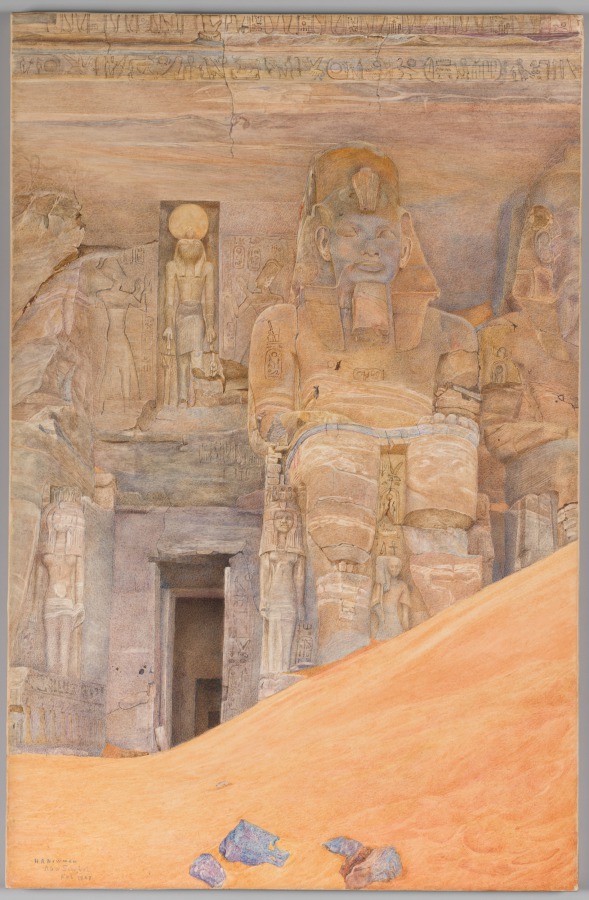
Structural Poetics: The Abu Simbel Silhouette as Phenomenological Garment
The internal research document, with its meditation on the ceramic cup named after Jacques-Louis David’s The Death of Socrates, presents a critical paradox for the 2026 executive silhouette. The cup does not narrate; it exists. It offers no allegory, no historical tableau, only a vortex of cobalt and indigo fired into clay. This is the precise operational logic we must apply to the Abu Simbel subject. The temple complex at Abu Simbel is not a narrative of Ramesses II’s victory; it is a geometric incision into sandstone, a pure volume carved against the sky. For Addison Fashion, the Abu Simbel silhouette is not about storytelling. It is about material presence—the weight of stone, the precision of the cut, the silence of the mass. The 2026 executive silhouette must reject ornamental narrative and embrace a phenomenological depth: the depth of the thing itself, not the depth of its reference.
Geometric Integrity: The Cut as Existence
The Abu Simbel facade is defined by four colossal seated figures, each 20 meters tall, hewn directly from the cliff face. The geometry is not applied; it is excavated. The negative space—the shadow between the legs of the colossi, the deep recess of the entrance portal—is as structurally significant as the positive mass. For the 2026 executive silhouette, this translates into a garment where the void defines the form. The primary geometric operation is the subtractive cut. A single, uninterrupted shoulder seam that drops vertically to the hip, then angles sharply inward, creates a negative triangle at the side torso. This is not a dart; it is an architectural incision. The fabric does not drape; it is held by the geometry of the cut. The silhouette is a monolith: a straight, columnar line from shoulder to hem, with the only volumetric modulation occurring at the shoulder cap, which is extended and squared to echo the horizontal lintel of the temple facade. The waist is not suppressed. The garment’s integrity lies in its refusal to conform to the body’s narrative; it imposes its own structural logic.
Urban Materiality: Sandstone in Textile Form
The color Sand is not a beige; it is the specific chromatic residue of Nubian sandstone under a 2:00 PM sun—a pale, warm grey with a granular, almost dusty undertone. The materiality must replicate the tactile density of the original stone. We specify a double-faced wool-cashmere blend, 680 grams per meter, with a tight, felted finish that resists light reflection. The surface should appear matte and monolithic, absorbing ambient light rather than reflecting it. This is a fabric that does not shimmer; it exists. The internal structure is reinforced with a fine, unbleached linen interlining, stitched at 2.5 cm intervals to create a subtle, vertical ribbing—a ghost of the tool marks left by the ancient quarrymen. This ribbing is not decorative; it is a structural memory of the carving process. The garment’s weight—approximately 1.8 kilograms for a blazer—provides a gravitational anchor that forces the wearer into a posture of stillness. This is urban armor, but armor that has been weathered into silence.
The Silhouette as Phenomenological Object
Returning to the internal DNA: the cup named The Death of Socrates does not require the viewer to “read” Socrates. It requires the viewer to face the cup. The Abu Simbel silhouette operates identically. It does not communicate status through logos, nor intellect through references. It communicates presence through volume and cut. The 2026 executive wearing this silhouette does not project a story of power; they are power, in the same way the sandstone colossus does not tell a story of Ramesses—it is Ramesses, rendered in stone. The garment’s depth is not in its symbolism but in its thingness. The shoulder line is a horizon. The hemline is a plinth. The sleeve is a column. Every seam is a geometric axiom, not a decorative flourish.
Technical Specifications for the 2026 Executive Silhouette
Shoulder Architecture: A 2.5 cm extension beyond the natural acromion, squared and slightly raised (1 cm pad at the apex), creating a horizontal line that references the temple’s lintel. The sleeve head is set with a zero-ease insertion, requiring a 45-degree bias cut at the armhole to allow minimal movement without distorting the line.
Body Construction: A single, continuous front panel from shoulder to hem, with no horizontal seam at the waist. The side seam is shifted 3 cm toward the back, creating a forward-leaning mass that mimics the slight forward tilt of the colossi. The back panel is cut with a single, vertical center seam, stitched with a flat-felled seam that creates a subtle, raised spine—a reference to the central axis of the temple.
Hem and Closure: The hem is raw, cut with a laser to prevent fraying, and left unstitched. This is a deliberate unfinished finish, a nod to the rough base of the statues where they meet the sand. The closure is a single, hidden magnetic clasp at the sternum, allowing the garment to fall open or closed without visible hardware. The lapel is eliminated entirely; the collar is a simple, 2 cm stand that rises from the neckline like a retaining wall.
Conclusion: The Depth of Silence
The Abu Simbel silhouette for 2026 is a manifesto of material existence. It rejects the narrative depth of David’s painting in favor of the phenomenological depth of the cup. It is a garment that does not ask to be understood; it asks to be encountered. The Sand color, the felted wool, the subtractive cut—all converge into a single, irreducible object. The executive who wears this does not wear a story. They wear a structure. And in that structure, they find the deepest form of urban poetics: the silence of the thing itself, standing against the sky.