Minimalist
Slate
Urban Form: Virgin and Child
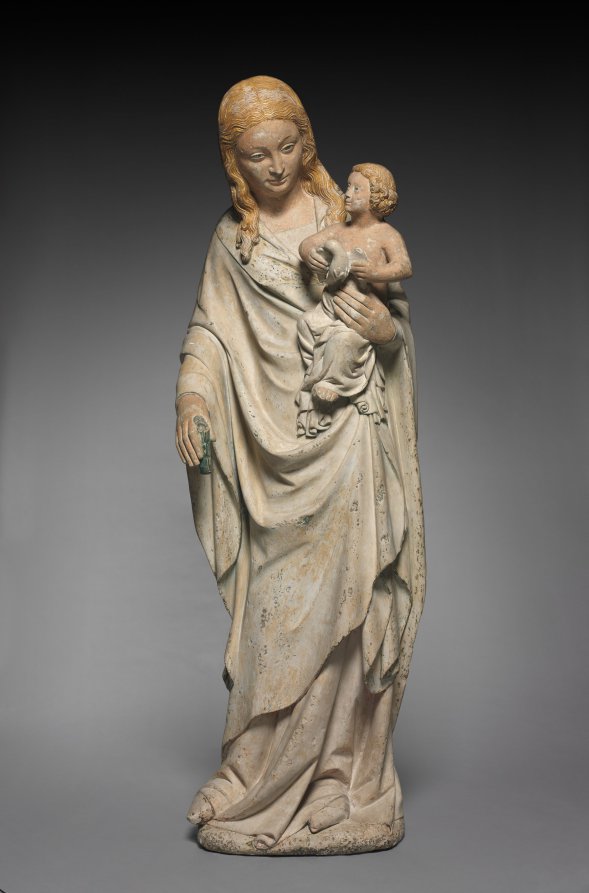
Geometric Integrity as a Dialectic of Stasis and Transcendence
The subject of the Virgin and Child, when refracted through the internal DNA of Addison Fashion’s research—the juxtaposition of the *Death of Socrates* vessel and the *Stele with Sakyamuni and Bodhisattvas*—yields a definitive urban silhouette for 2026. This is not a sentimental rendering of maternity. It is a structural poetics of the “limit moment,” where the body becomes a vessel for two opposing yet convergent forces: the heroic stasis of Western rationalism and the fluid transcendence of Eastern non-duality. The resulting silhouette is Minimalist, executed in Slate—a color that absorbs light without reflection, embodying the geological permanence of stone and the mineral density of ancient pigment.Structural Poetics: The Geometry of the Limit
The Virgin and Child, in this analysis, is not a narrative of nurture but a diagram of two existential postures. The mother’s form, derived from the Socratic vessel, is a study in geometric compression. Her shoulders are squared, her spine a vertical axis of unyielding rectitude. The child, by contrast, is rendered as a horizontal counterpoint—a recumbent form echoing the Buddha’s parinirvana. The silhouette must therefore resolve this tension: a vertical column of rational containment cradling a horizontal line of release. For the 2026 executive silhouette, this translates into a double-layered structural system. The outer shell—a high-neck, long-line tunic in Slate wool crepe—is cut with precise, angular shoulders that recall the Socratic finger pointing toward the ideal. The shoulder seam is not dropped but articulated, a 90-degree angle that declares the wearer’s sovereignty over space. The fabric is weighted, almost architectural, with a slight sheen that mimics the polished surface of carved stone. This is the “heroic” layer: it resists the body, holding it in a posture of ethical clarity. Beneath this, the inner layer—a draped, asymmetric panel in matte Slate silk—references the flowing water-like robes of the Bodhisattvas. This panel is not sewn to the shell but attached at a single point at the left clavicle, allowing it to fall in a continuous, unbroken line toward the hem. The child’s form is implied here: a gentle, horizontal swell at the waist, created by a hidden internal seam that mimics the Buddha’s reclining posture. This is the “transcendent” layer: it yields to gravity, suggesting release without collapse. The hem of the outer tunic is cut at the knee, a strict horizontal line that echoes the base of the stele. The inner panel extends to the ankle, its edge irregular, like the weathered edge of a stone relief. This asymmetry is not decorative but philosophical: it embodies the dialogue between the fixed and the flowing, the eternal and the impermanent.Urban Materiality: Slate as a Medium of Paradox
Slate is chosen not for its neutrality but for its paradoxical materiality. It is a stone formed under pressure, yet it cleaves into thin, flexible sheets. In the urban context, Slate reads as both severe and mutable. For the 2026 silhouette, the fabric is a double-faced wool-silk blend: the outer face is brushed to a matte, almost dusty finish, absorbing ambient light like a mineral surface. The inner face is woven with a subtle metallic thread—a nod to the mineral pigments of the stele—that catches light only when the wearer moves. This is the “color as mineral” approach: not a flat hue but a depth that shifts with angle and time. The texture is deliberately non-organic. There is no softness, no breathability in the conventional sense. Instead, the fabric is engineered to hold its shape, to resist the body’s warmth. This is a material that does not comfort but confronts. It is the urban equivalent of the Socratic cup: a vessel that contains poison and wisdom in equal measure. The silhouette’s construction emphasizes negative space. The neckline is a precise, shallow scoop that exposes the clavicle—the point where the inner panel attaches. This is the only area of skin visible, a deliberate reference to the “limit” where the body meets the garment. The sleeves are cut to the wrist, but the inner panel’s drape creates a void between the arm and the torso, a shadow that reads as both absence and potential. This is the “Buddhist emptiness” rendered in tailoring: the space between fabric and flesh is not empty but charged with the possibility of release.The 2026 Executive Silhouette: A Diagram of Two Deaths
The final silhouette is a vertical column with a horizontal interruption. From the front, the wearer appears as a monolith—a Slate pillar in a city of glass and steel. The angular shoulders and straight hem project authority, the “Socratic” stance of one who has faced the limit and chosen to stand. But from the side, the silhouette reveals its secret: the inner panel’s drape creates a subtle, continuous curve from the left shoulder to the right ankle, a line that suggests the Buddha’s reclining form. The wearer is both standing and lying down, both present and dissolving. This is the geometric integrity of the design: it does not resolve the dialectic but holds it in tension. The garment is a portable stele, a stone that carries the memory of two civilizations’ answers to the same question. In the urban landscape, where the executive must navigate the relentless forward motion of capital and the constant pressure of performance, this silhouette offers a third space: the ability to be both heroic and transcendent, to face the limit while embracing the void. The color Slate, in this context, is not a background but a material argument. It is the color of the philosopher’s stone, the mineral pigment that outlasts the hand that applied it. It is the color of the city at dusk, when the glass towers become mirrors of the sky. It is the color of the limit itself: neither black nor white, but the boundary where light ends and shadow begins. In the 2026 collection, this silhouette will be shown with a single accessory: a geometric clutch in polished Slate metal, its surface etched with a line that is both a finger pointing upward and a body reclining. The wearer carries the dialectic in her hand. She is the Virgin and Child, the Socratic and the Buddha, the stone and the pigment. She is the urban silhouette of the limit, rendered in Minimalist Slate.
Technical Insight
Technical Insight: Translating Slate palettes into Minimalist silhouettes for the modern metropolis.