Minimalist
Onyx
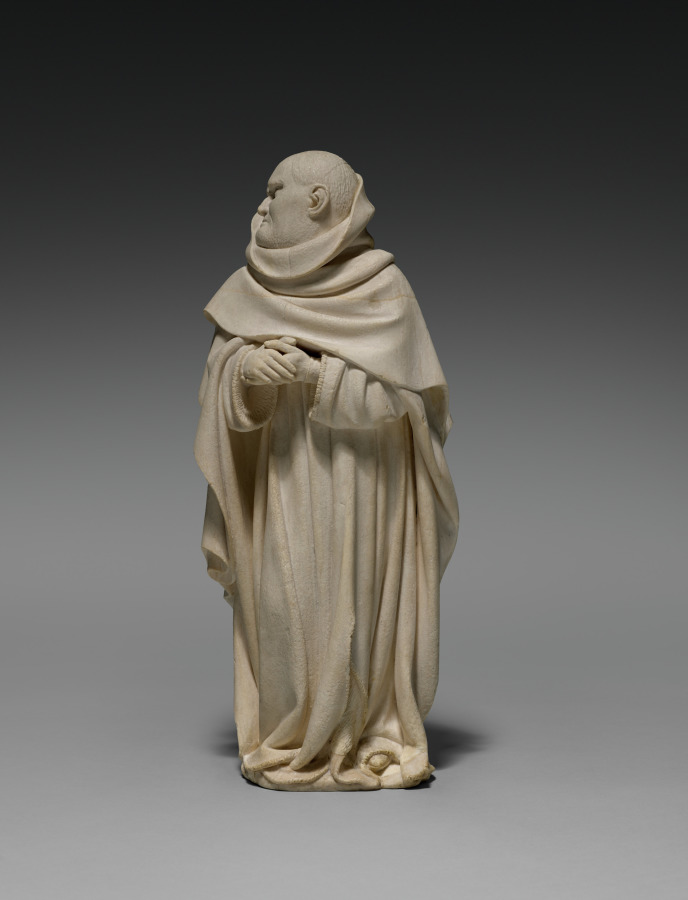
Urban Form: Mourner from the Tomb of Philip the Bold, Duke of Burgundy (1364–1404)
Executive Summary: The Architecture of Mourning and the Logic of the Void
The *Mourner from the Tomb of Philip the Bold* is not a sculpture of grief; it is a study in the suppression of the individual for the collective, the subordination of flesh to fabric, and the elevation of drapery to a system of structural logic. For the 2026 NYC executive wardrobe, this 14th-century Burgundian figure offers a radical thesis: power is not expressed through volume or ornament, but through the disciplined containment of form. The mourner’s cascading, deeply carved folds are not decorative—they are a tectonic language of weight, shadow, and verticality. This analysis deconstructs the mourner’s silhouette into three core principles—**Compression**, **Gravity**, and **The Negative Space of the Fold**—and translates them into actionable design directives for the modern urban professional.I. Silhouette Analysis: The Tectonics of Draped Mass
A. The Principle of Compression
The mourner’s form is defined by what is *not* seen. The body is entirely subsumed by the cloak; there is no discernible waist, no hip, no shoulder articulation. This is not an erasure of the human form, but a **redefinition of its boundaries**. The garment acts as a monolithic shell, compressing the figure into a single, unbroken vertical column. The critical detail is the **absence of a belt or cinch**. Unlike the hourglass or the A-line, this silhouette relies on internal structure—the weight of the fabric itself—to create a stable, self-supporting mass. **Technical Translation for 2026:** - **The “Mourner’s Column” Silhouette:** A single-layer, floor-length coat or duster in a heavy, non-draping fabric (e.g., 22oz wool melton, compacted cashmere felt). The cut must be straight from shoulder to hem, with zero waist suppression. The armhole is dropped to a 45-degree angle, creating a continuous line from the neck to the floor. - **Material Requirement:** The fabric must have a **high grammage (600+ gsm)** and a **tight weave** to prevent any flutter or movement. The garment should feel like a second skin of stone, not a blanket. Onyx-black is the optimal color, as it absorbs light and eliminates surface distraction, forcing the eye to read only the silhouette’s edge.B. The Logic of the Fold: Structural vs. Decorative
The mourner’s folds are not random. They are **structural ribs** that channel the eye downward. Each fold is a deep, vertical channel—a “negative space” that creates a rhythmic alternation of light and shadow. This is the opposite of Grecian drapery, which is fluid and organic. Burgundian folds are **carved, not draped**. They are architectural buttresses that stabilize the mass of the garment. **Technical Translation for 2026:** - **The “Channeled Pleat” System:** For a tailored trouser or a pencil skirt, replace standard darts with deep, unpressed vertical pleats that run from the hip to the hem. These pleats should be **sewn down at the top 6 inches** to maintain structure, then released to fall freely. The effect is a series of parallel shadows that elongate the leg and create a sense of controlled weight. - **The “Negative Space” Jacket:** A single-breasted blazer with no lapel. Instead, the front closure is a single, deep vertical slit from the collarbone to the hem. The fabric is folded back on itself to create a 1.5-inch “shadow channel” on either side of the closure. This mimics the mourner’s central fold, creating a visual spine for the garment.II. Color and Materiality: The Onyx Spectrum
A. The Primacy of Onyx
The mourner’s original limestone is a cold, matte gray—a color of negation. For the 2026 executive, we translate this into **Onyx**: a black that is not flat, but possesses a **subsurface depth** reminiscent of polished jet or volcanic glass. Onyx is the color of absolute authority because it refuses to reflect the environment. It is a color that *absorbs*—light, attention, and context. It does not compete; it commands. **Material Pairing:** - **Primary:** Onyx wool/cashmere blend with a matte finish. The surface should be slightly napped (brushed) to diffuse light, creating a soft, velvety black. - **Accent:** Onyx polished leather for accessories (belt, shoe, bag). The high-gloss leather creates a point of tension against the matte fabric, echoing the contrast between the mourner’s carved stone and the smooth, polished floor of the tomb.B. The Secondary Palette: Slate and Silver
To prevent the Onyx from becoming monolithic, we introduce two tonal accents derived from the mourner’s original material: - **Slate (15%):** A cool, blue-gray used for internal linings or a single underlayer (e.g., a Slate silk blouse worn under the Onyx column coat). This creates a **reveal**—a flash of color when the wearer moves, echoing the way light catches the deepest part of a stone fold. - **Silver (5%):** A cold, metallic thread used in a micro-herringbone weave for a tie or a pocket square. This is not a warm gold or brass; it is a **mineral silver**, like mica flecks in granite. It provides the only point of reflection, functioning as a visual anchor.III. The 2026 Executive Wardrobe: Three Key Pieces
1. The “Mourner’s Column” Overcoat
- **Form:** Floor-length, single-piece front and back (no side seams). Dropped shoulder, no collar, no buttons. Closure is a single, hidden magnetic seam at the center front, creating a seamless column. - **Fabric:** 24oz Onyx wool felt, double-faced. - **Function:** The ultimate power piece for the executive who needs to command a room without speaking. The garment’s weight and silence create a psychological barrier. It is a *presence*, not an outfit.2. The “Channeled” Trousers
- **Form:** High-waisted, wide-leg, with 8 deep, unpressed vertical pleats from hip to hem. The pleats are sewn down for the first 8 inches, then released. The hem is raw-cut and weighted with a 1-inch internal chain. - **Fabric:** 16oz Onyx wool crepe. - **Function:** These trousers replace the standard suit pant. The pleats create a visual rhythm that elongates the leg and adds a sculptural quality to movement. The raw hem and internal chain ensure the pant falls with a “dead” weight, mimicking the mourner’s static drape.3. The “Negative Space” Shell
- **Form:** A sleeveless, turtleneck shell. The front is a single piece of fabric with a deep, vertical slit from the collarbone to the navel. The slit is edged with a 0.5-inch Onyx leather binding. - **Fabric:** 4-ply Onyx cashmere. - **Function:** This is the foundational piece. Worn under the column coat or alone, it creates a central vertical line that organizes the entire silhouette. The leather binding adds a tactile, architectural edge.IV. Conclusion: The Aesthetics of Restraint
The *Mourner from the Tomb of Philip the Bold* teaches us that the most powerful form is the one that holds back. In an era of digital noise and constant visual stimulation, the 2026 NYC executive wardrobe must be a **counter-signal**: a statement of silence, weight, and permanence. The Onyx palette, the compressed column, and the structural fold are not trends; they are a return to the fundamental logic of form. This is not fashion. This is architecture for the body.
Technical Insight
NYC Perspective: Translating Onyx tones into Minimalist silhouettes.