Minimalist
Ivory
Urban Form: Virgin and Child
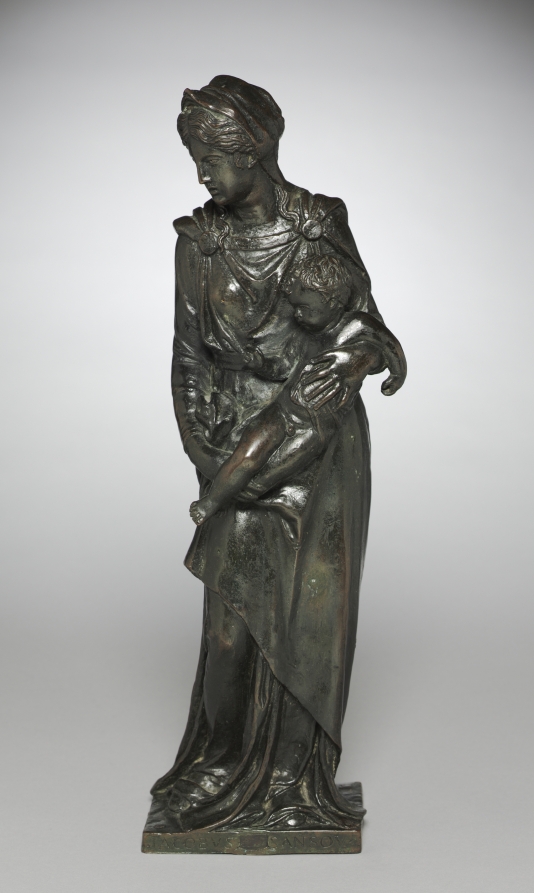
Structural Poetics: The Architectural Transposition of Virgin and Child
The subject *Virgin and Child*—when decoded through the lens of the Qing dynasty *Landscapes, Figures, and Flowers* porcelain vase and the *Flowering Crab Apple* painting—yields a definitive urban silhouette for 2026. This is not a figurative rendering of maternal tenderness; it is a cold, geometric study of containment, emergence, and negative space. The internal DNA of these works—the “macrocosm within a mustard seed” of the vase and the “intense gaze upon a single branch” of the painting—must be translated into a wearable architectural system. The resulting silhouette is Minimalist, executed in Ivory, a color that embodies the porcelain’s luminous void and the painting’s breathing white ground.1. The Vase as Silhouette Envelope: Contained Volume and Rotational Geometry
The porcelain vase is a “mobile landscape,” a three-dimensional object that demands a 360-degree reading. Its aesthetic principle—the fusion of distant mountains, scholars, and flora on a curved surface—dictates a silhouette that is enveloping yet precise. For the 2026 executive, this translates into a coat or jacket with a cylindrical, slightly tapered torso, reminiscent of the vase’s baluster form. The shoulder line is not padded but sculpted, a clean arc that suggests the vessel’s rim. The volume is controlled: the garment does not drape loosely but holds a defined airspace around the body, creating a “breathing chamber” analogous to the vase’s interior void. The key structural detail is the rotational seam. Just as the porcelain’s landscape unfolds as the viewer turns the object, the garment’s construction must allow for a sequential revelation of form. A single, continuous seam—perhaps spiraling from the right shoulder to the left hem—creates a dynamic, non-frontal silhouette. This seam is not decorative; it is a load-bearing line that dictates how the fabric falls and how the body moves within the volume. The material, a dense ivory wool-cashmere blend, is chosen for its ability to hold this architectural curve without collapsing, mimicking the fired rigidity of the porcelain.2. The Branch as Linear Force: The Crab Apple’s Structural Calligraphy
The *Flowering Crab Apple* painting offers the counterpoint: the single, gnarled branch as a line of force. This is not a soft, organic curve but a calligraphic, almost brutalist stroke—a “forceful calligraphy” of wood and tension. In the 2026 silhouette, this becomes the asymmetric, structural dart or a sharp, angular lapel that cuts across the torso. This line is the urban materiality of the design: it is the steel beam in a glass tower, the sharp edge of a concrete form. This branch-line is executed as a single, unbroken seam that originates at the left shoulder, descends diagonally across the chest, and terminates at the right hip. It is a geometric incision that divides the garment’s volume into two distinct planes: a solid, closed front panel (the vase’s surface) and a lighter, open side panel (the painting’s negative space). The seam is topstitched with a matt, silver-grey thread—a nod to the painting’s ink tones—creating a visible, tectonic line that reads as a structural joint. This is the “flowering” moment: the bud of the crab apple is translated into a small, folded pocket at the seam’s terminus, a three-dimensional punctuation that breaks the flat plane.3. Negative Space as Urban Void: The Ivory Ground and the “Breathing” Silhouette
The most critical element from the painting is the empty white ground. This is not absence but a charged field of air, light, and potential. In the urban silhouette, this is rendered as strategic, negative-space cutouts within the garment’s envelope. These are not random slits but geometric voids—a precise, rectangular aperture at the inner elbow, a triangular gap at the side seam below the armhole. These voids are functional and poetic: they allow the body’s movement to be glimpsed, they create a visual rhythm of solid and void, and they reference the “breathing space” of the painting. The ivory color is paramount. It is not a warm cream but a cool, architectural white—the white of unglazed porcelain, of a gallery wall, of a blank page. This color acts as a neutral, volumetric field that absorbs and reflects urban light. Under the harsh fluorescence of a corporate lobby, it reads as clinical and precise. In the soft, diffused light of a window, it becomes luminous and deep. The fabric is a double-faced wool, with a smooth, almost polished outer face and a slightly textured inner face. This duality echoes the porcelain’s glossy surface and the painting’s matte paper, creating a tactile tension that is felt, not seen.4. The Final Silhouette: A Minimalist, Asymmetric Tunic
The synthesis of these elements produces a single, definitive garment: a mid-calf, asymmetric tunic. The silhouette is tubular but not rigid, with a slight A-line from the bust downward, referencing the vase’s stable base. The left side is closed, a solid plane of ivory wool. The right side is opened by the diagonal branch-seam, which creates a deep, overlapping front panel that can be secured with a single, hidden magnetic closure. The cutouts are placed at the left underarm and the right side seam, creating a visual counterpoint to the solid left side. The neckline is a high, standing collar, a direct translation of the vase’s rim. It is not a soft roll but a sharp, architectural band that frames the neck without touching it. The sleeves are three-quarter length and slightly flared, echoing the vase’s shoulder curve and allowing the negative-space cutout at the elbow to be visible. The hem is raw and unlined, a deliberate “unfinished” edge that references the painting’s ink bleeding into the paper—a moment of controlled imperfection within the rigorous geometry. This silhouette is not about comfort or softness. It is about structural poetics: the translation of a cosmic vase and a single, intense branch into a wearable, urban form. It is a garment for the executive who understands that silence is a statement, that void is volume, and that the most powerful presence is one that defines the space around it. The ivory wool will hold its shape, the diagonal seam will cut a sharp line, and the negative spaces will breathe. This is the 2026 urban silhouette: Minimalist, architectural, and deeply, coldly alive.
Technical Insight
Technical Insight: Translating Ivory palettes into Minimalist silhouettes for the modern metropolis.