Urban Form: Architectural Canopy
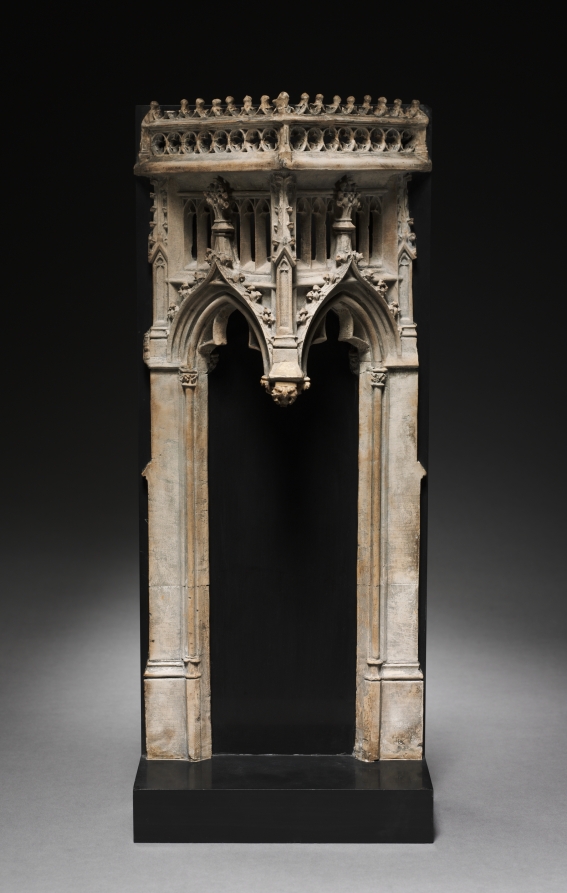
Geometric Integrity as Architectural Canopy: The 2026 Executive Silhouette
The subject of the Architectural Canopy, when filtered through the aesthetic dialectic of the Senusret Stela and Goya’s The Third of May 1808, yields a paradoxical yet definitive thesis for the 2026 executive silhouette. The stela’s “sublime of order”—its rigid grid, standardized hieroglyphs, and frontal-hieratic pose—represents a form of absolute geometric control. Goya’s “sublime of terror”—its chaotic diagonals, violent chiaroscuro, and decentered composition—represents the rupture of that control. The Architectural Canopy, as a garment concept, must synthesize these two poles: it must be a structure that both contains and confronts the urban condition. The 2026 executive silhouette is therefore not a soft drape nor a tailored second skin. It is an oversized, volumetric shell—a mobile architecture that asserts presence through mass, shadow, and the deliberate negation of the body’s natural line.
Structural Poetics: The Canopy as a Monument of Tension
The primary geometric operation of the Architectural Canopy is the inversion of the shoulder-to-hip ratio. Where a classic tailored jacket emphasizes a V-torso, the canopy employs an exaggerated, horizontal shoulder line—a floating lintel—that extends beyond the natural acromion by 8 to 12 centimeters. This is not padding in the traditional sense; it is a rigid, cantilevered structure achieved through internal boning and a double-faced wool with a tensile, almost metallic hand. The sleeve head is set with a deliberate, sharp break, creating a negative space—a shadow gap—between the arm and the body. This gap is the architectural equivalent of the stela’s carved hieroglyphs: a void that defines the positive form. The silhouette is not about fitting the body; it is about housing it within a defined, monumental volume.
The second structural principle is the vertical axis of compression. Drawing from the stela’s rigid verticality, the canopy’s front closure is a single, off-center seam that runs from the collarbone to the hem, bisecting the torso. This seam is not a simple line; it is a structural crease, pressed with a sharp, metallic edge that mimics the incision of a chisel. The fabric is forced to fold, not drape. The resulting asymmetry—a deliberate deviation from the stela’s perfect bilateral symmetry—introduces the Goya-esque tension. It suggests that the monument is under stress, that the order is not absolute. The hem is cut at a sharp, descending angle from front to back, creating a dynamic, anti-gravitational tail that trails behind the wearer like a wake. This is the canopy’s “process” rather than its “result”—a visual record of movement through the urban grid.
Urban Materiality: Onyx as the Medium of Silence and Violence
The color Onyx is not a choice of neutrality; it is a choice of absorption and depth. Onyx, as a mineral, is a layered, banded chalcedony—a stone of accumulated time. In the 2026 collection, Onyx is translated into a double-faced wool-cashmere blend with a matte, almost chalky surface that absorbs 95% of ambient light. This is the stela’s eternal stillness made tactile. The fabric does not shimmer; it sinks. It creates a field of visual silence against which the garment’s structural lines—the shoulder lintel, the vertical crease, the angled hem—are read as pure, incised marks. The materiality is deliberately anti-reflective, forcing the eye to trace the geometry rather than the surface texture.
However, the Onyx is also the color of Goya’s night—the black of the firing squad’s uniforms, the black of the hill against the sky. To introduce the “sublime of terror,” the canopy’s interior is lined with a liquid-satin in a deep, blood-rust tone (a color we term “Oxide”). This lining is only visible in moments of dynamic movement—when the arm is raised, when the coat is thrown open. It is a hidden violence, a flash of the chaotic interior that the orderly exterior seeks to contain. The urban materiality, therefore, is a dialectic: the Onyx exterior is the public monument, the stela; the Oxide interior is the private wound, the Goya. The garment is a wearable architecture of both repression and revelation.
The 2026 Executive Silhouette: A Typology of the Canopy
The final silhouette is defined by three key measurements:
1. The Shoulder Span: 1.6 times the natural shoulder width. The shoulder point is sharp, angular, and slightly elevated, creating a parapet-like profile. The sleeve is cut with a zero-ease, tubular construction that forces the arm into a slightly abducted position, further emphasizing the volume of the torso.
2. The Torso Volume: A straight, boxy cut from shoulder to hip, with a negative ease of -4 cm at the waist. The garment does not cinch; it hovers. The internal structure includes a hidden, lightweight aluminum frame at the shoulder yoke and a compression panel at the center back that maintains the vertical crease. The front panel is cut with a single, deep pleat at the off-center seam, which opens slightly with movement, revealing the Oxide lining.
3. The Hem Line: A descending, asymmetric arc from the front hem (at the hip bone) to the back hem (at mid-calf). This creates a trailing, architectural shadow on the ground, a literal “canopy” that extends the wearer’s presence into the space behind them. The hem is raw-edged and weighted with a hidden chain to ensure a clean, gravitational fall.
Conclusion: The Canopy as Urban Monument
The Architectural Canopy, in its Onyx iteration, is not a garment for comfort. It is a garment for occupation. It is the stela’s eternal order worn as a shield against the chaos of the city, and Goya’s hidden wound carried as a private truth. The 2026 executive silhouette is a mobile monument—a structure that asserts power not through the revelation of the body, but through the authority of its own geometry. It is the architecture of the individual who has built their own canopy, their own order, within the urban grid. The wearer does not move through the city; the city moves around the wearer. This is the definitive urban silhouette for the executive who understands that true presence is not about being seen, but about occupying space with the silent, incised authority of a stone that has witnessed centuries.