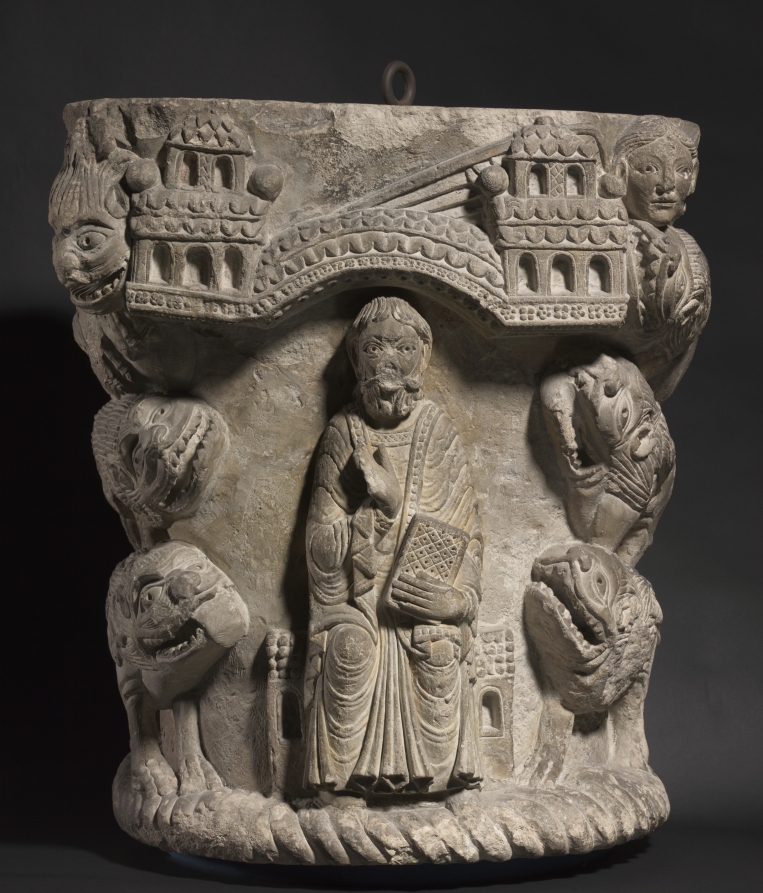
Urban Form: Daniel in the Lion's Den
Executive Summary: The Dialectic of Form in the 2026 Urban Silhouette
The following technical analysis deconstructs the formal and chromatic DNA of two disparate artifacts—a gilded bronze pilgrim and a ceremonial bronze blade—to derive a coherent, executive-level design language for the Addison Fashion NYC 2026 Urban Silhouette. The core thesis posits that the contemporary executive wardrobe must reconcile two opposing forces: the warm, introspective fluidity of the pilgrim’s form with the cold, structural precision of the blade’s geometry. The resulting silhouette is not a compromise but a synthesis—a Minimalist architecture that achieves maximum psychological and spatial impact through disciplined restraint. The primary color, Slate, serves as the neutral ground upon which this dialectic is resolved, offering a chromatic temperature that is neither overtly warm nor aggressively cold, but a poised, urban equilibrium.
I. Chromatic Dialectic: The Slate Resolution
A. The Warmth of Patina: From Gold to Slate
The Pilgrim Sudhana presents a surface of gilded copper, its warmth derived from a complex layering of amber, ochre, and verdigris. This is not a flat gold; it is a stratified color field where oxidation creates depth, suggesting time, journey, and internal illumination. For the 2026 executive, this translates into a rejection of flat, synthetic hues. The Slate palette we deploy is not a single gray but a composite tone—a blend of charcoal, muted blue, and a whisper of warm taupe. This chromatic complexity mimics the pilgrim’s patina, offering a surface that reads differently under varied lighting: cool and authoritative in a fluorescent boardroom, subtly warm and approachable in a candlelit dinner. The color becomes a narrative device, signaling depth without overt decoration.
B. The Cold of Ceremony: From Bronze to Slate
The Ceremonial Blade operates in a cooler register: silver-gray edges transitioning to a dense, almost black, central core. This is a color of ritual precision—uncompromising, linear, and hierarchical. The three perforations create points of visual gravity, anchoring the composition. In our Slate-based wardrobe, this translates to strategic contrast. The core garment—a double-breasted coat, a tailored trouser—is rendered in a deep, matte Slate. However, the structural seams, lapel edges, and pocket welts are articulated with a slightly lighter, silver-tinged Slate thread or a subtle, low-sheen finish. This creates a chromatic hierarchy that guides the eye, replicating the blade’s visual logic without resorting to literal ornamentation. The color becomes the architecture of the garment.
II. Formal Synthesis: The Geometry of the Minimalist Executive
A. The Pilgrim’s Spiral: Fluid Dynamics in a Rigid Frame
The Pilgrim Sudhana employs a “triple-bend” posture—a spiraling, asymmetrical composition that suggests motion and internal growth. The drapery flows in a continuous, unbroken line, creating a dynamic equilibrium. For the 2026 silhouette, we translate this into controlled fluidity. The jacket silhouette is not boxy but slightly cocooned, with a shoulder line that is soft but defined. The sleeve is cut with a subtle, forward pitch, mimicking the pilgrim’s leaning posture. The trouser is not a straight cylinder but a tapered, almost conical form that widens slightly at the hip before narrowing at the ankle, creating a visual spiral that draws the eye downward. This is movement arrested in form—a silhouette that suggests the executive is in a state of constant, purposeful transition.
B. The Blade’s Axis: Rigid Order and the Golden Section
The Ceremonial Blade is a study in axial symmetry and geometric precision. Its three holes are positioned at golden section points, creating a rhythm of negative space. The edges are razor-sharp, the lines absolute. For the executive wardrobe, this translates into structural anchors. The jacket’s center front seam is a non-negotiable vertical axis. The pocket placement—a single, horizontal welt pocket at the chest, two at the hip—follows a strict 1:1.618 ratio relative to the garment’s length. The trouser’s center crease is a performance line, pressed with surgical precision. The blade’s “three holes” are reinterpreted as three points of closure: a single, hidden button at the waist, a second at the mid-chest, and a third at the collar. This creates a ritual of dressing, a sequence that imposes order on the body.
C. The Hybrid: “Rigid Fluid” Construction
The true innovation lies in the synthesis of these two formal systems. We call this the “Rigid Fluid” construction. The garment’s internal structure—the canvas, the shoulder pads, the fusing—is engineered with the blade’s logic: precise, load-bearing, and symmetrical. However, the external shell—the wool, the cashmere, the silk—is cut and draped with the pilgrim’s logic: flowing, asymmetrical, and responsive to movement. The result is a garment that holds its shape with the authority of a ceremonial object but moves with the body with the grace of a living form. The shoulder is structured but not padded; the lapel is sharp but rolls softly. This is the urban armor for the executive who must be both immovable and adaptable.
III. Technical Specifications: The 2026 Slate Collection
A. The Outer Shell: The “Pilgrim Coat”
Form: A double-breasted, mid-calf coat with a soft, rounded shoulder and a slight A-line silhouette. The back is cut in a single, unbroken panel, echoing the pilgrim’s flowing drapery. The front features a hidden placket with three internal buttons, creating a seamless, blade-like surface when closed.
Color: Deep Slate (a blend of 70% charcoal, 20% blue-black, 10% warm taupe).
Technical Detail: The collar is cut with a “ceremonial” peak—a sharp, 90-degree angle that contrasts with the coat’s fluid body. The sleeves are set with a forward pitch of 15 degrees, mimicking the pilgrim’s posture of forward movement.
B. The Core Layer: The “Blade Jacket”
Form: A single-breasted, two-button jacket with a strictly defined waist suppression. The lapels are a narrow, 2.5-inch notch, cut with a razor-straight edge. The pocket placement follows a golden section grid: the chest pocket sits at 1.618 units from the shoulder seam; the hip pockets sit at 1.618 units from the hem.
Color: Matte Onyx Slate (a flat, non-reflective black-gray).
Technical Detail: The jacket’s internal canvas is a high-tension, horsehair-wool blend, providing the blade’s structural rigidity. The external fabric is a 4-ply, high-twist wool that drapes with the pilgrim’s fluidity. The three functional buttons are positioned at the golden section points of the jacket’s length.
C. The Lower Silhouette: The “Ritual Trouser”
Form: A high-waisted, wide-leg trouser that tapers sharply at the ankle. The waistband is cut with a single, continuous curve, mimicking the pilgrim’s spiral. The leg is cut with a single, razor-sharp center crease, mimicking the blade’s axial symmetry.
Color: Silver Slate (a lighter, cooler gray with a subtle metallic thread woven into the warp).
Technical Detail: The trouser features three internal pockets—two at the hip, one at the back—positioned at the same golden section ratios as the blade’s perforations. The hem is cut with a “ceremonial” finish: a 2-inch cuff that is pressed flat, creating a visual anchor at the foot.
IV. Conclusion: The Executive as Ritual Object
The 2026 Urban Silhouette for Addison Fashion is not a trend; it is a formal system. By deconstructing the Pilgrim Sudhana and the Ceremonial Blade, we have extracted a design philosophy that marries internal warmth with external precision. The Slate palette provides the chromatic neutrality necessary for this dialectic to function, while the Minimalist category ensures that every line, every seam, and every button carries maximum semantic weight. The executive who wears this collection is not merely dressed; they are enclosed in a ritual object—a garment that simultaneously facilitates introspection and projects authority. This is the armor of the modern pilgrim, built for the urban jungle where every gesture is a negotiation between the self and the system.