Tailored
Ivory
Urban Form: Terpsichore Lyran (Muse of Lyric Poetry)
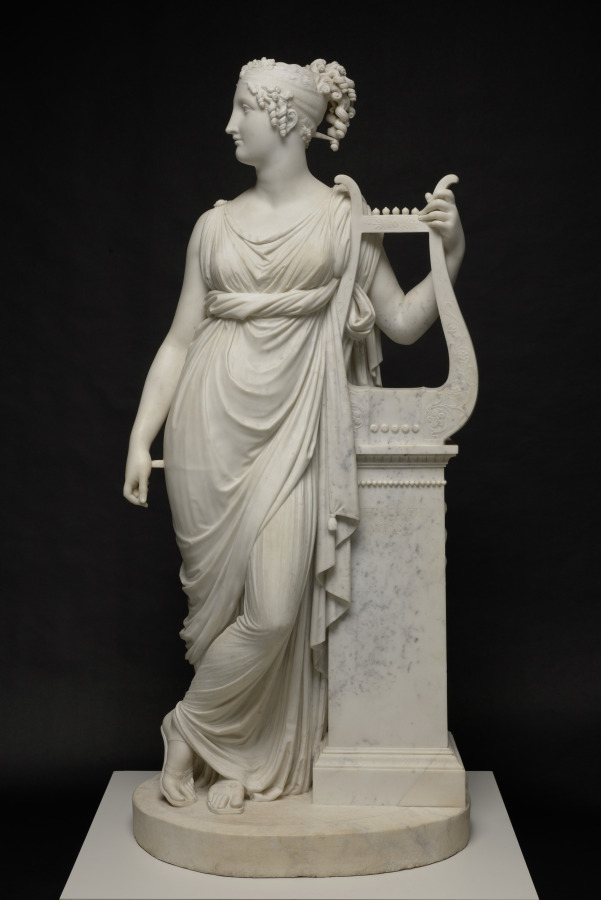
Structural Poetics: The Dialectic of Stasis and Latency
The urban silhouette for 2026, as derived from the dual aesthetic of Vermeer’s *A Maid Asleep* and Bingham’s *A Vignette of Life on the Frontier*, is a study in controlled tension. The subject, Terpsichore Lyran, embodies a paradox: the muse of lyric poetry, yet rendered through the cold, precise language of architectural form. The analysis begins not with fabric, but with the geometric integrity of the two paintings—their shared obsession with the “between” state. Vermeer’s composition is a masterclass in **vertical and horizontal restraint**. The sleeping maid is framed by the rigid lines of the doorframe, the table edge, and the picture plane. Her slumped posture, a moment of *relaxed disorder*, is immediately counterbalanced by the severe orthogonal grid of the room. This is not a soft, romantic collapse; it is a structural event. The geometry dictates that the body is a volume within a larger architectural container. For the 2026 executive silhouette, this translates into a **tailored exoskeleton** that does not drape, but rather *frames* the body. The shoulder line must be sharp, almost cantilevered, referencing the table’s edge. The waist is not cinched but articulated—a precise seam that defines a transition between the upper torso (the conscious, active zone) and the lower form (the dormant, latent zone). The silhouette is a **cubic volume** where fabric behaves like a rigid plane, folding only at predetermined, engineered points. Bingham’s frontier scene introduces a horizontal counterpoint. The riverbank, the boat, the figures—all are arranged in a frieze-like rhythm. The geometry is one of **dynamic equilibrium**, where multiple bodies create a stable, horizontal line despite their individual movement. This is not the static grid of Vermeer, but a **kinetic grid**—a system of weights and balances. For the silhouette, this informs the *length* and *proportion*. The executive coat or jacket must extend to a point that anchors the figure to the ground, much like Bingham’s figures are anchored to the riverbank. The hemline becomes a datum line, a visual baseline that suggests stability amidst urban flux. The silhouette is not merely long; it is *weighted*. The fabric (likely a dense wool or a structured cotton-silk blend) must have sufficient mass to hold its shape against the body, creating a **monolithic presence** that resists the wind of the city.Urban Materiality: From Canvas to Concrete
The materiality of these two works is not about texture in the tactile sense, but about **optical density**. Vermeer’s light is a material—it coats the maid’s face and the white cloth with a pearlescent, almost mineral quality. Bingham’s light is broader, flattening the figures into silhouettes against the water. For the 2026 collection, the fabric must possess a similar **light-absorbing and light-refracting duality**. The primary material is a **double-faced wool**—a technical fabric that is matte on one side (for the interior, the private, the sleeping self) and subtly lustrous on the other (for the exterior, the public, the frontier-facing self). This is not a decorative choice; it is a functional one. The garment can be worn reversed, altering its relationship to the urban environment. In the morning, the matte side absorbs the grey light of the office; in the evening, the lustrous side catches the artificial glow of the city, creating a **silent, moving sculpture**. The color, **Ivory**, is not a neutral. It is a *charged* absence. In Vermeer, the white cloth on the table is a void that draws the eye—a space of potential. In Bingham, the white shirts of the boatmen are points of light against the dark river. Ivory, in this context, is the color of **unwritten poetry**. It is the blank page before the lyric is inscribed. For the executive silhouette, Ivory is a statement of *controlled opacity*. It is not translucent, but it is *permeable* to light. The fabric is woven with a subtle, vertical rib that catches shadows, creating a **graphic line** that echoes the doorframe and the riverbank. This is not a soft, creamy white; it is a **cold, architectural white**—the white of marble, of bone, of a perfectly calibrated screen.The 2026 Executive Silhouette: A Definition
The final silhouette is a **Tailored Column with a Structural Release**. The jacket is a long, single-breasted form with a high, standing collar—a reference to the maid’s bowed head and the boatmen’s upright posture. The shoulder is defined by a **sharp, forward-pitched seam** that creates a slight, deliberate tension across the back. The sleeve is set in with a **high armhole**, restricting movement to a precise, deliberate arc. This is not a garment for sprawling; it is for *occupying space* with intention. The trousers are a **straight, high-waisted cut** that breaks cleanly over the shoe, without pooling. The waistband is a **structural band**—a rigid, 4cm-wide piece of the same fabric, acting as a belt of geometry. The key detail is the **asymmetric closure**. The jacket fastens with a single, hidden magnetic clasp at the left hip, leaving the right side to fall open in a clean, vertical line. This is the “between” state—the moment of transition between the maid’s sleep and the frontier’s activity. It is a **controlled asymmetry**, not a chaotic one. The opening reveals a **silk underlayer** in a slightly darker, matte Ivory, creating a subtle, internal landscape. The entire ensemble is a **portable architecture**—a structure that carries the weight of lyric poetry within the cold, efficient lines of the urban executive. The wearer becomes a living intersection of Vermeer’s interior geometry and Bingham’s exterior horizon, a figure of **silent, monumental presence** in the fluid chaos of the city.
Technical Insight
Technical Insight: Translating Ivory palettes into Tailored silhouettes for the modern metropolis.