Urban Form: Helmet Mask
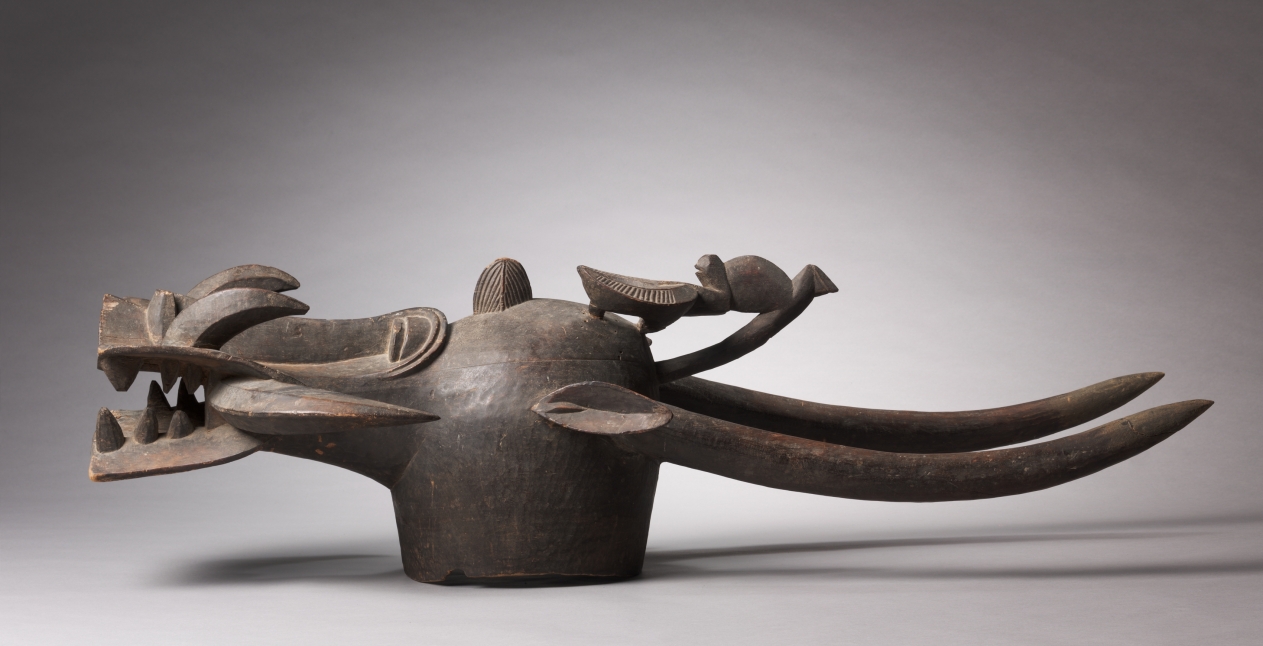
Executive Summary: The Helmet Mask as Structural Archetype
This analysis deconstructs the Helmet Mask as a formal prototype for the 2026 NYC executive wardrobe. Drawing from the dual sacred sources of the Bodhisattva and the Amulet in the Form of a Seated Figure with Bovine Head, we isolate two opposing yet complementary principles: “Harmonious Closure” (from the Bodhisattva) and “Composite Authority” (from the bovine-headed amulet). The Helmet Mask, in its purest urban iteration, is not a literal headpiece but a silhouette strategy—a volumetric enclosure that prioritizes geometric containment, material density, and the sublimation of the individual into a universal, power-signaling form. For the 2026 executive, this translates into garments that function as portable architecture: rigid, monolithic, and deliberately depersonalized.
I. Form Analysis: From Sacred Geometry to Urban Armor
A. The Bodhisattva Principle: Absolute Harmony and the “Enclosed Void”
The Bodhisattva sculpture achieves its spiritual gravity through mathematical perfection. Every curve—from the cascading drape of the robe to the serene oval of the face—is a calculated arc that eliminates psychological tension. The form is self-referential; it does not interact with the viewer’s space but rather creates its own gravitational field. For the Helmet Mask, this translates into a monolithic upper block: a structured shoulder line that extends into a clean, uninterrupted neckline, often achieved through a high, stand-away collar or a sculpted yoke. The goal is visual silence—no lapels, no revers, no decorative seams that break the surface. The fabric (typically a dense, matte wool or bonded neoprene) must hold its shape without draping, creating a negative space around the wearer’s head that mimics the Bodhisattva’s halo. Color is critical: Onyx absorbs all light, eliminating shadow and reinforcing the form’s impenetrability.
B. The Bovine Amulet Principle: Composite Power and the “Hybrid Silhouette”
In contrast, the bovine-headed amulet introduces disruption through fusion. The combination of human posture and animal head creates a volumetric tension—the smooth, seated human form is abruptly capped by the angular, horned bovine skull. This is not harmony; it is strategic dissonance. For the Helmet Mask, this principle manifests as a layered, asymmetrical construction that breaks the pure line. Imagine a tailored, high-necked shell (the human base) topped with a separate, detachable collar piece that extends upward and outward in a sharp, geometric arc (the bovine horns). The collar is not soft; it is a rigid, cantilevered structure made from molded leather or resin-infused fabric. This creates a dual silhouette: from the front, the wearer appears contained and serene; from the profile, the angular extension projects an aggressive, protective aura. The Onyx palette here serves to unify the disparate elements, preventing the hybrid form from reading as costume. It is a monochromatic power play.
II. Color and Material Logic: The Onyx Imperative
A. Chromatic Absorption and the Erasure of the Individual
Onyx is selected not for its neutrality but for its totalizing quality. In the context of the Helmet Mask, black is not a background; it is a material statement. It absorbs the viewer’s gaze, forcing attention onto the pure form—the volume of the shoulder, the precision of the collar’s edge, the absence of texture. This aligns with the Bodhisattva’s “de-individualization”: the executive wearing Onyx is not a person but a function. The color erases personal expression, replacing it with institutional authority. For the bovine-inspired hybrid, Onyx prevents the horn-like collar from appearing theatrical; it grounds the aggressive extension in a corporate, urban context.
B. Material as Structure: Bonded, Molded, and Rigid
To achieve the Helmet Mask silhouette, fabric must behave like shell. Recommended materials include:
- Bonded wool felt (for the monolithic base): 800+ grams per meter, steam-molded to hold a permanent, rounded shoulder.
- Molded polyurethane leather (for the bovine collar): heat-set into a sharp, 90-degree arc that extends 4–6 inches above the natural neckline.
- Rigid cotton-linen canvas (for internal structure): used as a hidden interlining to maintain the form’s integrity against body movement.
The finish must be matte—any sheen would introduce a distracting light reflection, breaking the form’s monolithic quality. Seams are either invisible (fused or glued) or deliberately exposed as structural lines, mimicking the bovine amulet’s composite joinery.
III. Silhouette Application: The 2026 Executive Wardrobe
A. The “Harmonious Closure” Piece: The High-Neck Tunic
This garment embodies the Bodhisattva principle. It is a floor-length, sleeveless tunic with a high, stand-away collar that rises to the jawline. The shoulder is extended by 2 inches, creating a continuous, rounded arc from collar to sleeve cap. No fastenings—the garment is pulled over the head, its closure a ritual act of donning armor. The hem is clean, unadorned, and falls just above the ankle. Worn alone or over a matching Onyx base layer, it creates a vertical, uninterrupted column. The executive’s face becomes the only organic element, framed by the rigid collar—a modern, secular halo.
B. The “Composite Authority” Piece: The Asymmetric Collar Jacket
This piece applies the bovine amulet’s logic. It is a cropped, single-breasted jacket in Onyx bonded wool, but the collar is replaced by a detachable, molded leather element that rises on the left side to a sharp, horn-like point (12 inches above the shoulder), while the right side remains flat and flush. The asymmetry is functional: the high side creates a visual barrier, suggesting a protective, watchful presence. The jacket is cut close to the body, with a fitted waist and a slight peplum that flares at the hip, referencing the seated figure’s stable base. The horn-like collar can be removed for a more subdued look, offering the executive modular authority.
IV. Conclusion: The Helmet Mask as Urban Liturgy
The Helmet Mask, in its 2026 iteration, is a tool for spatial dominance. It borrows from the Bodhisattva the principle of self-contained perfection—a form that requires no external validation—and from the bovine amulet the principle of protective aggression—a form that actively shapes the space around it. The Onyx palette and Minimalist category are not stylistic choices but strategic imperatives. They allow the executive to project an image of impenetrable competence, where the garment is not an expression of self but a vessel for institutional will. In a city of constant visual noise, the Helmet Mask silhouette is a statement of controlled silence—the most powerful signal in the 2026 executive lexicon.