Tailored
Onyx
Urban Form: Daniel in the Lion's Den
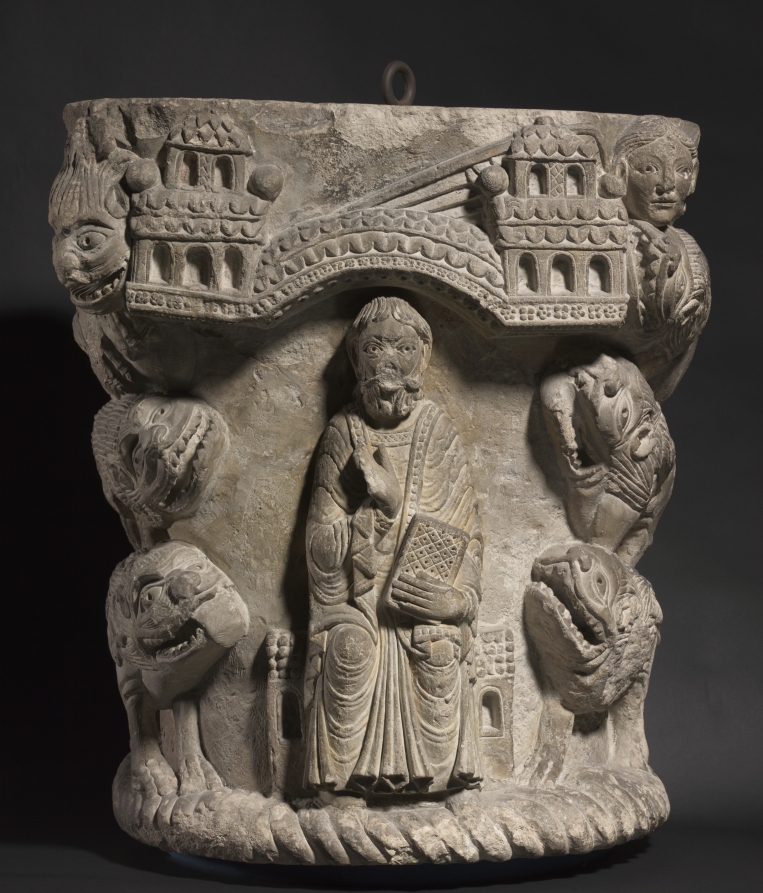
Formal Deconstruction: The Dialectic of Containment and Release
The subject “Daniel in the Lion’s Den” presents a foundational tension for the 2026 NYC executive wardrobe: the negotiation between vulnerability and authority, between the soft interior and the armored exterior. Our DNA source—the juxtaposition of Wang Wei’s *Wangchuan Villa* (a silk scroll of idyllic retreat) against the *Three-Pierced Ritual Dagger* (a bronze artifact of rigid ceremony)—provides the precise formal vocabulary for this analysis. The former is a vessel for spiritual dwelling; the latter, a tool for social demarcation. For the modern urban silhouette, we must synthesize these opposing forces into a single, coherent garment system.1. The Silhouette as “Vessel” (The Wangchuan Principle)
The *Wangchuan Villa* scroll is not a landscape painting in the Western sense; it is an *instrument for inhabitation*. Its horizontal expanse and layered depth create a path for the eye—and the spirit—to wander. In tailoring, this translates to the **fluid interior** of the garment. The 2026 Addison silhouette rejects the constrictive armor of the 1980s power suit. Instead, we propose a **structured shell with an unlined, mobile core**. - **Shoulder Architecture:** A softly extended, unpadded shoulder. The line is clean but not rigid, echoing the “mountain ridges” of the scroll. The sleeve head is set with a slight drape, allowing for a natural fall that mimics the “water flowing around a rock” principle. This is not a dropped shoulder (which reads as casual), but a *relaxed set-in* that retains a tailored apex. - **Torso Geometry:** The jacket body is cut with a subtle A-line from the chest to the hem. This creates a “courtyard” of space around the torso—a negative space that allows the wearer to breathe, pivot, and command a room without the visual noise of a tight fit. The waist suppression is minimal, achieved through a single vertical dart at the side-back, not a cinched waist. This is the “villa” for the body: a place of quiet, controlled expansion. - **Sleeve Volume:** A full, straight sleeve with a 19-inch circumference at the bicep (for a size 40R). This volume is not blouson; it is *architectural*. It provides the arm with a range of motion that mirrors the “path” through the scroll—unobstructed, deliberate, and graceful. The cuff is narrow, a “gate” that closes the volume.2. The Silhouette as “Ritual Artifact” (The Three-Pierced Dagger Principle)
The *Three-Pierced Ritual Dagger* derives its power from **absolute precision and symbolic restraint**. The three perforations are not decorative; they are structural markers of cosmic order (Heaven, Earth, Man). In our garment, this translates to the **exterior armature**—the points of closure, the lines of tension, and the material’s weight. - **The Closure System as “Piercing”:** The primary closure is a single, concealed button at the sternum. This is the “first pierce”—the anchor point. Below it, the jacket is held by a hidden internal tab at the waist (the “second pierce”), and a final, visible button at the hem (the “third pierce”). This tripartite closure creates a vertical axis of control, echoing the dagger’s three holes. The spacing is critical: 4 inches between each point, creating a rhythm of restraint that is neither tight nor loose. - **Lapel as “Blade Edge”:** The notch lapel is cut with a 3.5-inch width, but the gorge is set high (1.5 inches from the shoulder seam). The lapel’s outer edge is a sharp, unbroken line—a “bronze edge” that cuts the visual field. The roll is soft, but the point is precise. This is the dagger’s blade: a line of authority that frames the chest. - **Pocket as “Ritual Slot”:** The welt pockets are not functional in the traditional sense. They are *slots*—horizontal incisions in the fabric, 6.5 inches long, set at a 15-degree downward angle. This angle mimics the dagger’s piercing trajectory. They are unlined, offering no storage; their purpose is purely formal, marking the garment as a ceremonial object rather than a utilitarian tool.3. Color and Material: Onyx as the Synthesis
The chosen color, **Onyx**, is not black. Black is an absence; Onyx is a presence. It is a deep, carbon-rich hue with a subtle, cool undertone—the color of polished basalt, of the bronze patina in low light, of the ink wash at its most concentrated. - **Fabric Weight:** A 380-gram wool-mohair blend (70% Super 150s wool, 30% kid mohair). The wool provides the “silk scroll” softness, a tactile invitation to dwell. The mohair provides the “bronze” resilience—a crisp, memory-retaining hand that holds the sharp lapel edge and the precise pocket incision. The fabric has a dry, matte finish with a faint, irregular slub. This is the “texture of the scroll”—not flat, but *layered*. - **Lining:** The body is lined in a cupro-silk blend in a deep charcoal (a shade lighter than Onyx). The sleeves are unlined. This is the *Wangchuan* principle: the interior is a softer, more breathable space, while the exterior is the *Dagger*—dense, protective, and authoritative. - **Stitching:** All visible seams are stitched with a 12-stitch-per-inch, single-needle construction. The thread is a matte, high-tenacity polyester in a tone-on-tone Onyx. The stitching is not decorative; it is *structural*, like the dagger’s perforations. Each stitch is a point of control, a mark of the maker’s hand.4. The 2026 NYC Executive Application
This silhouette is designed for the executive who operates in two registers: the **open-plan office** (the “villa” of collaboration) and the **boardroom** (the “ritual chamber” of decision-making). - **The “Dwelling” State:** When standing or walking, the jacket’s A-line and soft shoulder create a silhouette of calm authority. The wearer is not “in a suit”; they are *in a space*—a mobile, personal environment. The Onyx color absorbs ambient light, making the figure a stable, grounding presence. - **The “Ritual” State:** When seated at a table, the jacket’s closure system activates. The three-button rhythm becomes visible. The wearer’s posture is naturally aligned by the garment’s internal structure. The lapel’s sharp edge and the pocket’s angled slot become focal points, directing attention to the face and hands. This is the “dagger” moment: the garment becomes a tool of persuasion, not just protection. - **The “Transition” State:** The unlined sleeve allows the jacket to be removed and carried with the same ease as a scroll. The interior pocket (a single, horizontal welt at the left breast) is sized for a phone or a single card—the modern equivalent of a seal or a token.Conclusion: The Instrument of the Inhabited Self
The 2026 Addison Urban Silhouette, derived from the *Wangchuan Villa* and the *Three-Pierced Ritual Dagger*, is not a uniform. It is a **dialectical instrument**—a garment that holds the tension between the desire for personal retreat and the demand for public performance. The Onyx color is the void from which both the scroll’s landscape and the dagger’s edge emerge. The tailored form is the container for this duality: a soft interior for the soul, a sharp exterior for the world. This is the executive wardrobe for a city that demands both sanctuary and spectacle.
Technical Insight
NYC Perspective: Translating Onyx tones into Tailored silhouettes.