Minimalist
Onyx
Urban Form: Hollow-Legged Tripod (Li Ding)
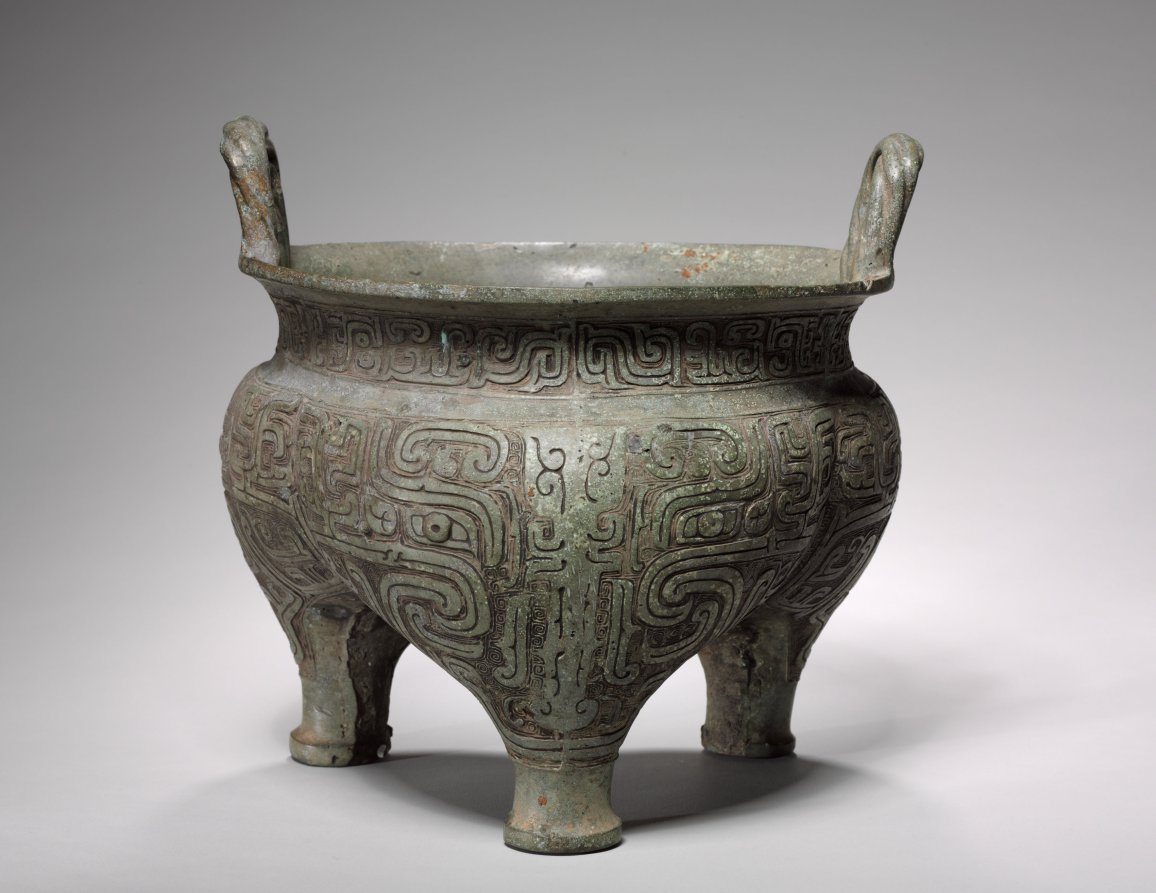
Formal Deconstruction: The Hollow-Legged Tripod (Li Ding) as a Structural Paradigm
The Li Ding, a ritual bronze vessel characterized by its hollow legs and tripod base, presents a compelling case study in architectural restraint and volumetric precision. For the 2026 NYC executive wardrobe, this artifact offers a blueprint for achieving monolithic presence through negative space. The hollow leg is not a void; it is a deliberate structural decision that redistributes mass upward, creating a silhouette that is simultaneously grounded and ethereal. This principle translates directly into garment construction: the elimination of superfluous fabric in favor of strategic emptiness. Consider a double-breasted coat in Onyx wool crepe. The traditional lapel is suppressed, replaced by a sharp, continuous line from collar to hem. The waist is defined not by darts but by the negative space between the body and the fabric—a hollow leg effect where the garment’s volume is suspended, allowing the wearer’s form to become the tripod’s central pillar. The hemline, like the Li Ding’s base, must be crisp and unadorned, terminating precisely at the knee or ankle to avoid visual clutter. This is not tailoring for the sake of fit; it is tailoring for the sake of architectural clarity.Color as Material Philosophy: Onyx and the Aesthetics of Absorption
Onyx, in this context, is not merely a color but a material condition. It absorbs light, creating a surface that reads as depth rather than flatness. The Li Ding’s patina—a complex layering of oxidation and mineral deposits—offers a parallel: Onyx garments must be constructed from fabrics that possess inherent gravity. Double-faced cashmere, matte satin, or densely woven wool twill are optimal. The color’s function is to eliminate distraction, forcing the eye to focus on silhouette and proportion. In the 2026 executive wardrobe, Onyx serves as the anchor hue for a capsule collection. A single Onyx piece—a floor-length skirt with a side slit that mimics the Li Ding’s leg aperture, or a sleeveless shell with a high neckline—becomes the visual fulcrum around which other elements (Silver accessories, Sand footwear) orbit. The color’s neutrality is not passive; it is a strategic withdrawal that amplifies the wearer’s presence. When paired with the hollow-leg silhouette, Onyx creates a negative space double bind: the garment’s color absorbs light, while its structure absorbs volume, resulting in a form that is both present and absent, solid and void.Urban Poetics: Translating the Tripod’s Tension into Movement
The Li Ding’s three legs are not identical; they are subtly asymmetrical, introducing a dynamic tension that prevents the vessel from appearing static. This asymmetry must be encoded into the garment’s movement. For the executive woman navigating the verticality of NYC—subway stairs, glass elevators, crosswalks—the hollow-leg silhouette must allow for controlled disruption. A tailored jumpsuit in Onyx with a single leg slit (the hollow leg) and a high-waisted, cinched bodice (the vessel’s body) achieves this. The slit, positioned at the left or right side, creates a visual break that echoes the Li Ding’s leg separation. When walking, the fabric parts to reveal a flash of skin or a contrasting lining (Silver or Ivory), introducing a momentary color event that disrupts the Onyx monolith. This is not decoration; it is functional asymmetry. The garment’s hem should be weighted—using internal chain stitching or a bonded edge—to ensure the slit opens cleanly and closes with precision, mimicking the Li Ding’s legs’ ability to bear weight while appearing to float.Minimalist Execution: The 2026 Executive Uniform
The hollow-legged tripod informs a three-piece uniform for the NYC executive: a structured shell, a high-waisted pant, and a long-line vest. Each piece must be constructed with zero tolerance for excess. The shell: a mock-neck top in Onyx silk charmeuse, with sleeves that end at the wrist bone and a hem that sits at the hip bone. The pant: a wide-leg silhouette with a single, deep pleat at the front (the hollow leg), cut from Onyx wool gabardine. The vest: a sleeveless, floor-length layer in Onyx double-faced cashmere, with a single button closure at the sternum. The vest’s hem is cut on a slight diagonal, referencing the Li Ding’s asymmetrical legs. This uniform is not about comfort; it is about ritualized dressing. Each piece is a component in a system of visual economy. The wearer becomes the tripod: grounded, elevated, and defined by the spaces between. Accessories are limited to a single Silver chain (a nod to the Li Ding’s metallic origin) and Sand leather boots with a block heel—the only point of contact with the ground, like the tripod’s feet.Conclusion: The Eternal in the Ephemeral
The Li Ding’s hollow legs are not a flaw; they are a philosophical statement on the relationship between form and emptiness. In the 2026 NYC executive wardrobe, this principle is operationalized through minimalist rigor and chromatic discipline. The Onyx palette absorbs the city’s noise, while the hollow-leg silhouette creates a portable architecture that allows the wearer to move through vertical spaces with authority. This is not fashion; it is structural poetry—a translation of ancient bronze into modern urban armor. The garment does not cling; it suspends. The color does not reflect; it absorbs. The result is a silhouette that is both ancient and futuristic, a vessel for the executive’s ambition, held aloft by the very voids that define it.
Technical Insight
NYC Perspective: Translating Onyx tones into Minimalist silhouettes.