Urban Form: Carving from an Overmantel
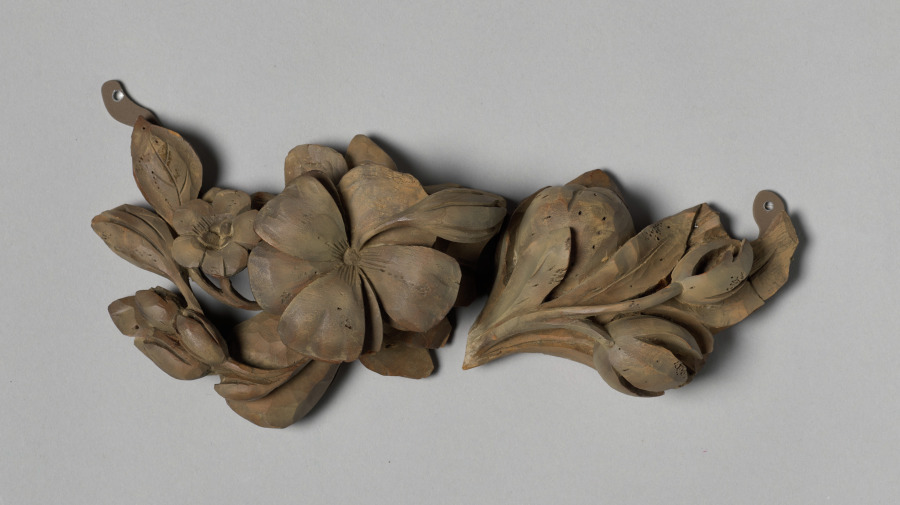
Technical Deconstruction: The Overmantel as Structural Archetype
The subject “Carving from an Overmantel” demands a rigorous formalist reading. An overmantel is not merely decorative; it is a framing device, a tectonic element that organizes vertical space and anchors the visual field. In the context of urban silhouette research for Addison Fashion NYC, this translates directly into the architecture of the executive wardrobe: a garment must function as a structural boundary that contains, defines, and elevates the body within the compressed geometries of the city. The overmantel’s carved relief—its interplay of shadow and projection—becomes the operative metaphor for how we construct volume, line, and negative space in a 2026 NYC context.
The DNA source provided—Han Gan’s Night Shining White (Tang Dynasty) and Yun Shouping’s Hundred Flowers Scroll: Peony and Plum Blossom (Qing Dynasty)—offers a dialectical tension that is essential for this analysis. These two works represent the polar extremes of Chinese aesthetic philosophy: the monochromatic sublime versus the polychromatic organic. Their juxtaposition is not merely a matter of subject matter but a fundamental ontological confrontation between cosmic abstraction and worldly immanence. For the 2026 executive, this translates into a wardrobe that must negotiate between the authority of reduction (the Onyx palette) and the vitality of detail (the carving’s relief).
Form I: The Tectonic Line and the Trapped Energy
Han Gan’s Night Shining White is a masterclass in minimalist tension. The composition is brutally efficient: one post, one horse, one tether. The horse’s body is rendered with an iron-wire line (tie xian miao) that defines its musculature with surgical precision—the swelling of the haunch, the arch of the neck, the splayed hooves. Yet the vast majority of the horse’s form is blank silk, left as pure negative space. This is not emptiness; it is accumulated potential. The white of the silk becomes the horse’s luminosity, a “moonlight” that is both material and metaphysical. The critical formal move is the tether: a taut, unyielding line that binds the horse to the post. The horse rears, nostrils flared, hooves striking air—but it cannot escape. This is the architecture of constraint. The energy is not released; it is compressed into the line itself.
For the 2026 NYC executive silhouette, this translates into a structured minimalism that does not suppress power but channels it. The overmantel carving becomes a shoulder line—sharp, defined, almost architectural. The jacket’s lapel is not a soft roll but a carved edge, a clean break between the garment and the body’s negative space. The silhouette is fitted but not restrictive; it is a cage that the wearer’s energy fills. The Onyx color—a deep, almost black charcoal—absorbs light, creating a void against which the body’s movement becomes a figure-ground reversal. The executive is not wearing a suit; they are inhabiting a structure that frames their presence as a monumental form within the urban grid. The tether is the single-button closure or the sharp notch lapel—a minimal intervention that holds the entire composition in tension.
Form II: The Organic Relief and the Polychromatic Surface
Yun Shouping’s Hundred Flowers Scroll offers the counterpoint: a surface of infinite nuance. His “boneless” (mo gu) technique eliminates the outline, building form through layered washes of color. The peony’s petals are not drawn; they are saturated with pigment that bleeds and blends, creating a tactile illusion of softness and depth. The plum blossom, by contrast, is rendered with dry brush strokes that suggest bark and branch, a textural counterpoint to the peony’s lushness. The color palette is not naturalistic but emotionally filtered: lavender, celadon, cinnabar, ochre. Each hue carries a literati resonance, a coded meaning of virtue or season. The composition is dense but ordered—a controlled chaos that mirrors the urban fabric of NYC itself.
In the context of the overmantel carving, this becomes the relief surface of the garment. The carving is not a flat plane but a topography of light and shadow. For the executive wardrobe, this translates into textural differentiation within a monochromatic scheme. The Onyx base is not flat; it is broken by subtle relief: a jacquard weave that catches light at certain angles, a matte-satin contrast on the lapel, a micro-pleated panel at the shoulder. These are not decorative flourishes but structural articulations that mimic the carved overmantel’s play of depth. The peony’s layered petals become a draped collar or a sculpted sleeve head; the plum branch’s dry strokes become a seam line that traces the body’s architecture. The color, while nominally Onyx, is inflected with undertones—a hint of aubergine in the weave, a whisper of silver in the thread—that reveal themselves only in motion or under specific light. This is color as information, not decoration.
Color: Onyx as the Void and the Vessel
The selection of Onyx is not arbitrary. Onyx is a black that is not black—it is a deep, sedimentary charcoal with internal striations, a stone that absorbs light but also reflects it in micro-fractures. This mirrors the Night Shining White’s use of white silk as a luminous void. In the Han Gan painting, the white is not absence; it is potential light. Similarly, Onyx in the 2026 wardrobe is not a negation of color but a container for all color. It is the ground against which the carving’s relief—the textural details, the structural lines—becomes legible. It is the silence that makes the note audible.
From Yun Shouping’s scroll, we borrow the principle of color as emotion. The Onyx is not neutral; it carries the gravity of the Tang dynasty—the imperial authority, the cosmic ambition—but also the intimacy of the Qing literati—the quiet observation, the cultivated taste. It is a color that negotiates between the public and the private, between the boardroom and the gallery. In the 2026 NYC context, where the executive moves between glass towers and historic brownstones, Onyx provides a consistent visual anchor that adapts to context without losing its identity.
Synthesis: The 2026 Executive Silhouette
The final silhouette is a dialectical resolution of the two DNA sources. It is minimalist in form but maximalist in detail. The jacket is a single-breasted, notch-lapel structure with a sharp, carved shoulder that extends slightly beyond the natural line—a nod to the overmantel’s projection. The waist is suppressed but not cinched, creating a columnar silhouette that elongates the torso. The trousers are straight-cut, full-length, with a single pleat that provides movement without breaking the line. The entire garment is unlined except for the shoulders, allowing the fabric to drape as a second skin—a nod to Yun Shouping’s boneless technique.
The carving is located in the lapel and pocket details: a raised, hand-stitched edge that mimics the overmantel’s relief, a welt pocket with a micro-pleated interior that catches light like a peony petal. The button is a single, matte-black horn—a minimal intervention that holds the entire composition in tension, like Han Gan’s tether. The color is Onyx, but the weave is a fine wool-mohair blend with a subtle herringbone that reads as solid from a distance but reveals texture up close—a carved surface for the urban eye.
This is not a suit for the timid. It is a structural statement that demands the wearer inhabit it with intention. It is the overmantel of the executive body—a frame that organizes the space around it, a carving that captures light and shadow, a monument to the compressed energy of the city. The 2026 NYC executive does not wear clothes; they wear architecture. And this silhouette, carved from the tension between the cosmic and the organic, is the new standard.