Urban Form: Architecture of the Middle Ages: Cathedral, Abbeville
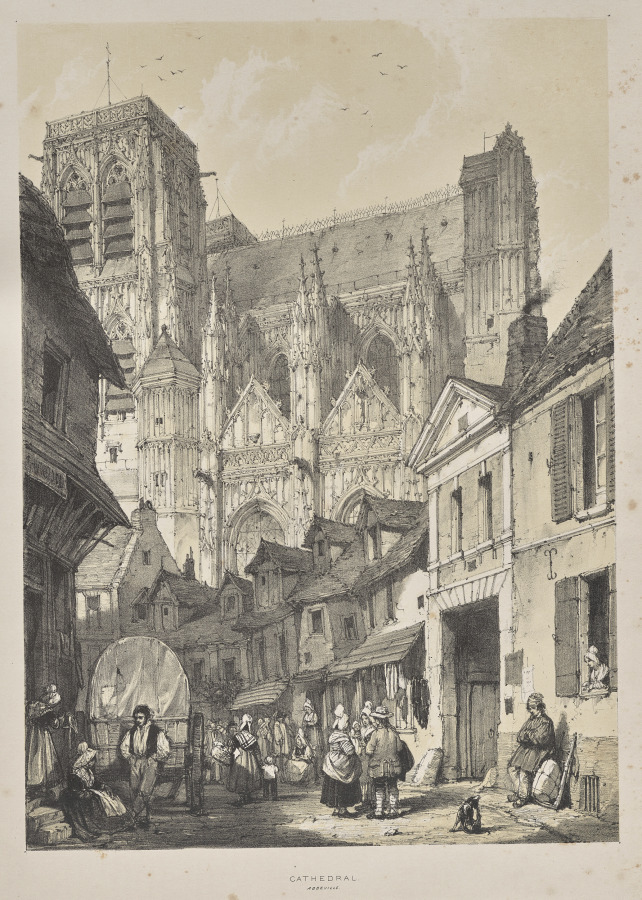
Structural Poetics: The Cathedral as Silhouette Matrix
The medieval cathedral of Abbeville presents a verticality that is not merely architectural but ontological. Its ribbed vaults, flying buttresses, and pointed arches constitute a grammar of compression and release—a dialogue between earthly weight and spiritual aspiration. For the 2026 executive silhouette, this translates into a minimalist vocabulary of linear tension. The cathedral’s nave, with its repetitive bay system, offers a rhythm of vertical lines that can be abstracted into the clean, unbroken seams of a tailored coat or the elongated proportions of a tunic. The structural logic is one of controlled ascension: every stone is placed to direct the eye upward, just as every seam in a garment should direct the gaze along the body’s vertical axis.
The geometric integrity of Abbeville lies in its modular repetition. The crossing of the transept, the quadripartite vaults, the lancet windows—all are variations on a theme of pointed arch and right angle. This is not organic form but calculated geometry, a system of ratios that creates a sense of inevitability. In urban materiality, this demands fabrics that hold their shape: structured wools, bonded cottons, and double-faced cashmeres that resist draping in favor of crisp, architectural folds. The silhouette becomes a vertical sheath, with shoulder lines that echo the corbel’s projection and hemlines that fall like the cathedral’s plinth—clean, unadorned, definitive.
Urban Materiality: From Stone to Textile
The cathedral’s stone is not inert; it bears the patina of centuries, the erosion of wind and rain, the soot of urban life. This is the materiality of the 2026 executive: surfaces that record time. Think of a slate-gray wool suiting with a subtle herringbone weave—a texture that catches light like the cathedral’s ashlar masonry. The color palette is drawn from the stone itself: Slate for the nave’s shadowed recesses, Onyx for the choir’s darker mysteries, Ivory for the limestone’s sunlit faces. These are not neutral tones but narrative hues, each carrying the weight of architectural history.
The interior DNA of the cathedral—its spatial compression and release—finds expression in garment construction. A double-breasted jacket with a high, notched lapel mimics the pointed arch’s upward thrust. The waist suppression, minimal but precise, echoes the column’s entasis. Sleeves are set with a high armhole, allowing for a clean, uninterrupted line from shoulder to wrist—a gesture of the flying buttress’s outward thrust contained within the body’s frame. Pockets are welted, flush with the fabric, like niches in a wall. Every detail is subordinated to the vertical line.
The 2026 Executive Silhouette: Minimalist Ascension
The definitive silhouette is the elongated column. A coat that falls to the mid-calf, with a single row of buttons placed at the natural waist, creates a continuous vertical plane. The collar is a stand-up mandarin, referencing the clerestory’s height. The fabric is a heavy, double-faced wool in Slate, its surface matte but with a subtle luster—like stone wet with morning dew. The shoulders are slightly extended but unpadded, allowing the fabric to fall in a clean, unbroken line. This is not a silhouette that hugs the body; it frames the body, creating a space between fabric and form that is both protective and aspirational.
Underneath, a high-neck tunic in Ivory silk, with a hidden placket and no visible fastenings. The sleeves are set-in with a gusset, allowing for movement without disrupting the line. The tunic’s hem falls just below the hip, creating a layered effect that echoes the cathedral’s nave and aisles—a spatial hierarchy within the garment. Trousers are wide-legged but not voluminous, with a single front crease that continues the vertical theme. The waistband is high and fitted, with belt loops that are narrow and set close to the body—like the colonnettes of a triforium.
Geometric Integrity: The Poetics of Restraint
The cathedral’s geometry is one of restrained complexity. The pointed arch is not a curve but a compromise between circle and line, a shape that resolves tension into stability. In garment construction, this translates to seams that are not decorative but structural. A princess seam that follows the body’s curve without excess fabric; a shoulder seam that sits precisely at the acromion; a hem that is faced and weighted to fall with absolute precision. Every line is a statement of intent, not an accident of drape.
The color Slate is chosen for its urban neutrality. It is the color of wet pavement, of storm clouds, of the stone itself. It absorbs light rather than reflecting it, creating a matte, contemplative surface that invites touch. In the 2026 executive wardrobe, this color becomes a ground for texture: a ribbed knit, a twill weave, a felted wool. The silhouette is not about volume but about presence—a body that occupies space with the same quiet authority as a cathedral’s nave.
Conclusion: The Silhouette as Urban Sanctuary
The medieval cathedral of Abbeville offers a model of verticality and containment that is profoundly relevant to the contemporary executive. In a world of digital fragmentation and visual noise, the minimalist silhouette becomes a sanctuary of form. It does not shout; it asserts through absence. The 2026 executive wears not a garment but a structure of intention, a line that connects the body to the sky. The Slate wool, the Ivory silk, the Onyx buttons—these are not colors but architectural materials, each chosen for its ability to hold a line, to resist the chaos of the street, to offer a moment of stillness in motion.
This is the urban silhouette as cathedral: a body clothed in geometry, a form that transcends its materiality to become a statement of order. In the tension between the pointed arch and the straight seam, between the stone’s weight and the fabric’s lightness, we find the poetics of the executive—a being who moves through the city not as a participant but as a monument.