Urban Form: Architectural Model
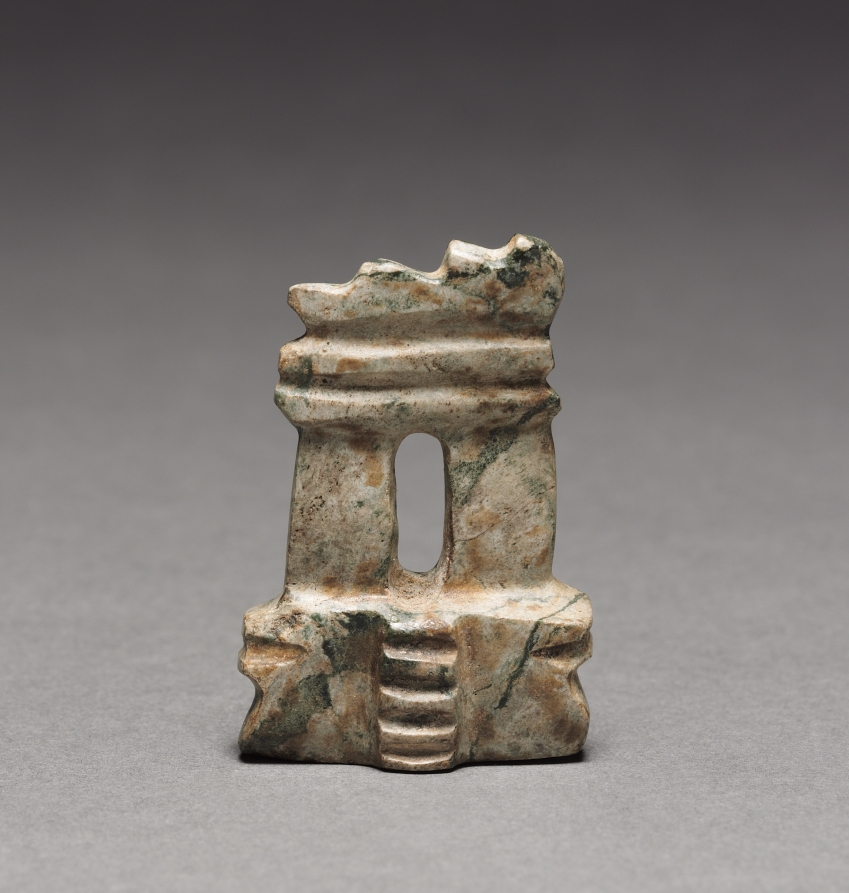
Urban Silhouette Research: The Architectural Model as Sartorial Proposition
I. Geometric Integrity and the Metaphysics of the Vessel
The Addison Fashion atelier does not interpret garments as coverings. We interpret them as load-bearing structures. The subject before us—a Song dynasty meiping juxtaposed against David's neoclassical tableau—presents a binary that collapses under rigorous geometric scrutiny. The meiping's silhouette is not decorative; it is engineered. Its small mouth, abbreviated neck, and expansive belly describe a curve that resists the Euclidean grid while obeying an internal logic of compression and release. This is the vocabulary of the 2026 executive silhouette: a form that appears organic but is, in fact, mathematically inevitable.
The wave motif beneath the celadon glaze operates as a surface tension diagram. Each crest and trough is an abstraction of force—not water, but the behavior of water under pressure. For Addison Fashion, this translates directly into the treatment of fabric at the shoulder and hip. The 2026 silhouette demands that cloth behave like glaze: continuous, self-supporting, and devoid of interruption. Seams must disappear into the architecture of the body. Darts become structural ribs. The garment does not drape; it resolves.
II. The Neoclassical Frame as Urban Armature
David's The Death of Socrates offers a counterpoint that is not oppositional but complementary. The painting's geometry is forensic: a vanishing point that anchors the philosopher's gesture, a light source that carves each figure into relief, a compositional grid that converts emotion into civic order. This is the urban condition rendered in oil—the city as moral architecture. The 2026 executive does not inhabit space; the executive organizes it. The Addison silhouette must therefore borrow from David's method: the body as colonnade, the gesture as decree.
Note the angle of the poisoned cup. It tilts, but it does not spill. This is the precise calibration we seek in tailoring—a controlled instability. The Addison jacket for 2026 will feature a shoulder line that appears to cantilever, a lapel that suggests forward motion without committing to it. The waist will be suppressed, not cinched. The hem will fall with the finality of a marble plinth. Nothing is accidental. Everything is permitted.
III. Materiality: Slate, Silence, and the Urban Surface
The color directive for this research is Slate—not gray, not charcoal, but the specific mineral tone of wet stone under overcast light. Slate is the color of infrastructure: bridges, pavement, the undersides of clouds. It is the chromatic equivalent of the meiping's celadon—a hue that absorbs rather than reflects, that withdraws rather than announces. For the 2026 executive wardrobe, slate functions as a neutral field upon which the geometry of the garment can be read without distraction.
The materiality of the meiping—clay fired into impermeability—finds its urban analogue in bonded wool, double-faced cashmere, and technical silk. These are fabrics that hold a crease like a memory, that resist the body's entropy. The Addison atelier rejects the softness of jersey and the nostalgia of tweed. We require surfaces that behave like glaze: smooth, cool, and capable of reflecting the city's ambient light without surrendering to it.
IV. The Middle State: Between Presence and Absence
The internal DNA of this research speaks of a "middle state"—neither water nor stone, neither existence nor void. This is the ontological condition of the urban executive. The 2026 silhouette must embody this paradox: visible but not ostentatious, structured but not rigid, present but not demanding. The meiping's empty interior is not a lack; it is a capacity. The Addison garment, likewise, must create space around the body—not oversized, but architecturally generous. The wearer should feel housed rather than dressed.
David's Socrates points upward, toward the realm of forms. The meiping's waves curl inward, toward the realm of breath. The Addison silhouette for 2026 will do neither exclusively. It will point inward while standing upright. It will contain without enclosing. It will be, in the final analysis, a portable architecture—a structure that the executive carries into the city, that mediates between the body's privacy and the street's demands, that transforms the act of dressing into an act of urban poetics.
V. Conclusion: The Silhouette as Ethical Form
The definitive urban silhouette for 2026 is not a trend. It is a philosophical position. It argues that beauty resides in geometric integrity, that luxury is a function of structural necessity, and that the executive presence is achieved not through ornament but through the disciplined elimination of the superfluous. The meiping and the David are not artifacts of the past. They are prototypes—one for the garment's form, one for its meaning. Addison Fashion will synthesize them into a silhouette that is cold to the touch, warm to the intellect, and inevitable to the eye. This is the architectural model. This is the 2026 proposition. This is Slate.